After a seven-year drought on the big screen following 2019’s divisive The Rise of Skywalker, Lucasfilm and Disney have finally returned to theaters. Their vehicle of choice isn’t a new episodic trilogy, but a cinematic leap for Disney+’s flagship duo: The Mandalorian & Grogu.

Steered by director Jon Favreau and co-writer Dave Filoni, the film attempts to translate the episodic, “space-dad” dynamic of Din Djarin and his tiny, Force-sensitive apprentice into a grand theatrical event.
The initial box office returns and critical post-mortems reveal a franchise caught in a fascinating state of flux balancing lower budgetary risks against a noticeably cooling global box office footprint.
The Box Office: A Historic Low with a Financial Silver Lining
Opening over the high-stakes four-day Memorial Day weekend, The Mandalorian & Grogu secured the No. 1 spot but debuted to a highly scrutinized $165 million worldwide.
- Domestic Debut: The film pulled in $81.9 million over its three-day opening, stretching to $102 million over the full four-day holiday frame.
- International Performance: Offshore markets contributed a softer $63 million across 51 territories, exposing a widening gap between domestic nostalgia and international interest in streaming-led spin-offs.
The “Solo” Comparison
The numbers place The Mandalorian & Grogu as the lowest theatrical opening weekend in the modern Disney-era Star Wars catalog, trailing just behind 2018’s Solo: A Star Wars Story ($103 million domestic four-day).

However, Wall Street and box office analysts aren’t panic-buttoning this as a total disaster, thanks to a massive shift in Disney’s production strategy:
The Budget Difference: Unlike Solo, which ballooned to a catastrophic, reshoot-inflated production budget well north of $250 million, The Mandalorian & Grogu was built with massive economic discipline. Benefiting from California tax incentives, the film carried a lean $144 million net production budget. Because of this controlled overhead, the film is on a clean trajectory to break even and turn a modest theatrical profit bolstered by its inevitable, multi-million-dollar merchandise tailwind.
The Critical Consensus: Popcorn Fun vs. Creative Fatigue
While general audiences embraced the theatrical spectacle, awarding the film a highly respectable A- CinemaScore, film critics were far less forgiving. The review aggregate leans heavily toward the mixed-to-negative end, with a prevailing sentiment that the film plays it far too safe.
The Praises: Pure Popcorn Entertainment
Defenders of the film highlight its accessibility and unpretentious fun. Critics noted that you don’t need to have logged dozens of hours of Disney+ streaming to understand the plot (Mando now acts as a freelance operative for the New Republic).

- The Standouts: Sigourney Weaver’s heavily praised appearance as New Republic Colonel Ward and Jeremy Allen White’s voice performance as Rotta the Hutt (the gladiator-like son of Jabba) brought much-needed texture to the outer rim.
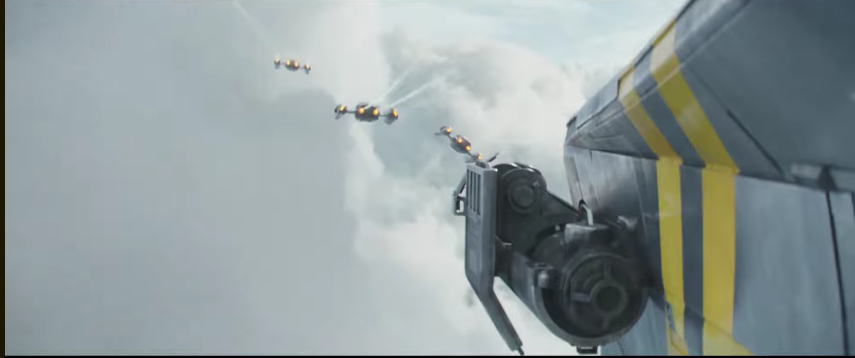
- A chaotic, live-action creature battle modeled after the Millennium Falcon’s holochess board was widely cited as the film’s visual and kinetic high point.
The Criticisms: “A Glorified Filler Episode”
Major outlets like IGN and Pajiba expressed deep frustration with the script’s lack of ambition, characterizing the 2-hour-12-minute runtime as an overlong, low-stakes television episode on autopilot.
- Nonexistent Stakes: Reviewers noted that the script completely sidelines the complex Mandalorian lore built over three seasons of television to cater exclusively to casual moviegoers.
- Character Stagnation: Critics pointed out that Din Djarin (Pedro Pascal) and Grogu are so perfectly in sync by the film’s opening frame that there is zero internal conflict or meaningful character development, leaving the emotional beats feeling manufactured rather than earned.
The Verdict: A Fragmented Galaxy
The Mandalorian & Grogu ultimately achieves exactly what Disney designed it to do: it proves Star Wars still possesses a viable theatrical pulse, dominates the holiday box office, and sets up a lucrative retail cycle for Grogu animatronics.
Yet, by delivering a conflict-averse “popcorn flick” that avoids taking any real creative narrative risks, Lucasfilm has left fans and critics wondering if the franchise’s cinematic future is truly moving forward, or simply running on the residual fuel of past success.