The story of anime is a masterclass in creative engineering. It is a medium born out of structural necessity, shaped by massive geopolitical pivots, and heavily defined by an intentional rejection of standard Western rules.
While modern global pop culture treats anime as an undisputed juggernaut, its aesthetic language was forged in the fire of economic constraints and artistic defiance. To understand how it conquered the world, we have to look back at the scaffolding of the medium: the timeline, the industrial gap, the founding art houses, and the thematic genres that built its foundation.
1. The Genesis: Paper Cutouts and a Blunt Sword
Anime did not start with slick corporate boardrooms or high-budget television broadcasts. Its origin belongs to independent filmmakers tinkering with chalk, ink, and paper cutouts in the early 20th century.

The structural blueprint of Japanese animation was laid down in 1917. That year, pioneering filmmakers like Hekoten Shimokawa and Seitaro Kitayama released crude, short animated works. Tragically, almost all of these foundational films were lost to history—incinerated in the catastrophic 1923 Great Kantō Earthquake or lost to physical degradation.
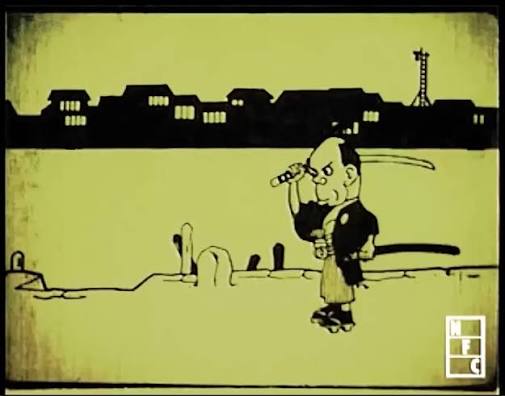
The oldest surviving evidence of the medium is a brilliant four-minute comedy short from June 1917 titled Namakura Gatana (The Dull Sword).

Directed by Jun’ichi Kōuchi, this short utilized intricate paper cutout animation to spin a satirical yarn about a bumbling samurai who gets swindled into buying a blunt weapon. Even at the dawn of the medium, the Japanese instinct leaned away from pure slapstick and toward narrative irony and character-driven satire.
While 1917 marked the technical genesis, the commercial and aesthetic architecture of modern television anime was engineered decades later by a single man: Osamu Tezuka. In the 1960s, Tezuka realized that his studio could never match the multi-million-dollar budgets of Disney’s fluid, 24-frame-per-second “full animation.”
To bypass this financial barrier, Tezuka pioneered “limited animation.” He slashed the frame rate to 8 frames per second, recycled backgrounds, and prioritized dramatic, live-action-style camera angles over fluid motion. His creation, Astro Boy (1963), became the structural catalyst for the entire weekly television industry.
2. Age Check: The Industrialization Gap
When evaluating the absolute earliest experimental origins, Western cartoon culture is only slightly older than anime. The divergence lies not in when they started, but how fast the respective industries matured.
WESTERN ANIMATION
[1908] Fantasmagorie (France) ──> [1914] Gertie the Dinosaur (USA) ──> [1928] Steamboat Willie
JAPANESE ANIME
[1917] Namakura Gatana (Japan) ───────────────────────────────> [1963] Astro Boy (TV Birth)
The Origin Gap
The concept of frame-by-frame illustration developed almost simultaneously across the globe. France’s Émile Cohl released Fantasmagorie (widely considered the world’s first traditional cartoon) in 1908. Winsor McCay followed in the United States with Gertie the Dinosaur in 1914. Japan’s independent creators entered the arena a mere three to nine years later in 1917.
The Industrialization Gap
Where the Western and Japanese paths radically split was commercial scaling. Walt Disney synchronized sound and animation to create a global icon with Steamboat Willie in 1928, achieving a full-length, technicolor masterpiece with Snow White and the Seven Dwarfs by 1937.

Conversely, Japan’s animation landscape spent the 1930s and 1940s fragmented, underfunded, and strictly controlled as a tool for wartime propaganda. The nation didn’t manage to release its first full-length color feature film, The White Snake Enchantress, until 1958.
While the raw concept of animated film is roughly the same age on both sides of the hemisphere, the distinct, episodic, manga-driven anime ecosystem we recognize today is a post-WWII phenomenon that crystallized in the 1960s. This places the commercial maturity of the anime industry roughly 30 to 40 years behind the Western studio system.