In elite motorsport, there is a distinct, unwritten law that every ambitious project eventually confronts: the executive who builds the machine is rarely the engineer who knows how to race it.
When Cadillac abruptly replaced founding team principal Graeme Lowdon with former FIA technical chief Marcin Budkowski , paddock commentators treated it like a sudden backroom coup. But if you look closely at Maranello’s recent moves, Cadillac didn’t panic they simply executed the exact playbook Ferrari used when transitioning their revolutionary Hypersail projectinto a cutthroat operational reality.
Giovanni’s Time Was Done And So Was Lowdon’s
To understand Cadillac’s move, you have to look at how Ferrari managed veteran ocean racer Giovanni Soldini.

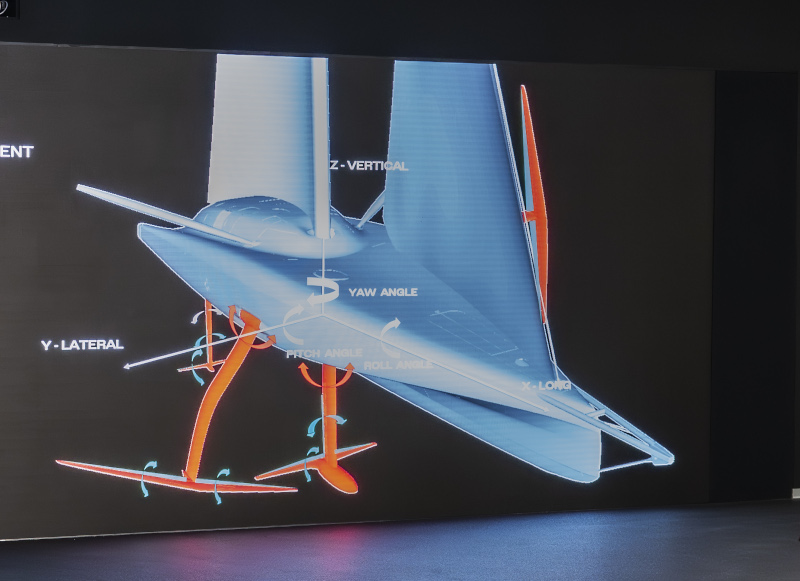
When Ferrari launched the Hypersail initiative—their 100-foot flying monohull designed to conquer offshore endurance records—Soldini was essential. His stature, deep nautical connections, and decade-defining experience in yacht construction were indispensable for getting the hull laid, securing supplier networks, and giving the concept credibility. But as the boat neared its scheduled launch and technical sea trials, the project shifted away from high-level architecture toward brutal systems integration, fly-by-wire flight dynamics, and aerodynamic telemetry derived straight from Maranello’s F1 factory. Soldini did what he was hired to do; his build phase was complete, and the pure engineers took the wheel.
                     THE PROJECT TRANSITION PATTERN

  PHASE 1: THE BUILD (Foundational)      PHASE 2: THE OPERATOR (Execution)
  ---------------------------------      ---------------------------------
  • Political & Grid Navigation          • Factory-to-Trackside Integration
  • Infrastructure & Personnel Setup     • Reliability & Aerodynamic Yield
  • Figures: Lowdon (F1) / Soldini (Sail)• Figures: Budkowski (F1) / Engineers
Dan Towriss and General Motors faced the exact same inflection point at Silverstone with Cadillac’s MAC-26.
Lowdon was the master political operative needed to fight through F1’s entry politics, hire initial staff, and line the cars up in Melbourne. But once on track, political capital doesn’t fix cooling gremlins or electrical failures. Towriss didn’t mince words when addressing the press: the move wasn’t mutual it was a cold, calculated executive decision that had been brewing for months. Lowdon built the house, but his time was done. Cadillac needed a ruthless, factory-minded mechanic to run it.

The Budkowski Effect: Technical Muscle Over Politics
In bringing in Budkowski, Cadillac didn’t just hire a new manager; they re-aligned their technical leadership to mirror top-tier F1 outfits. Budkowski brings a rare hybrid background:
- Aerodynamicist Roots: Deep stints inside Ferrari and McLaren during high-pressure eras.
- Regulatory Authority: Headed the FIA’s technical department, understanding the rulebook’s exact gray areas.
- Operational Execution: Worked directly alongside Cadillac’s current Technical Director Nick Chester during their days at Enstone (Alpine/Renault).
As we explored in “The Chat: The Silent Game and Our Disconnect,” there is a vast gulf between declaring ambition and mastering daily execution. Budkowski instantly closes the gap between Cadillac’s trackside garage and the Silverstone drawing boards.
What This Means for Bottas and Perez
For Valtteri Bottas and Sergio Perez, the leadership swap provides an immediate sense of direction.
Both drivers came onboard knowing 2026 would carry startup growing pains. However, endless practice-session retirements test the patience of drivers who spent their prime years at Mercedes and Red Bull.
- Direct Communication: Budkowski’s immediate priority is stopping the hardware failures that cost valuable track time. Having a team principal who understands aero mapping and thermal limits means driver feedback goes straight into engineering solutions, not management filters.
- Squashing Market Noise: Despite persistent paddock speculation linking Checo with a shock move to rival midfield seats, Budkowski immediately publicly affirmed both drivers, framing their veteran feedback as Cadillac’s most valuable asset while the chassis evolves.
Development Roadmap: Stopping the Bleeding
Budkowski made zero effort to sell false hope during his opening media session. He explicitly stated that modern F1 offers no “magic wands,” making Cadillac’s second-half strategy clear:
- Factory Workflows First: Under tight cost-cap rules, building parts that fail on track burns money and development time. Budkowski is streamlining communication between trackside mechanics and Silverstone designers.
- Reliability Over Peak Aero: Rather than bolting on aggressive, unstable aero packages, the team is focused on curing the cooling and electrical failures that plagued early rounds.
- Setting Up 2027: Treating the rest of 2026 as a live-fire testing laboratory to ensure structural processes feed directly into next year’s chassis architecture.
The Verdict
Just as Ferrari recognized when to pivot the Hypersail project from Soldini’s initial vision to pure engineering execution, General Motors realized that Cadillac’s survival depended on adaptation. Replacing Lowdon with Budkowski proves Cadillac isn’t content just wearing the suit on the grid—they are building the machinery required to fight.