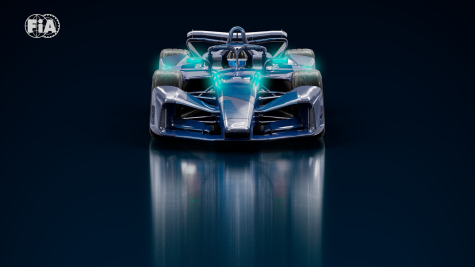
While the Formula 1 paddock continues to debate the merits of the 2026 “50/50” power split, Formula E has quietly unveiled a technical masterclass that shifts the electric racing narrative from efficiency to raw, aggressive performance. The newly released Gen4 car recently showcased in a striking Citroen Racing-inspired “track livery” represents the most significant leap in the series’ history.


It is a machine that appears to have solved the “electric paradox”: it is remarkably agile in the corners and stable on exit, even if it still faces the physical realities of aerodynamic drag on the straights.
The Grip Revolution: Permanent All-Wheel Drive
The most jarring difference between the Gen4 and its predecessors is how it handles a corner. The “agile” nature you see on track is the result of a total drivetrain overhaul. For the first time, Formula E has moved to Permanent All-Wheel Drive (AWD), utilizing both the front and rear powertrains for active propulsion.

With a staggering 600kW (800+ hp) available in Attack Mode, the Gen4 doesn’t just exit corners it launches out of them. This dual-motor setup provides a level of traction that makes the previous Gen3 cars look like they were skating on ice. To manage this new-found power and the increased weight of a 55kWh battery, the car now features power steering, allowing drivers to manipulate the larger chassis with surgical precision through tight urban chicanes.
The Straight-Line Paradox
There is a noticeable contrast in the car’s behavior: while it looks like a predator in the technical sectors, it can appear to “suffer” on the long straights. This is largely a consequence of the “Two-Mode” Aero Philosophy.

To ensure the car remains “planted” during those high-G cornering maneuvers, the Gen4 utilizes a high-downforce body kit. While this creates the suction needed to maintain high mid-corner speeds, it inherently increases aerodynamic drag. On the straights, the car is effectively fighting its own wings. Despite this, the Gen4 is still capable of hitting 335 kph (210 mph), but the sheer violence of its cornering makes the straight-line transition feel more measured by comparison.
Technical Specification Comparison
| Feature | Gen3 Evo | Gen4 (2026/27) |
| Peak Power | 350kW (470hp) | 600kW (804hp) |
| Drivetrain | RWD (Front regen only) | Permanent AWD |
| Battery Capacity | ~40kWh | 55kWh |
| Regen Capability | 600kW | 700kW |
| 0-100 kph | 1.82 Seconds | ~1.8 Seconds |
A New Visual Identity
The “track livery” used for the launch a parametric, high-contrast camouflage is more than just an aesthetic choice. It emphasizes the car’s longer, wider stance. The Gen4 is 5,540 mm long, a significant increase that gives it the “road presence” of a top-tier global racing category.
By prioritizing cornering speeds that are projected to be 10 seconds faster than Gen3 in qualifying, Formula E is no longer asking for permission to be taken seriously. The Gen4 is a definitive statement: in the world of electric racing, the era of compromise is over.