In the world of high-performance automotive development, the “racetrack” is increasingly made of pixels rather than pavement. While European legacy brands have long held the crown for simulation hardware, 2026 marks the year China’s automotive ecosystem officially disrupted the hierarchy. From the professional R&D labs of Shanghai to the “Smart Cabins” of Beijing, the Chinese approach to simulation is redefining the intersection of technical sophistication and functional luxury.
The “Zero Prototypes” Philosophy
China’s leading EV manufacturers, including BYD and XPeng, have moved toward a “Zero Prototypes” development cycle. This shift relies on massive AI-driven simulation environments that validate vehicle dynamics before a single piece of carbon fiber is molded.

- X-World Generative Modeling: XPeng has pioneered X-World, a generative “world model” that uses video diffusion to create real-time, multi-view driving environments for autonomous training.
- Massive Scale: This system simulates 30 million kilometers of real-world driving daily, allowing engineers to test edge-case scenarios that would be impossible to replicate safely on public roads.
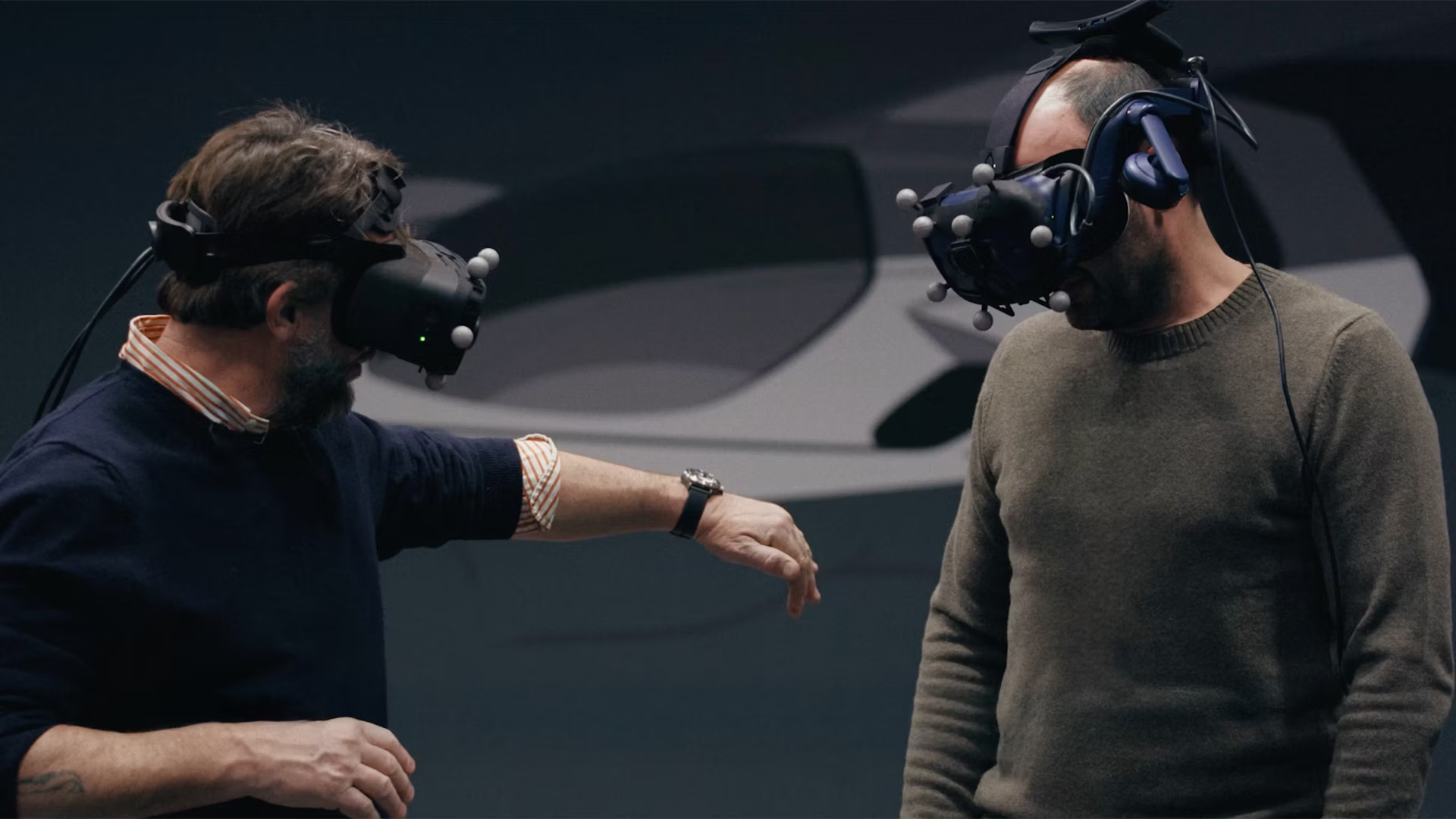
- SimCenter Shanghai: This hub functions as a Human Lab, where Driver-in-the-Loop (DiL) stations allow professional racers to fine-tune the suspension geometry of upcoming hypercars in a purely digital space.
Democratizing the Direct-Drive Revolution
For the high-end consumer, Chinese brands like Moza Racing and Simagic have effectively ended the era of “old money” gatekeeping in sim racing. By offering high-torque direct-drive (DD) systems at aggressive price points, they have made professional-grade feedback accessible to a global audience.

- Simagic Alpha EVO: The Simagic Alpha EVO Pro has become the 2026 benchmark for mid-tier enthusiasts, offering 18Nm of torque and a level of mechanical fidelity that rivals European units costing twice as much.
- Grounded Luxury: This “Pinkies Down” approach prioritizing performance and build quality over heritage branding aligns perfectly with the modern connoisseur’s demand for unpretentious technical excellence.
The “Human x Car x Home” Ecosystem
Perhaps the most unique evolution in the Chinese market is the integration of simulation technology into the vehicle itself. Brands like Xiaomi are blurring the lines between the driver’s seat and the gaming rig.
- Xiaomi SU7 Max: The Xiaomi SU7 Max Smart Cabin allows the car’s 16.1-inch 3K control screen and 56-inch HUD to act as a unified simulator hub.
- Onboard Training: For owners of the BYD Yangwang U9, the onboard DiSus-X intelligent body control system provides haptic “posture feedback” during simulated track runs, helping drivers master the car’s 1,200V platform while parked.
As we look toward 2027, the “Digital Dragon” shows no signs of slowing down. By combining NVIDIA-level GPU acceleration with a massive domestic testing ground, China is no longer just following the simulation curve it is drawing it.