The Rare Aircraft Club: The World’s Most Extraordinary Private Jets and eVTOLs
Private aviation has changed.
Once, the only way to fly privately was to own a jet or know someone who did. Today, the industry has created an entire ecosystem around access. You can buy a fraction of an aircraft, purchase a block of hours, join a private-jet membership, charter aircraft one trip at a time, or simply register with a broker and wait for an attractive empty-leg opportunity.
But alongside this expanding world of access, another category is attracting attention: rare aircraft.
These are not simply private jets designed to move passengers efficiently from one city to another. They are aircraft built around scarcity, engineering ambition and extraordinary capability.
Some are ultra-long-range business jets with private suites, dining rooms and showers.
Some are limited-production aircraft designed for a small circle of owners.
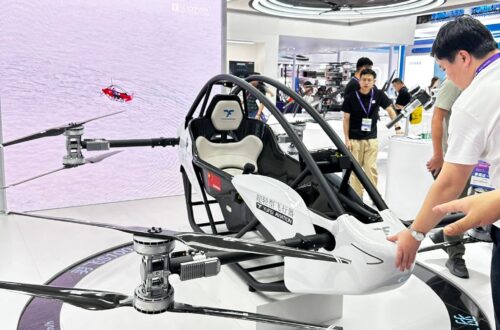
Others are electric vertical-takeoff-and-landing aircraft, or eVTOLs, promising to transform short urban journeys.
The result is a new kind of luxury traveller.
You don’t necessarily need to own the aircraft.
You just need to know which machines are changing the meaning of private flight.
And in 2026, several aircraft dominate that conversation: the Gulfstream G700, Bombardier Global 7500, Dassault Falcon 10X, Boeing Business Jet 787, HondaJet Elite II, and the emerging generation of eVTOLs from companies such as Joby Aviation, Archer Aviation and Vertical Aerospace.
But they aren’t selling the same thing.
Some offer range.
Some offer speed.
Some offer space.
Others promise a completely different form of travel, replacing runways with rooftops and airports with vertiports.
Understanding that difference is where the real value begins.
Gulfstream G700: The new long-range benchmark
The Gulfstream G700 has perhaps the strongest claim to being the benchmark in modern private aviation.
It is not the rarest aircraft in the world, but it is one of the most significant.
The G700 was designed to combine intercontinental range with an exceptionally spacious cabin, allowing passengers to travel between distant cities without sacrificing comfort.
Its cabin can be configured with multiple living areas, including a dining space, lounge, office and private suite.
The aircraft’s appeal isn’t simply its range.
It’s the way the cabin is designed around long journeys.
A private jet that can fly farther is useful.
A private jet that allows passengers to arrive rested is more valuable.
The G700 also represents the direction in which the business-jet market is moving: larger cabins, better air quality, quieter interiors and more sophisticated onboard technology.
For the traveller flying between New York, Dubai, Singapore, London or Los Angeles, the aircraft offers something close to a private residence in the sky.
It is not an aircraft chosen merely because it is fast.
It is chosen because the journey itself becomes part of the luxury experience.
Best for: travellers who want the latest generation of ultra-long-range comfort.
Bombardier Global 7500: The private jet built around distance
If the G700 represents the newest benchmark, the Bombardier Global 7500 remains one of the most impressive long-range aircraft available.
Its defining feature is endurance.
The Global 7500 was designed to connect city pairs that previously required a fuel stop, making it particularly attractive to passengers who value uninterrupted travel.
The aircraft’s cabin is divided into multiple living spaces, allowing passengers to work, dine, relax and sleep without everything happening in one room.
That distinction matters.
Many private jets are luxurious.
The Global 7500 is designed to feel genuinely residential.
It can include a full-size bed, a dedicated dining area and a separate crew rest zone, creating a sense of privacy that is difficult to replicate on smaller aircraft.
The aircraft is also notable for its ability to serve airports that are not always practical for larger commercial aircraft.
That creates a powerful combination:
long range, direct routing and access to more convenient airports.
For a traveller heading to a remote island, a secondary European city or a business destination far from a major hub, that flexibility can be more valuable than raw speed.
Best for: long-distance travellers who want maximum range and a multi-room cabin.
Dassault Falcon 10X: The rarest kind of spaciousness
The Dassault Falcon 10X is one of the most anticipated aircraft in the private-jet market because it approaches the idea of cabin space differently.
Rather than simply extending the length of the aircraft, Dassault has focused heavily on cabin width, height and flexibility.
The result is intended to feel less like a traditional business jet and more like a private apartment.
The Falcon 10X is expected to offer a cabin large enough for several distinct zones, including a bedroom, dining area and lounge.
Its design also reflects Dassault’s experience with high-performance aircraft.
The company is known for producing jets with strong runway performance and excellent handling characteristics, making the Falcon 10X particularly interesting for travellers who want both comfort and access.
The aircraft is not yet as common as established models from Gulfstream or Bombardier.
That scarcity is part of the appeal.
Owning or chartering one is not simply a matter of choosing a large private jet.
It is a statement that the passenger wants something newer, rarer and more individual.
Best for: travellers who want a wide-body private-jet experience with a distinctly European design philosophy.
Boeing Business Jet 787: When a private jet becomes a residence
The Boeing Business Jet 787 occupies an entirely different category.
It is not a conventional private jet.
It is a wide-body aircraft converted into a private flying residence.
The aircraft can offer bedrooms, bathrooms, lounges, dining rooms and even dedicated office areas, depending on the interior design.
Its range allows it to connect major cities across continents without the need for frequent stops.
But the real attraction is space.
A typical ultra-long-range business jet may offer several hundred square feet of cabin area.
A Boeing Business Jet can offer several times that amount.
This changes the experience completely.
Passengers are not simply sitting in a larger cabin.
They are moving through different rooms.
A family can sleep in one area while staff work in another. Guests can dine together, hold meetings or relax without feeling as though they are occupying the same small space for an entire day.
The aircraft is rare because the customer base is rare.
It requires an owner or charter client who values privacy, capacity and permanence above operating simplicity.
For a small group travelling together, however, the economics can become more compelling than chartering several smaller aircraft.
Best for: large families, heads of state, corporate groups and travellers who want a private residence in the sky.
HondaJet Elite II: Small aircraft, serious individuality
Not every rare aircraft needs to be enormous.
The HondaJet Elite II is interesting precisely because it offers a different interpretation of private aviation.
It is a light business jet designed for shorter journeys, smaller groups and airports that may be inaccessible to larger aircraft.
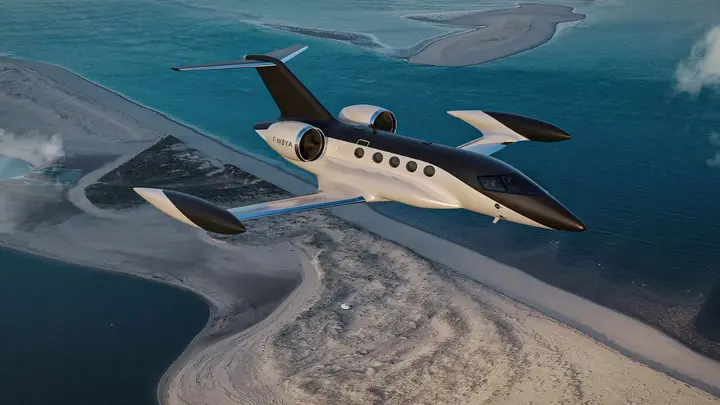
Its distinctive over-the-wing engine placement gives the aircraft an unusual appearance and contributes to its efficient design.
The cabin is compact, but it is carefully arranged.
For two or three passengers travelling between regional destinations, the HondaJet can provide a level of convenience that larger aircraft cannot always match.
It may be able to operate from smaller airports closer to the passenger’s final destination, reducing ground travel and avoiding the congestion of major hubs.
That is an important reminder.
Luxury is not always about having the largest cabin.
Sometimes it is about removing unnecessary steps from the journey.
The HondaJet is also rare in the sense that it has a strong visual identity.
It does not look like every other business jet on the ramp.
For owners who want something efficient, distinctive and relatively intimate, that matters.
Best for: short regional journeys, smaller groups and owners who value efficiency over size.
The electric aircraft revolution
The most important rare aircraft of the next decade may not be a private jet at all.
It may be an eVTOL.
Electric vertical-takeoff-and-landing aircraft are designed to take off and land vertically, potentially allowing passengers to travel between urban vertiports without using conventional runways.
The concept is simple.
A passenger could travel from a city centre to an airport, island or nearby business district without sitting in traffic.
The aircraft would operate more like a helicopter, but with electric propulsion, distributed motors and a design intended for short urban and regional journeys.
The technology is still developing.
Certification, infrastructure, battery performance and public acceptance remain significant challenges.
But the potential is enormous.
The eVTOL does not need to replace the Gulfstream G700.
It solves a different problem.
A long-range private jet moves passengers between continents.
An eVTOL could move them from Manhattan to an airport, from a city centre to a resort or from one side of a congested metropolitan area to another.
The rarest aircraft may therefore be the one that changes the first and final mile of private travel.
Joby Aviation: The quiet urban aircraft
Joby Aviation is one of the most closely watched names in the eVTOL sector.
Its aircraft is designed for short passenger journeys and uses multiple electric motors to achieve vertical takeoff and landing.
The company has focused heavily on noise reduction, which is essential if eVTOL aircraft are to operate near populated areas.
The aircraft is not designed to replace a private jet.
It is designed to complement one.
A passenger might fly commercially or privately into a major airport, then use a Joby aircraft to reach a city centre or nearby destination.
That could reduce a two-hour ground transfer to a journey of minutes.
The challenge is not simply building the aircraft.
It is creating a network of vertiports, securing regulatory approval and persuading passengers that the service is safe and reliable.
If those pieces come together, Joby could become one of the most important names in short-distance premium travel.
Best for: urban transfers and airport connections where time matters more than cabin size.
Archer Aviation: The premium air-taxi proposition
Archer Aviation is pursuing a similar vision, with an eVTOL aircraft designed for short urban and regional routes.
Its proposition is particularly relevant to premium travellers because the aircraft could provide a faster alternative to ground transportation in congested cities.
The experience would be different from a traditional private jet.
There would be no long runway, no large cabin and no expectation of crossing an ocean.
Instead, the value would come from convenience.
A passenger could leave a hotel, reach a nearby vertiport and fly directly to another part of the region.
For business travellers, that could mean attending several meetings in different cities without losing hours to traffic.
For leisure travellers, it could make remote resorts and island destinations more accessible.
The aircraft remains part of an emerging category, but its importance lies in the possibility of making vertical flight a normal part of premium transportation.
Best for: short city-to-city journeys and travellers who want to avoid road congestion.
Vertical Aerospace: The regional eVTOL vision
Vertical Aerospace is developing an eVTOL concept aimed at regional travel.
That places it somewhere between the urban air-taxi model and conventional private aviation.
The aircraft is intended to carry passengers over longer distances than a typical city transfer while still using vertical takeoff and landing.
This could be particularly valuable in regions with difficult geography.
Island chains, mountainous areas and destinations with limited airport infrastructure may benefit from aircraft that do not require a conventional runway.
The Caribbean is an obvious example.
A traveller could potentially move between islands without relying on a major commercial hub or a long boat transfer.
The technology is not yet a replacement for a private jet.
But it could become a new layer in the travel network, connecting destinations that are currently inconvenient to reach.
Best for: regional routes, island travel and destinations where runway infrastructure is limited.
The rare aircraft experience is becoming part of the journey
The biggest change in private aviation may actually have nothing to do with aircraft.
It is what happens after you land.
The industry is increasingly selling complete experiences.
Private jet.
Private island.
Villa.
Yacht.
Michelin-starred restaurant.
Helicopter transfer.
Return flight.
The aircraft becomes the first and final chapter of a much larger luxury experience.
A rare aircraft adds another layer to that proposition.
The Gulfstream G700 offers long-range comfort.
The Global 7500 offers direct access across continents.
The Boeing Business Jet offers space on a residential scale.
An eVTOL may eventually offer a faster connection between the airport and the destination.
The aircraft is no longer simply transportation.
It becomes part of the identity of the trip.
So which rare aircraft wins?
There isn’t one winner.
There is the best aircraft for your particular style of travel.
The ultra-long-range traveller
Gulfstream G700
If you want the newest generation of long-range comfort, the G700 is one of the strongest choices available.
The distance specialist
Bombardier Global 7500
If direct flights and maximum range matter most, the Global 7500 remains exceptionally compelling.
The wide-cabin enthusiast
Dassault Falcon 10X
If you want a private jet that feels more like a spacious apartment, the Falcon 10X is one of the most interesting aircraft to watch.
The large-group traveller
Boeing Business Jet 787
If you are travelling with family, colleagues or staff, a private wide-body aircraft offers a level of space that conventional business jets cannot match.
The regional minimalist
HondaJet Elite II
If your journeys are shorter and you value airport access, efficiency and individuality, the HondaJet offers a compelling alternative.
The urban innovator
Joby Aviation
If the future of travel means moving quickly between airports and city centres, Joby’s eVTOL concept may become one of the most important aircraft in the market.
The air-taxi traveller
Archer Aviation
If you want to avoid traffic and make short regional journeys more efficient, Archer’s model is designed around that need.
The island traveller
Vertical Aerospace
If eVTOL aircraft can achieve regional certification and reliable operations, they could transform travel between islands and remote destinations.
The smartest private traveller may not choose just one aircraft
This is perhaps the biggest lesson.
You don’t necessarily have to choose one aircraft.
A traveller could use a Gulfstream G700 or Global 7500 for intercontinental journeys, charter a smaller HondaJet for regional travel, and eventually use an eVTOL for the transfer between the airport and the city centre.
And then there are the journeys where none of those options make financial sense.
That’s when you book business class.
Because private aviation isn’t really about proving that you can avoid commercial airlines.
It’s about having the ability to choose.
For one journey, the right answer might be a Gulfstream.
For another, a Global 7500.
For another, a Boeing Business Jet.
For a short urban transfer, it may eventually be an electric aircraft lifting quietly from a vertiport.
And sometimes the smartest choice is simply a lie-flat business-class seat on a commercial aircraft.
At the highest level of luxury travel, the aircraft is no longer the status symbol.
Flexibility is.