There is a sacred visual vault that belongs entirely to the late-night otaku. Long before algorithms began sanitizing anime to appease broad streaming demographics, there was a class of storytelling that thrived in the shadows. These were the shows we watched with the lights completely out darker, grittier, hyper-violent, and unapologetically bold.
But this contrast between raw, unfiltered substance and modern commercialization isn’t just a phenomenon found in the horror genre. It runs all the way to the absolute peak of mainstream shonen.
If you want to understand what happens when a franchise loses its structural edge, or what made the dark corners of the late-90s and 2000s internet so exhilarating, we have to look at the masterpieces we hide—and the legendary lineages we need to restore.
The Blood-Soaked Masterclass: Hellsing and Hellsing Ultimate (OVA)
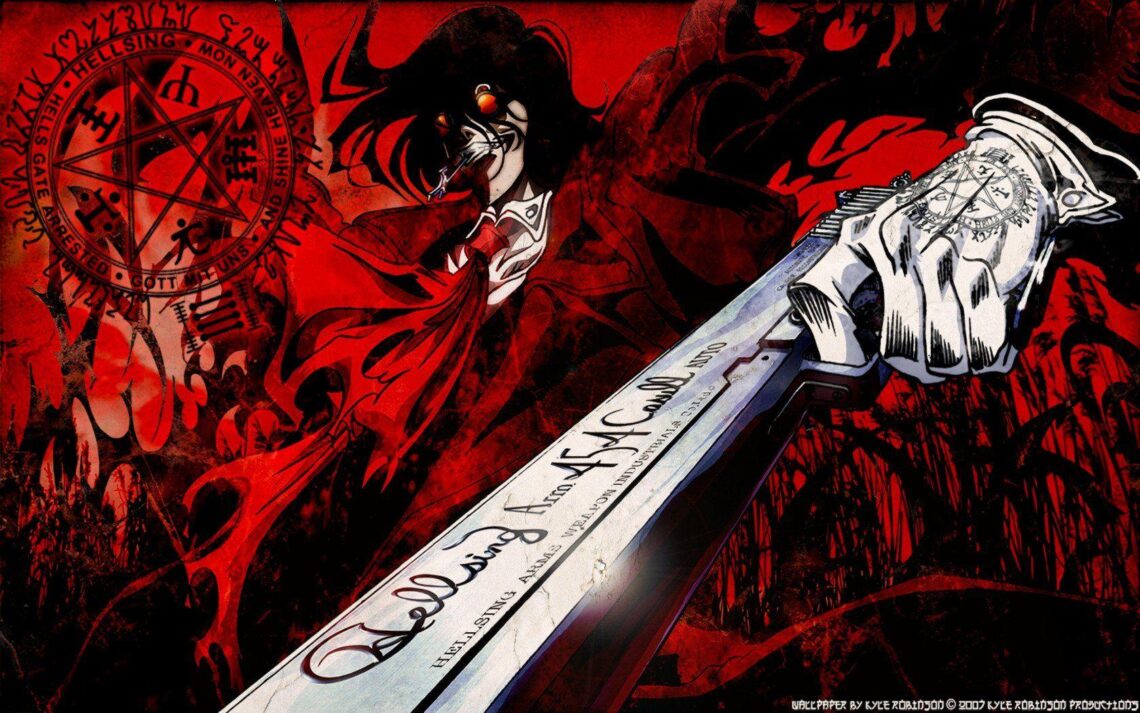
When it comes to pure, unadulterated gothic grit, nothing on the planet touches the Royal Protestant Knights of the Hellsing Organization. While the original 2001 TV series gave us a brilliant, jazz-infused atmospheric trip, it was the Hellsing Ultimate OVA series that delivered the definitive, manga-accurate masterpiece.

[ THE HELLSING HIERARCHY ]
Sir Integra Hellsing (The Unyielding Leader)
│
▼
Alucard (The Primordial Monster)
│
▼
Seras Victoria (The Awakened Protege)
The dynamic of this British family is a masterclass in subverting traditional hero structures. You have Sir Integra Hellsing, a fiercely stoic noblewoman running a shadow military operation, backed by Walter C. Dornez—a butler who looks refined but weaves razor-sharp monofilament wires through the air to cleanly slice through vampire hordes.

And then, there is Alucard.
Alucard isn’t a hero; he is a cosmic nightmare kept on a leash by the Hellsing family. Watching his relationship develop with his newly turned protege, Seras Victoria, is the beating heart of the series. Seras’s internal agony—clinging desperately to her fading human morality while Alucard forces her to embrace the absolute, blood-drenched reality of becoming a true monster of the night—creates a brilliant, terrifyingly fluid storyline.
The Body-Horror Anatomy: Parasyte -the maxim-
If Hellsing is an aristocratic bloodbath, Parasyte -the maxim- is a deeply psychological masterclass in body-horror and existential dread.
“If you have the right to live, so do we. Balance isn’t moral—it’s mechanical.”
The setup is brilliant: silent, spore-like alien parasites rain down on Earth, burrowing into human brains to take complete control of their hosts. But when a parasite fails to reach the brain of high schooler Shinichi Izumi, it gets trapped in his right hand instead.

The resulting entity, Migi, becomes the ultimate pragmatist. Parasyte succeeds because it abandons standard good-versus-evil tropes. Migi doesn’t possess human empathy; he operates purely on cold, calculated survival logic. Watching Shinichi’s human emotion slowly erode as he blends with Migi’s alien biology creates an incredibly tense, grittier atmosphere that forces you to question what actually separates humans from the monsters devouring them from the inside out.
The Great Dragon Ball Realignment: Why Modern Runs Lost Their Flair
To understand why fans constantly seek out these darker, high-substance gems, you only have to look at how the mainstream industry treats its absolute biggest titans.

Let’s look at the facts directly: Dragon Ball Super and the modern theatrical runs are undeniable global successes. The animation is polished, and the new transformations look fantastic on merchandise. But if you are searching for the real soul, grit, and structural depth of true Dragon Ball Z, you cannot start with Super. You have to trace the lineage backward.
[Dragon Ball Z / DBZ Kai] ───> [Dragon Ball GT] ───> [The Modern Shift (Super)]
(High Stakes, Raw Grit) (Creative Concepts) (Sanitized Power Scales)
To find the true essence of Akira Toriyama’s grand universe, your viewing order needs a serious realignment:
1. The Purist Foundation: Dragon Ball Z Kai
Before stepping into any modern continuation, you must experience Kai. By stripping away the excessive filler episodes of the original 90s broadcast, Kai restores the blistering, tight pacing of the Saiyan, Frieza, and Cell sagas. It reminds you of an era where battles carried genuine weight, characters suffered real physical consequences, and the fate of the universe felt terrifyingly fragile.
2. The Creative Frontier: Dragon Ball GT
Many modern viewers skip straight past Dragon Ball GT, which is an absolute crime against creative concept design. While its execution was divisive, GT possessed a raw, experimental spirit that Super completely sanitized.

- The Grand Tour Vibe: It remembered that the franchise started as an adventure, sending Goku, Pan, and Trunks across a sprawling, dangerous cosmos.
- Super Saiyan 4: Visually, Super Saiyan 4 remains an absolute masterpiece of character design. Instead of a simple palette-swap hair color change, it tapped directly into the primal, Saiyan ape mythology—incorporating red fur, fierce eyes, and a wild, uncontained aesthetic.
- The Shadow Dragons: The final arc of GT is conceptually superior to almost anything in modern shonen. It forced the characters to face the literal consequences of their own actions, turning the Dragon Balls themselves into the ultimate villains because the heroes had overused them for decades.
The Era | The Visual Direction | The Core Stake |
|---|---|---|
Dragon Ball Z / Kai | Hand-drawn, heavy shadows, visceral battle damage | Survival against overwhelming, genocidal tyrants. |
Dragon Ball GT | Moody, dark color palettes, primal transformations | Exploring the consequences of cosmic wish-granting. |
Dragon Ball Super | Bright, digital gradients, clean lines, safe aesthetics | Multiversal tournaments with zero long-term casualty risk. |
The Verdict
Whether it’s the dark, midnight corridors of the Hellsing estate, the terrifying evolutionary logic of Parasyte, or the primal, risk-heavy world of Dragon Ball GT, these series remind us of a fundamental truth: the best stories happen when creators are allowed to be daring, specific, and unapologetically raw. If you want to experience the true soul of otaku culture, turn off the mainstream neon lights, look into the shadows, and start your binge from the real foundations.