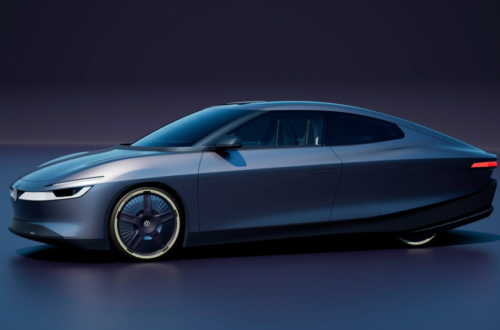
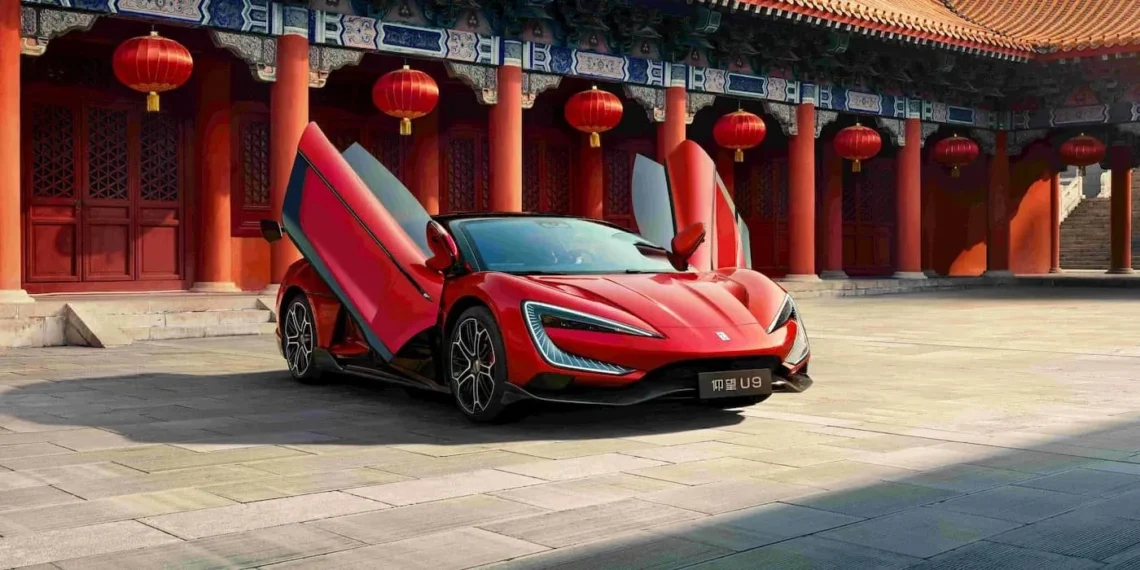
With McLaren officially embedding NVIDIA-powered Agentic AI and Rescale’s AI physics into their engineering core as of March 2026, the Yangwang U9 is officially on notice.

While the U9 from BYD’s luxury arm has dominated the “tech-heavy” conversation with its DiSus-X suspension (the “dancing” car) and quad-motor 1,300 hp setup, McLaren is now fighting back with something the U9 lacks: The Intelligence Fabric.

Here is how McLaren’s new AI stack sets up a legitimate challenge to the U9’s dominance.
1. The “Weight” Fight: AI Physics vs. Raw Power
The Yangwang U9 is a beast, but it is heavy tipping the scales at over 2,400 kg (approx. 5,300 lbs).
- The McLaren Edge: Using the new Rescale AI-physics models, McLaren is optimizing carbon fiber structures and structural dynamics in real-time.
- The Challenger: While the U9 uses raw motor torque to mask its weight, McLaren’s AI allows them to design a “perfect fit” chassis that maintains their signature lightweight DNA. In a 2026 showdown, a McLaren EV developed with this tech will likely be 500–700 kg lighter than the U9.

2. Suspension Wars: DiSus-X vs. Predictive AI
The U9’s party trick is its active suspension that can jump and drive on three wheels.
- The McLaren Edge: McLaren isn’t looking for “tricks”; they are using Agentic Engineering to simulate millions of damping scenarios per second.
- The Challenger: Using NVIDIA’s real-time performance prediction, a future McLaren can essentially “foresee” the track surface. While the U9 reacts to the road with incredible speed, the AI-engineered McLaren will have pre-calculated the optimal aero and suspension state before it even hits the corner.
3. The “Spirit” of the Machine
The biggest criticism of the U9 has been its “digital” feel it’s fast, but some say it lacks soul.

- The McLaren Edge: As CEO Nick Collins noted, this AI stack is trained exclusively on McLaren data. It isn’t learning how to drive from a generic algorithm; it’s learning from 60 years of Bruce McLaren’s heritage and F1 telemetry.
- The Challenger: This means the “AI challenger” to the U9 won’t just be a fast electric car; it will be a car that feels like a 750S or a P1, even with an electric heart.
Comparison: The Tech Battle 2026
| Feature | Yangwang U9 (BYD Tech) | McLaren AI-Challenger (NVIDIA/Rescale) |
| Philosophy | “Software Defined” / Extreme Power | “Agentic AI” / Precision Engineering |
| Suspension | DiSus-X (Hydraulic/Active) | AI-Optimized Predictive Damping |
| Development | Traditional High-Speed Prototyping | Real-Time Generative Design Exploration |
| Heritage | Modern Tech Giant | 60 Years of Racing Knowledge Graph |
The Verdict: Where the Thrill Lives
The Yangwang U9 is a marvel of Chinese electronic engineering, but McLaren’s NVIDIA-powered pivot is a move to protect the “Driver’s Car.” If the U9 is a smartphone on wheels, the McLaren AI-Challenger is a supercomputer designed to feel like a mechanical masterpiece. By the time this new McLaren hits the track (likely 2027/2028 based on these 2026 development speeds).