Business - The Lifestyle

The Core Architecture: Ferrari’s Scintillab Restructures Primary STEM Education

True engineering dominance is never a static achievement; it is a generational pipeline. In a move that shifts its corporate social responsibility from standard philanthropy to deep, structural investment, Ferrari has launched Scintillab.

Announced in Maranello on May 13, 2026, this highly targeted educational initiative aims to fundamentally restructure how Science, Technology, Engineering, and Mathematics (STEM) are introduced to Italian primary school students. Developed in a direct partnership with the Agnelli Foundation and backed by the scientific rigor of the CNR (National Research Council), Scintillab strips the abstract pretense away from early science education. It replaces rote memorization with a tactile, inquiry-based methodology designed to instill the raw scientific method from the very beginning of the academic ladder.


The Technical Architecture of the Box

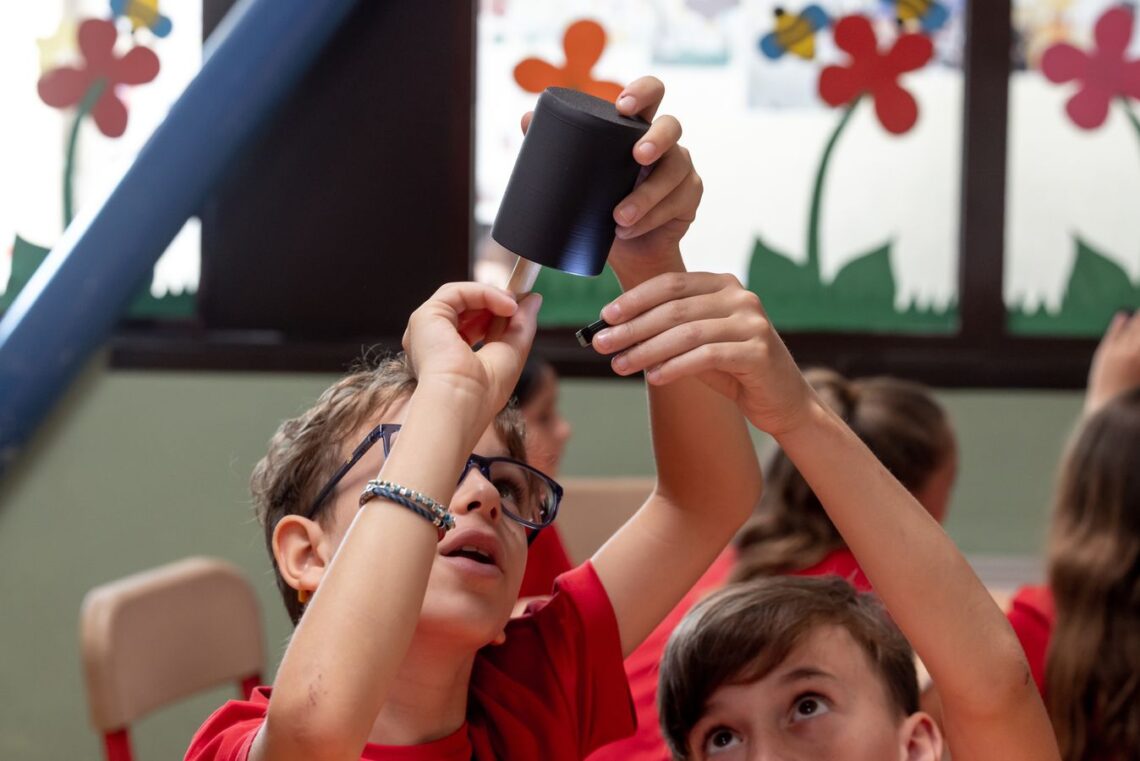
Scintillab rejects passive, digital-screen learning in favor of physical, analog problem-solving. At the center of the free program is a ready-to-use educational “laboratory in a box” delivered directly to classrooms, supplemented by rigorous in-person training for educators.

The framework breaks scientific discovery down into five core architectural pillars, forcing students to formulate hypotheses, experiment, and analyze results in real time:

  • Shadows: An exploration of optics, light propagation, and spatial geometry.
  • Balance: A foundational look at physics, load distribution, and structural equilibrium.
  • Gravity: Demystifying fundamental forces and acceleration.
  • Probability: Introduction to data, risk calculation, and statistical reasoning.
  • Scientific Investigation: A overarching methodology that teaches children how to isolate variables and verify empirical data.

By turning standard classrooms into active testing environments, the project mirrors the exact trial-and-error ethos found within Ferrari’s own experimental departments.


Scalability and Regional Footprint

The rollout strategy for Scintillab is deliberate and metrics-driven, prioritizing Italy’s regional provinces rather than just major metropolitan hubs.

The initial launch phase has already deployed across a diverse geographic grid, engaging 61 comprehensive schools, 238 teachers, and 4,700 students across the provinces of Cuneo, Savona, Modena, Parma, Ancona, and Matera.

[LAUNCH PHASE] --------> 61 Schools | 238 Teachers | 4,700 Students
       |
[2-YEAR HORIZON] ------> 300 Schools | 800 Teachers | 15,000 Students

Over the next two years, Ferrari plans to scale the operation rapidly. The target trajectory aims to expand the project’s footprint to 300 schools, 800 trained teachers, and over 15,000 students as it integrates into new territorial sectors.


The Philosophy

For Ferrari, this is not a detached marketing exercise. Embedding an engineering-first mindset into the youngest demographic is viewed as an essential preservation of the brand’s core identity.

Michele Antoniazzi, Ferrari’s Chief Human Resources Officer, anchored the project’s corporate necessity:

“Ferrari recognizes education as a pillar of its identity, deeply rooted in its history. Scintillab is one of the initiatives through which we concretely support new generations, promoting STEM subjects from primary school. These are the foundation of the scientific approach that we consider essential, first and foremost within our company, to innovate and continuously improve.”

By investing in the foundational logic of young minds, Maranello is ensuring that the analytical, high-performance discipline required to push technical boundaries remains alive well into the future.

Image Credit Ferrari

Leave a Reply

Your email address will not be published. Required fields are marked *