The story of Duke Liudolf of Swabia begging for forgiveness from his father, Holy Roman Emperor Otto I (Otto the Great), is one of the most dramatic, high-stakes family reconciliations of the Middle Ages.

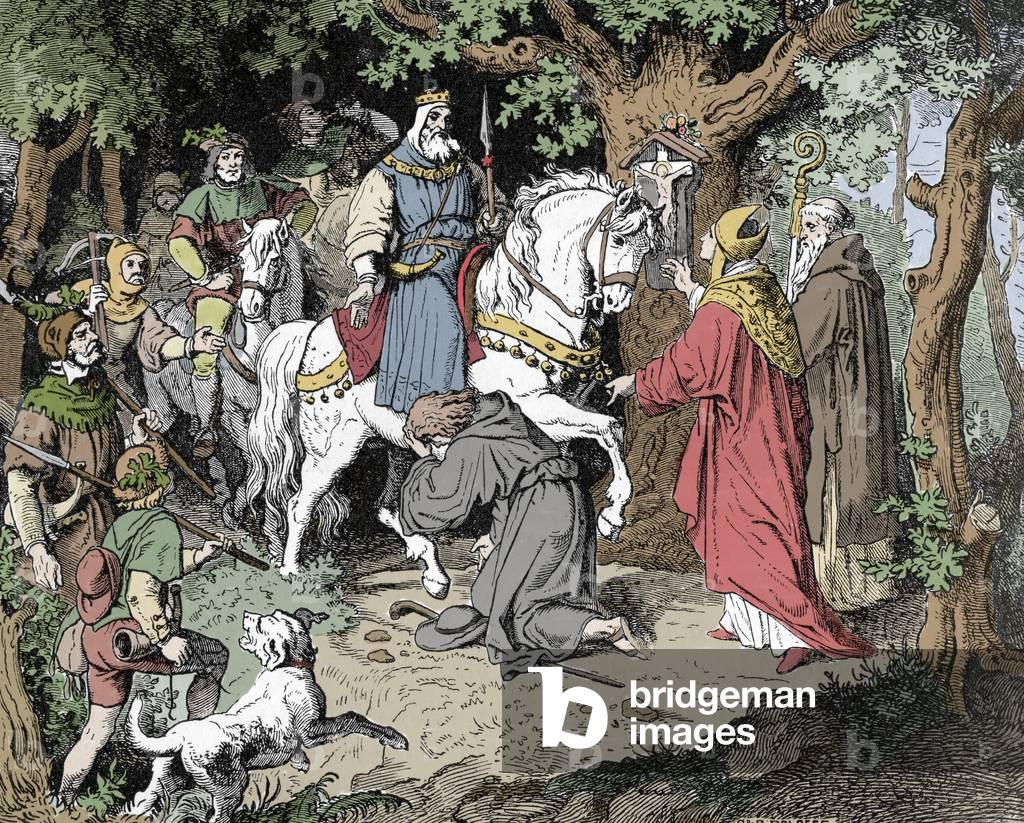
While historical archives often attribute the classic 19th-century visual renderings of this moment to “Unknown Artists” or anonymous engravers in old history textbooks, the original creative force behind the most famous version of this scene was the celebrated German Romantic painter and illustrator Adrian Ludwig Richter (1803–1884). Over time, his detailed drawing was converted into woodcuts and copper engravings, widely replicated across Europe without his signature leaving the image famously detached from its creator.
This historical moment directly followed the founding of the Stuotgarten (the horse breeding grounds that became Stuttgart) and nearly fractured the entire Holy Roman Empire.
1. The Betrayal: A Prince Displaced
By 951 AD, Liudolf was the undisputed golden child and designated heir to King Otto I. But the political dynamics shifted violently when Liudolf’s mother passed away, and Otto I remarried a powerful, wealthy Italian noblewoman named Adelaide.
[ Heir Apparent: Liudolf ] ──► Position Threatened by Otto I’s New Wife (Adelaide)
│
▼
[ The Rebellion (953 AD) ] ──► Liudolf Allies with Disgruntled German Nobles
│
▼
[ Result: Civil War Plunges Empire into Chaos ]
When Adelaide gave birth to a new son, Liudolf felt his claim to the throne slipping away. Consumed by insecurity, the young Duke did the unthinkable: in 953 AD, he forged alliances with rival dukes and raised the flag of open rebellion against his own father.
The ensuing civil war plunged the young German kingdom into absolute chaos. For over a year, father and son tore the realm apart, fighting bloody sieges across Bavaria and Swabia.
2. The Breaking Point: The Magyar Threat
The brutal stalemate broke when the Magyars (the nomadic horse archers from the East) realized the German states were completely distracted by the family feud. They launched a massive, devastating invasion across the undefended borders.

The realization of what he had done broke Liudolf. He saw that his personal ambition had opened the gates for the destruction of his homeland. Deserted by his allies and deeply remorseful, he realized his only options were absolute ruin or an agonizingly public submission.
3. The Scene: The Imperial Diet of Arnstadt (954 AD)
In December 954, Emperor Otto I convened the Imperial Diet (a grand council of nobles) at Arnstadt. Mid-session, the heavy oak doors opened, and Liudolf entered the hall entirely unannounced. He didn’t come at the head of an army; he came barefoot, wearing nothing but the simple, coarse linen tunic of a penitent sinner.
[ Imperial Diet of Arnstadt ] ───► Liudolf Enters Barefoot in Penitent Robes
[ The Act of Submission ] ───► Prostrates Himself Flat on the Floor Before Otto I
│
▼
[ The Paternal Resolution ] ──► Otto I Weeps, Lifts His Son, and Grants Forgiveness
In front of the entire assembly of shocked German nobility, the proud young Duke the founder of Stuttgart threw himself flat on the floor at his father’s feet, weeping and begging for mercy.

Historically, Otto I was known as a clinical, ruthless ruler. But faced with the complete submission of his firstborn son, the Emperor broke down in tears. He stepped down from his throne, lifted Liudolf from the floor, embraced him, and publicly granted him forgiveness.
4. The Legacy of the “Unknown” Artwork
During the 19th-century revival of romantic nationalism, historical illustrators obsessed over this specific scene because it captured an idealized blend of imperial power and Christian mercy.
[ Adrian Ludwig Richter Drawing ] ──► Converted to Wood Engravings (1880s) ──► Replicated in History Textbooks
│
▼
[ Strip Away Artist Credit ]
(Cataloged as “Unknown”)
When Adrian Ludwig Richter designed the woodcut layout, he composed the scene to highlight the extreme psychological contrast:
- The Emperor’s Domain: Otto I sits elevated, flanked by heavily armored guards and stoic bishops representing the unyielding rule of law.
- The Son’s Humility: Liudolf is positioned lower on the canvas, on his knees, his hands clasped in desperation. His hunting dog frequently sits quietly beside him, mirroring the submissive posture of its master.
Because these engravings were churned out rapidly by publishing houses to decorate monumental multi-volume books like Ward and Lock’s Illustrated History of the World (1882), the actual printmaking plates often dropped the artist’s signature line. As a result, when modern image archives, art galleries, and printmakers cataloged the piece, it was recorded under “Unknown 19th-Century Artist.”
Though Liudolf was stripped of his title as Duke of Swabia as a consequence of the rebellion, his reconciliation saved the empire. Just a year later, a unified father and son marched side-by-side to crush the Magyar army at the Battle of Lechfeld, securing the Ottonian dynasty’s place in history.