On June 18, 1995, a privateer British team wrote one of the most remarkable chapters in endurance racing history. Entering the 24 Hours of Le Mans for the very first time, Lanzante—operating under the banner of Kokusai Kaihatsu Racing—steered the #59 McLaren F1 GTR across the finish line to take outright victory.
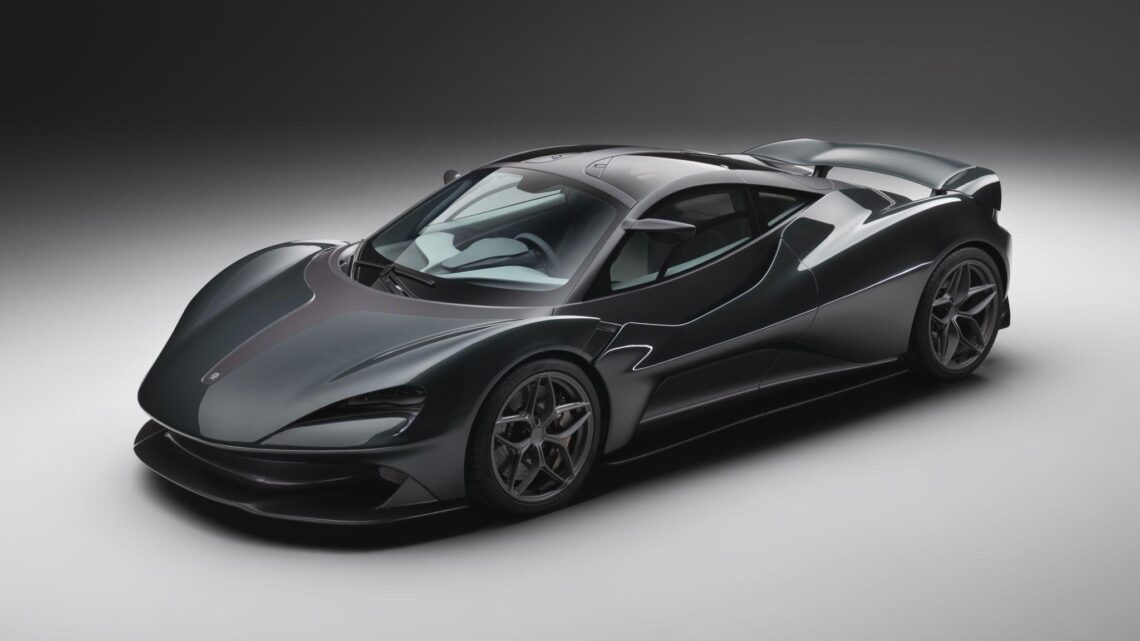
Exactly three decades later, Lanzante honored that iconic moment with the Lanzante 95-59: a bespoke, coachbuilt, driver-centric hypercar that blends 30 years of race-bred heritage with modern road-going usability.
The Roots of Lanzante
To understand the 95-59, you have to understand the heritage behind the badge:
- Conception & Early Days: Founded in Petersfield, England by Paul Lanzante, the company initially established itself as an elite engineering and restoration specialist for historic motorsport.
- The Racing Era: In 1993, Paul’s son, Dean Lanzante, joined the business and pushed the company into modern GT racing. By 1995, McLaren entrusted Lanzante to run their F1 GTR chassis at Le Mans with drivers JJ Lehto, Masanori Sekiya, and Yannick Dalmas.
- The Legacy: Following their shock Le Mans triumph, Lanzante evolved into the premiere global hub for servicing, maintaining, and converting hypercars—most notably turning track-only legends like the McLaren P1 GTR and Pagani Zonda Revolución into fully road-legal monsters.

The Visionaries Behind Project 95-59
The name 95-59 directly decodes its lineage: 95 for the historic year of victory, and 59 for the winning car’s race number.
- Dean Lanzante: Spearheaded the project to synthesize everything the company has learned over three decades into a single, cohesive driver’s car.
- Paul Howse (Chief Designer): The former McLaren designer behind the McLaren P1 and P1 Spider. His connection runs even deeper—his father helped build the original McLaren F1s.
- Kenny Bräck: The Indy 500 winner and former McLaren test driver led the dynamic development and track testing.
Technical Specifications & Performance
Rather than creating a retro reproduction, Lanzante engineered the 95-59 as a forward-looking supercar built around a re-engineered McLaren carbon fibre monocoque. The engine bay opts for pure internal combustion—deliberately bypassing heavy hybrid systems in favor of raw engagement.
Parameter | Specification |
|---|---|
Engine | 4.0-liter Twin-Turbo V8 (Pure ICE) |
Output | 850+ bhp / 880 Nm (649 lb-ft) of torque |
Transmission | 7-Speed SSG (Dual-Clutch) |
Layout | Central Driving Position + 2 Flanking Passenger Seats |
Target Weight | 1,250 kg (~2,755 lbs) |
Power-to-Weight | ~700 bhp per ton |
Exterior Finish | Full Carbon Fibre in Ueno Grey (matching the 1995 winner) |
Aerodynamics | Active floating rear wing & full carbon ground-effects |
Production Run | Strictly limited to 59 units worldwide |
Base Price | ~£1.02 Million (~$1.3M USD) |
The Optional LM30 Track Package: Drops an extra 20 kg using Inconel exhaust headers, titanium secondary tailpipes and body fixings, ultra-light forged wheels, and gold-foil engine bay heat shielding.

Design and Interior Concept
Unlike typical two-seater supercars, the 95-59 features a central driver layout flanked by two outer passenger seats integrated directly into the carbon monocoque—a direct nod to the iconic McLaren F1.
Despite its aggressive proportions, the 95-59 was engineered with long-distance usability in mind, featuring enlarged fuel storage, clever cabin ergonomics, and dedicated luggage space. It stands as a pure distillation of Lanzante’s 30-year journey from a small British workshop to hypercar royalty.