
There is a specific kind of desperation that doesn’t come from an empty stomach, but from an empty future. It’s the quiet, suffocating realization that if you don’t claw your way out of where you are, you will simply fade into the background of your own life.
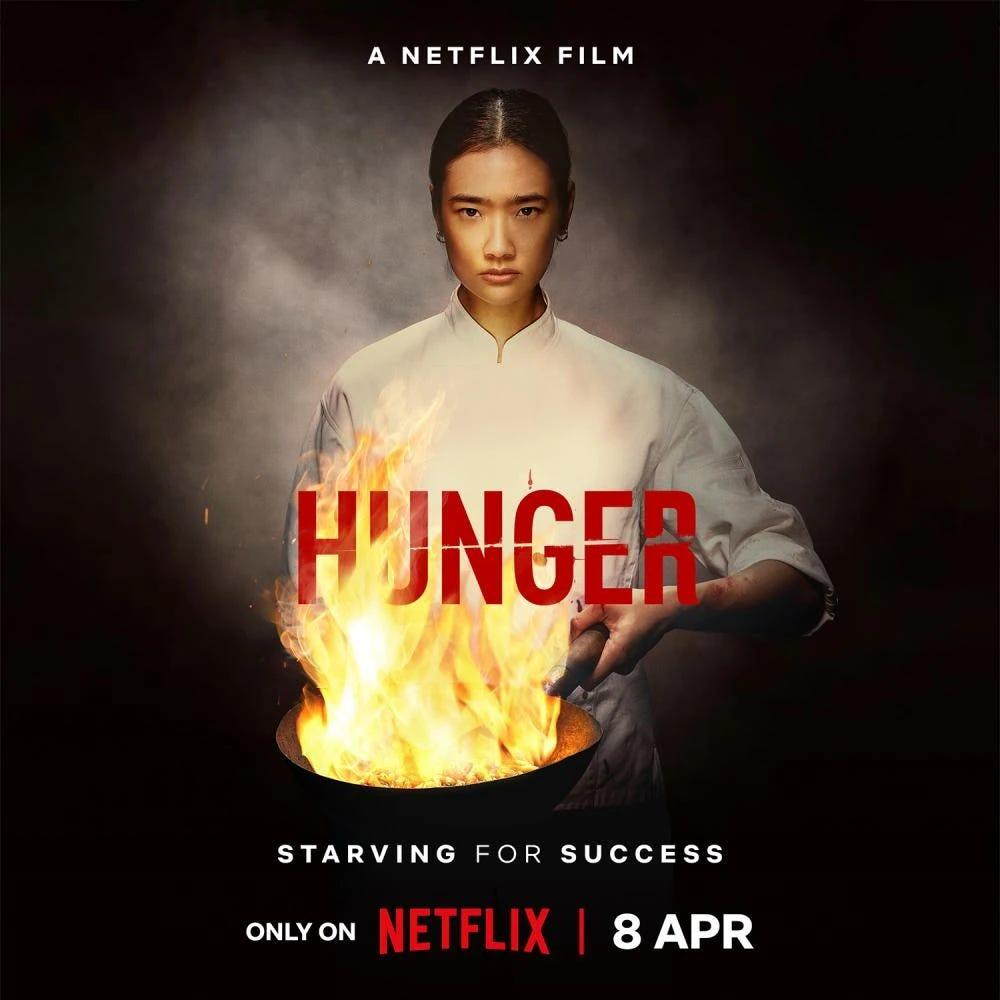
Sitisiri Mongkolsiri’s Thai psychological drama Hunger (streaming on Netflix) takes that precise angst and sets it ablaze over a high-heat wok.

If you’ve stumbled across that audition clip—the one where Aoy (Chutimon Chuengcharoensukying) stands in a cold, clinical luxury kitchen and secures her place on Team Hunger using nothing more than leftover rice, eggs, and a roaring flame—you’ve already glimpsed the beating heart of the entire film.
The Ego of Wanting to Be Special
What makes that audition scene so magnetic isn’t just the culinary technique; it’s the quiet collision of courage, confusion, and raw ambition.

Aoy comes from a world of soot, steam, and repetition, frying street-side noodles at her family’s small shop. She doesn’t have a diploma from a European culinary institute, nor does she possess the polished arrogance of her competition—a classically trained chef who scoffs at being asked to make something as mundane as fried rice.
When Chef Paul (Nopachai Chaiyanam), the tyrannical high priest of Bangkok’s fine-dining elite, commands them to cook, the contrast is stark:
- The Competitor: Relies on expensive ingredients, technical pretension, and fresh rice, assuming complexity equals greatness.
- Aoy: Reaches for day-old cold rice, cranks the burner to maximum heat, and lets muscle memory and instinct take over.
There is an incredible audacity in that moment. To step out of obscurity, look a tyrant in the eye, and implicitly say through a plate of fried rice: “I am better than what this place thinks I am. I deserve to be seen.” It’s the birth of ego—not as a flaw, but as a survival mechanism for those who start with nothing.
What Drives the Story: Class, Clout, and Consumption
Hunger isn’t really a movie about food. Food is merely the currency.
The film digs into the deep socio-economic divide between those who eat to fill their bellies and those who eat to prove they are superior to everyone else. Chef Paul doesn’t sell flavor; he sells status to politicians, millionaires, and influencers who devour his grotesque, blood-red sauces like starved predators.
As Aoy gets sucked deeper into Paul’s orbit, she learns that climbing the ladder requires stepping on others, burning away your empathy, and replacing your love for the craft with a ruthless desire to dominate.
The Verdict: Is It Still Worth the Watch?
If you are drawn to stories about outsiders, toxic mentorships, and the intoxicating, terrifying high of trying to make something of yourself, Hunger delivers on every front.
Why You Should Dive In:
- Chutimon Chuengcharoensukying’s Performance: She grounds the film with an intense, vulnerable, and fiercely believable performance. You feel every burn mark on her arms and every drop of sweat on her forehead.
- Visceral Sound & Cinematography: The sizzle of oil, the clanging of iron woks, and the theatrical presentation of high-end dining are shot with thrilling, almost anxiety-inducing precision.
- A Sharper Edge Than ‘The Menu’: While often compared to Hollywood’s The Menu, Hunger leans far heavier into the tragic cost of social mobility and the emotional weight of turning your passion into a weapon.
It’s a story for anyone who has ever felt invisible, anyone who has ever wanted more than what was handed to them, and anyone brave enough to admit out loud that they want to be special.