While modern travelers often associate Belgium primarily with waffles and chocolate, the true “old world” taste of the region lies in medieval pastries. The most prestigious of these is the Geraardsbergse Mattentaart, which holds the distinction of being the first Belgian regional product to receive protected status from the European Union.
The Top Contenders for “Oldest”
| Dessert | Origin Era | Significance |
|---|---|---|
| Geraardsbergse Mattentaart | Middle Ages | The oldest known recipe appears in the first Dutch-language cookbook (1514). |
| Waffles | 13th Century | Evolved from Greek obleios; first recorded recipe in the late 14th century. |
| Lierse Vlaaike | 18th Century | A spicy pastry from Antwerp with over 300 years of history. |
| Speculoos | 17th Century | Began as Klaaskoeken (Saint Nicholas cakes) in the Middle Ages. |
1. Geraardsbergse Mattentaart (The “1514” Pie)
This small puff pastry pie features a tender curd-cheese filling known as mattenbrij. It is widely considered the most authentic link to Renaissance-era Belgian baking.


- The Recipe: The oldest written evidence is found in Thomas van der Noot’s 1514 cookbook, Een Notabel Boecxken van Cokeryen.
- Art History: It was famously depicted in the 1567 painting The Peasant Wedding by Pieter Bruegel the Elder.
- Authenticity: By European law, it can only be called a “mattentaart” if it is produced in Geraardsbergen or Lierde using local dairy products.
2. Global & Regional Inspirations
The culinary techniques found in the earliest Dutch-language cookbooks did not just stay in Flanders; they inspired several other world-famous treats:
- The South African Melktert: Culinary historians trace the roots of the South African Melktert (Milk Tart) directly back to the Dutch/Flemish tradition of curd-based pies like the Mattentaart. While the Mattentaart uses curds and puff pastry, the Melktert evolved into a lighter, cinnamon-dusted custard tart brought to the Cape by Dutch settlers in the 17th century.


- Geutelingen: An “Old Dutch” relative of the pancake found in the Flemish Ardennes. Unlike a flat pancake, it is a thick, airy “poured cake” baked on hot clay tiles, representing the medieval transition from simple porridges to structured baked goods.


- The Evolution of the “Brussels” Waffle: While the Liège waffle is a medieval monastery creation, the airy Brussels version was inspired by the batter waffles of the 18th-century Low Countries, later refined by Ghent bakers into the light, rectangular icon we know today.


3. Belgian Waffles (Ancient Evolution)
The waffle predates the existence of Belgium as a unified country, evolving significantly over centuries.
- Liège Waffle: Legend says it was invented in the mid-17th century by the chef to the Prince-Bishop of Liège, featuring pearls of sugar that caramelize when baked.


- Brussels Waffle: This lighter, rectangular version gained widespread popularity much later, around 1864, and became a global icon at the 1964 World’s Fair.
4. Belgian Chocolate (The “Modern” Legend)
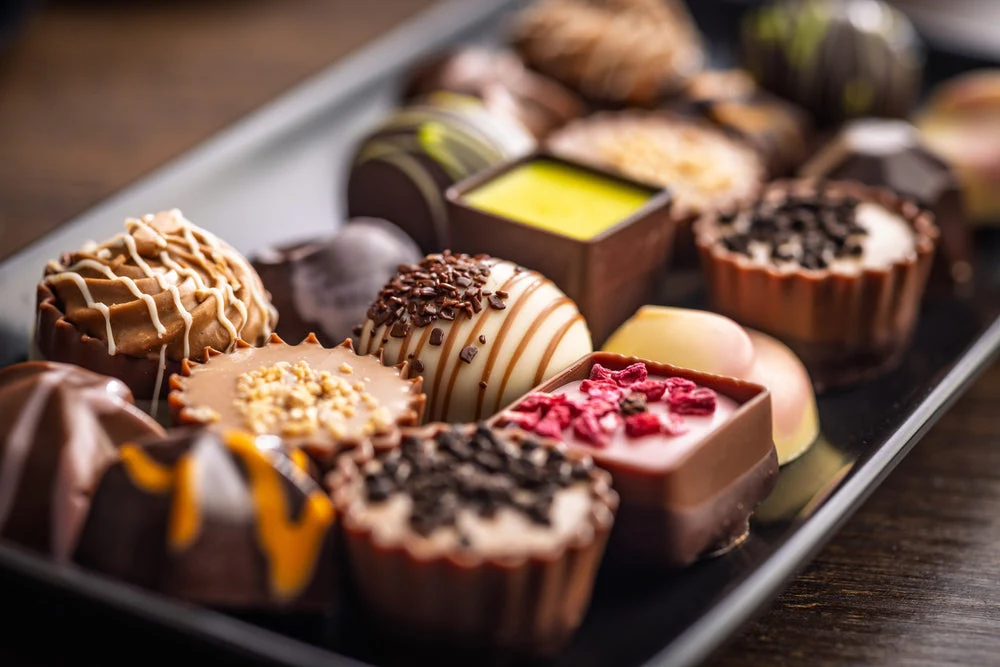
While cocoa arrived in the 17th century via the port of Antwerp, the “Belgian Chocolate” industry as a world-renowned standard is relatively young compared to the country’s ancient pastries.
- The Praline: The famous filled chocolate was invented as recently as 1912 by Jean Neuhaus.


- Legacy: Despite its “younger” status, the strict regulation of cocoa content and grinding techniques has made it a global benchmark for quality.