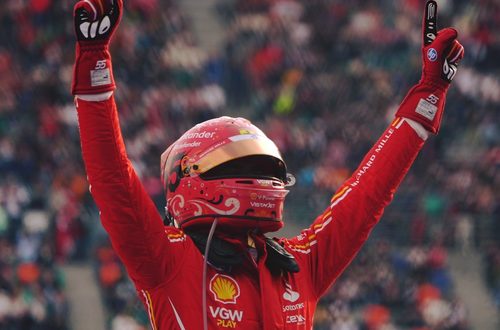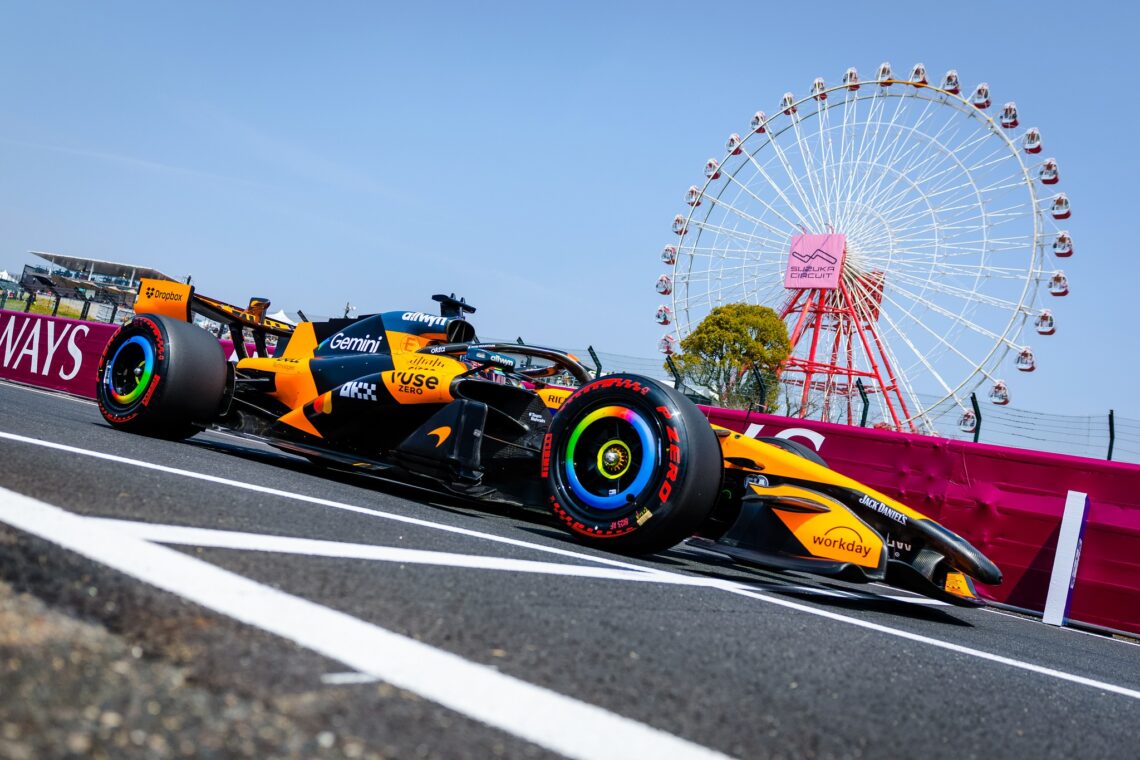
When you turn on the television today, Formula 1 looks like a slick, multi-billion-dollar traveling show. We see Lando Norris wheel-to-wheel with Max Verstappen, Lewis Hamilton making historical moves, and Fernando Alonso defying time itself.
It’s easy to believe that the soul of the sport resides entirely on the tarmac. But Formula 1 has never been just a racing series. It is a, high-stakes political chess game wrapped in a carbon-fiber shell a sport where multi-national corporations, governing bodies, and brilliant, ruthless minds spend just as much energy fighting in boardrooms and courtrooms as they do in the pit lane.
If you peel back the layers to the era between 2001 and 2005, you don’t just find a period of engine roars and grid girls; you find an era defined by war, corporate mutiny, and two drivers whose contrasting journeys encapsulated the chaos of early 2000s Formula 1: Juan Pablo Montoya and Kimi Räikkönen.
The Backdrop: Max Mosley, Bernie Ecclestone, and the Threat of Civil War
To understand 2001–2005, you first have to understand the dynamic off the track.
Formula 1 was ruled with an iron fist by two men: Bernie Ecclestone, who controlled the commercial cash machine, and Max Mosley, the iron-willed President of the FIA (the governing body).
During this era, major car manufacturers—BMW, Mercedes-Benz, Renault, Toyota, and Honda—poured hundreds of millions of dollars into F1. But they grew furious. They felt Ecclestone was taking too large a slice of the TV revenue cake, while Mosley was changing technical regulations on a whim to break Ferrari and Michael Schumacher’s absolute dominance.
By 2002, the manufacturers formed the GPWC (Grand Prix World Championship)—a rebel group threatening to pull out of F1 entirely and form a breakaway series. Lawsuits were threatened, teams were accused of cheating with “flexi-wings” and illegal engine mapping, and tire wars raged between Michelin and Bridgestone.
Against this backdrop of corporate espionage, political threats, and technical mudslinging, two young drivers were thrust into the crossfire to challenge the undisputed king of the grid: Michael Schumacher.
Enter Juan Pablo Montoya: The Maverick Who Refused to Bow
When Colombia’s Juan Pablo Montoya arrived at Williams-BMW in 2001, he didn’t care about corporate diplomacy or the unwritten hierarchy of F1. Fresh off winning the CART championship and the Indianapolis 500 in America, Montoya brought a street-fighter aggression that Formula 1 hadn’t seen since Ayrton Senna.
In only his third race—the 2001 Brazilian Grand Prix—Montoya made his statement. Following a Safety Car restart, he lunged down the inside of Michael Schumacher into Turn 1, banging wheels and forcing the legendary champion wide. It sent shockwaves through the paddock. Schumacher wasn’t used to being treated with such blatant disrespect.
The Tussle with Williams and BMW
Montoya’s raw pace was undeniable, but his story between 2001 and 2005 is a tragedy of corporate friction.
Williams was an old-school, independent racing team led by the pragmatic Sir Frank Williams and Patrick Head. Their engine partner, German auto giant BMW, wanted corporate polished perfection and immediate championship results. Montoya sat squarely in the middle of their crumbling marriage.
- 2003 Title Heartbreak: In 2003, Montoya was in a blistering multi-way fight for the World Championship against Schumacher and Kimi Räikkönen. But at the French Grand Prix, internal team politics erupted when Williams prioritized his teammate, Ralf Schumacher, during pit stops. Montoya exploded over the team radio.
- The Michelin Tire Saga: Right as Montoya hit his peak, Ferrari and Bridgestone lobbied the FIA, arguing that Michelin’s front tires widened illegally when worn. Mosley changed the enforcement rules overnight right before the Italian Grand Prix, hamstringing Montoya’s title push and handing the advantage back to Schumacher.
Furious with Williams’ corporate infighting and felt unappreciated, Montoya secretly signed a deal to jump ship to McLaren-Mercedes for 2005 before the 2004 season even began—setting off a firestorm of driver-market lawsuits.
Kimi Räikkönen: The Iceman Against the Machine
While Montoya fought with passion, Kimi Räikkönen fought with total detachment.
When Sauber signed the 21-year-old Finn in 2001, it triggered an immediate political scandal inside the FIA. Mosley initially refused to issue Räikkönen a superlicense, arguing Kimi was dangerously inexperienced, having competed in just 23 junior car races. Red Bull founder Dietrich Mateschitz (then a major shareholder at Sauber) was so incensed when Sauber picked Räikkönen over his favored driver that he eventually pulled his backing to launch his own team.
Räikkönen silenced everyone by scoring points on his debut in Australia. By 2002, McLaren boss Ron Dennis—a perfectionist famous for strict corporate control—spotted Kimi’s prodigal talent and signed him to replace the retiring Mika Häkkinen.
The Fastest Car That Couldn’t Finish
The 2003 and 2005 seasons showcased both the genius of Räikkönen and the dark, fragile side of top-tier F1 engineering.
In 2003, driving a year-old chassis because McLaren’s radical revolutionary car (the MP4-18) was so unstable it failed FIA crash tests and caught fire in testing, Kimi almost won the World Championship through sheer, unyielding consistency, taking the fight to Schumacher until the final race in Japan.
By 2005, Kimi was universally recognized as the fastest man on the planet. His McLaren MP4-20 was an aerodynamic masterpiece, but Mercedes’ V10 engines were built on the absolute limit of technical legality and endurance.
While Fernando Alonso capitalized on a reliable, well-drilled Renault team, Räikkönen watched potential victories vanish in plumes of white Mercedes engine smoke while leading comfortably in Imola, Hockenheim, and Monza.
Kimi didn’t care for the sponsor dinners, the media parades, or the boardroom battles. His response to mechanical failure was to simply walk off the track, board his yacht in Monaco, and let the engineers battle the executives behind closed doors.
The Legacy of the 2001–2005 Era
By the end of 2005, the landscape of Formula 1 changed forever:
- The End of the V10 Era: The roaring, screaming 3.0-liter V10 engines—generating over 900 horsepower at 19,000 RPM—were forcibly retired by the FIA in favor of regulated V8s to cut costs.
- The Collapse of the Rebel Group: Bernie Ecclestone successfully fractured the GPWC breakaway threat by quietly offering Ferrari a massive, secret financial bonus (the “historical legacy payment”) to stay in F1, ruining the manufacturers’ united front.
- Driver Burnout: Juan Pablo Montoya grew so tired of F1’s corporate restrictions and endless political games that he walked away from McLaren mid-season in 2006 to head to NASCAR. Meanwhile, Räikkönen would go on to win the 2007 World Championship for Ferrari—the ultimate irony for a driver the FIA once tried to ban.
The next time you watch a modern Grand Prix during a summer break and hear about budget caps, team principal radio debates, or legal appeals over wing flex, remember that this isn’t a modern phenomenon. Formula 1 has always been a theater of war—where the driving on Sunday is merely the final act of a week-long battle fought in the shadows.