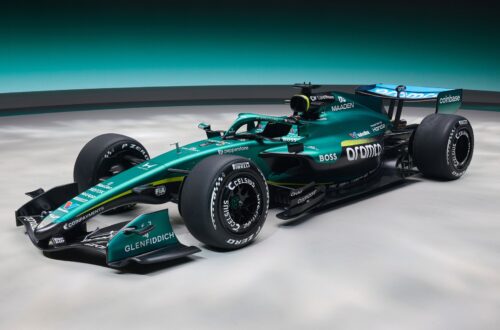
The dawn of Formula 1’s current regulatory cycle has triggered the most radical engineering and sporting reset in a generation. Driven by a desire for tighter competition, sustainability, and road relevance, the governing body has entirely dismantled the architectural blueprints of the previous era.
The adjustments don’t just change how the cars look—they fundamentally rewrite how teams approach race weekends, energy management, and mid-season development. Here is a definitive breakdown of how things were, how they are now, and what these changes mean for the grid, including a deep dive into the paddock’s most talked-about technical equalizer: the ADUO system.
1. Power Units & Energy Management
The heart of the regulatory shift lies beneath the engine cover. The sport has moved away from the complex engineering excesses of the past decade toward a highly disciplined, electrified future.
How It Was
The previous power units featured an intricate dual-hybrid layout: the MGU-K (harvesting kinetic energy under braking) and the MGU-H (harvesting heat energy from exhaust gases). The MGU-H was a marvel of engineering, but it was astronomically expensive, incredibly complex, and had virtually zero relevance to everyday road car development. Electrical output was heavily capped, meaning the Internal Combustion Engine (ICE) still did the vast majority of the heavy lifting.
How It Is Now
The MGU-H has been entirely deleted. The engine remains a 1.6-liter turbocharged V6, but the hybrid reliance has shifted to a 50:50 power split. The electric output has skyrocketed to 350kW (roughly 470 horsepower), matching the output of the internal combustion side. Additionally, cars now run on 100% fully sustainable synthetic fuels.
The Benefits to Teams
- Lower Entry Barriers: Removing the MGU-H slashed development costs and complexity, successfully enticing world-class giants like Audi and Ford into the sport.
- Extreme Strategic Nuance: Because teams no longer have an MGU-H to constantly feed energy back into the battery via the turbo, managing the state of charge is a relentless challenge. Drivers can no longer run flat-out every lap; they must deliberately harvest, lift-and-coast, and play a game of tactical “yo-yo” positioning to bank energy for a lethal attack.
2. Aerodynamics: Active Aero vs. DRS
How It Was
Aerodynamics were inherently static. The only mobile element on the car was the Drag Reduction System (DRS), which allowed a chasing car within one second at a designated detection point to flip open a rear wing flap on specific straights to drop drag and complete a pass.
How It Is Now
Static wings are gone, replaced by Active Aerodynamics. Both the front and rear wings feature active, moving flaps that switch between two primary driver-controlled states across the entire lap:
- Z-Mode (High Downforce): Flaps are closed to maximize cornering grip.
- X-Mode (Low Drag): Flaps open on the straights to slash drag and maximize top-end speed.
Crucially, X-Mode is available to every driver on the grid, regardless of the gap to the car ahead.
The Benefits to Teams
Instead of relying on the air flowing over the car ahead to create a passing opportunity, teams now have complete aero-control to manage drag down the straights. It eliminates the old penalty of “dirty air” destroying front tires in high-speed sectors, allowing cars to follow closely through twisty complexes before activating X-Mode on the straightaways.
3. The 1-Second Window: Overtake Mode
Because active aero is now a universal tool, the traditional DRS overtaking aid had to evolve into something purely digital.
How It Was
Getting within one second of the car ahead gave you a physical, aerodynamic drag drop via the rear wing.
How It Is Now
Being within one second at the detection point now unlocks a legal electrical override for the following lap, known as Overtake Mode. The standard regulations dictate that electrical deployment automatically tapers off after a car hits 290 km/h to save the battery. Triggering Overtake Mode hands the driver an extra 0.5 Megajoules (MJ) of energy allocation, allowing them to push 350kW of full electrical deployment all the way up to 337 km/h.
The Benefits to Teams
As seen in recent wheel-to-wheel battles, this provides massive strategic flexibility. Drivers can use the extra 0.5 MJ to blow past a rival on a straight, or they can use that higher legal allowance to back off, lift-and-coast, and aggressively harvest energy (“super clipping”) behind a car without losing ground. It turns the one-second window into a resource management tool rather than just a pass button.
The ADUO System: F1’s New Development Equalizer
Perhaps the most sophisticated—and intensely debated—addition to the 2026 sporting and technical regulations is ADUO, which stands for Additional Development and Upgrade Opportunities.
How It Was (The Old Homologation Era)
When F1 introduced the original turbo-hybrids in 2014, engine development was locked down via a rigid “token system” and strict homologation windows. If a manufacturer missed the mark out of the gate (like Honda or Renault did initially), they were structurally locked into an uncompetitive deficit for years. The only way to bypass the freeze was to prove a reliability issue to the FIA.
How It Is Now (The ADUO Framework)
ADUO is an explicit mechanism designed to prevent a repeat of a manufacturer running away with a prolonged engine monopoly. It is not a Balance of Performance (BoP) system—the FIA doesn’t artificially slow down the fastest car with ballast or fuel-flow restrictions. Instead, it is a data-driven cost cap relief and development framework.
The FIA divides the season into specific quarterly monitoring windows (e.g., Rounds 1–6, 7–12, 13–18). Using a highly precise ICE Performance Index—which measures raw internal combustion output using input shaft torque, engine speed, and MGU-K power—the FIA determines where each manufacturer sits relative to the benchmark engine.
If an engine manufacturer drops 2% or more behind the top-performing ICE, the ADUO system kicks in:
| Performance Deficit | Extra Upgrades Allowed | Cost Cap Relief Allowance |
| 2% to <4% behind | +1 upgrade this season, +1 next season | Up to $3.0 Million USD |
| 4% to <6% behind | +2 upgrades this season, +2 next season | Up to $4.65 Million USD |
| 6% to <8% behind | +2 upgrades this season, +2 next season | Up to $6.35 Million USD |
This financial relief represents a downward adjustment to their power unit cost cap spending, essentially allowing underperforming garages extra financial headroom and dyno hours to fix their deficits outside the constraints of the standard budget limit.
The Benefits to Teams and Manufacturers
- Protects the Grid from Monopolies: If an engine supplier miscalculates their initial V6 architecture, they aren’t doomed to five years of backmarker status. ADUO gives them a heavily structured, legal path to fight their way back to parity.
- Preserves Meritocracy: Because the relief is strictly financial and developmental, a lagging manufacturer still has to do the hard engineering work to design, test, and manufacture a better engine block to win. The fastest team is never punished for doing a superior job; the trailing teams are simply given the resources to catch up.