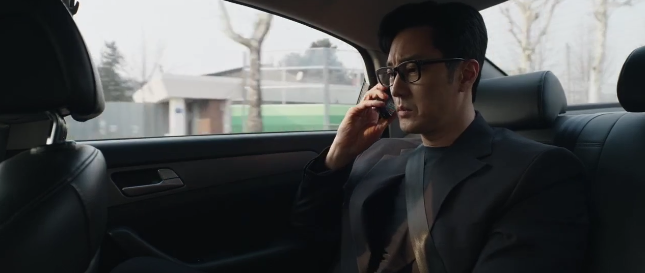
As we step into Episode 3, the live-action adaptation is making a bold, definitive statement: it is not interested in being a panel-by-panel carbon copy of the manhwa. While the source material built its massive following on the relentless momentum of “the hunt,” the television adaptation is choosing to slow down and probe the quiet spaces between the action.
Nowhere is this more evident than in the evolving, grounded relationship between Kim and Min-ji.

The Single Father Reality
To be honest, watching the live-action setup for this father-daughter dynamic early on raised a few eyebrows. In the manhwa, you acknowledge the history, but the sheer velocity of the plot doesn’t let you sit with it. It’s hard to picture the lethal, mythic operative picking up a toddler Min-ji from preschool.
Yet, Episode 3 opens by stripping away the mythos to give us a sequence that is brilliantly mundane. We see a typical single father just being a father. It’s a deliberate choice by the writers to ground Kim before the storm. By forcing us to watch the everyday routine, the narrative breathes a profound layer of depth into their bond that the comic never quite captured.
Streamlining the Threat: A One-Man Army
For the lore purists, the narrative trajectory might raise a few questions. If memory serves, the manhwa establishes early on that the North sent an entire specialized team trained by Number 66 specifically to recapture Kim or put him down permanently. The series writers seem to have ditched that multi-layered threat in favor of a more streamlined, “one-man army” approach.

While some might miss the broader geopolitical shadow of that elite unit, tightening the focus keeps the immediate emotional stakes front and center. It trades sprawling lore for concentrated momentum.
High Stakes and Stuck Knives
Then there is the Chairman’s bodyguard. Seeing him finally flex his capabilities in this episode was an absolute highlight, setting a phenomenal baseline for the close-quarters showdowns guaranteed to come. The choreography is sharp, heavy, and carries a visceral weight.
Where the adaptation takes a risk is its tonal balancing act. Injecting broad comedy into a gritty military-thriller framework can be jarring, but you can’t deny the dark humor of seeing a knife nonchalantly vibrating out of a wall mid-scene. Less successful, however, is the pace of the investigation. The detective work feels noticeably rushed compared to the meticulous, step-by-step uncovering in the manhwa.
Despite the hurried buildup, the payoff lands. The tense, multi-sided standoff between the SMD, Kim, and Sung-hoo delivered exactly the kind of tactical friction the series needs.
What’s Missing in Transition
Still, as the episode flows, it’s hard to shake the feeling that something is occasionally missing. Certain sequences connect beautifully, while others briefly lapse into looking like “just another action show.”
A perfect example is Sung-hoo facing down the delinquents. In the manhwa, half the joy of those encounters is the internal monologue—the absolute, psychological terror and “freaking out” happening in the back of the thugs’ minds when they realize who they’re dealing with. On screen, without that internal perspective, a bit of that unique flavour is lost.
The Ultimate Comfort
But the episode finds its redemption in its quietest character beat. After the grueling process of tracking down Min-ji’s phone and discovering the brutal reality of how it got there, Kim’s reaction isn’t just rage—it’s a heartbreaking moment of paternal comfort.
His primary takeaway isn’t the danger; it’s the realization that when the world collapsed around her, Min-ji called him. Not a friend, not classmates, but her father alone.
It highlights the beautiful irony of the adaptation’s structure: the further Kim descends into the dark underbelly of his daughter’s disappearance, the more he is actually getting to know the young woman Min-ji has become. The manhwa gave us a flawless predator on a trajectory of violence; the show is giving us a father reconstructing his relationship with his daughter through the clues she left behind. It’s a different beast, but an undeniably richer one.
How does this direction feel for the column? If you want to lean heavier into comparing specific fight choreography choices between the two mediums, let me know!