Swiss Cheese and Asphalt Academies: How BMW’s “Unofficial” Baby Birthed Area M
Long before “M” became a ubiquitous badge stuck to the trunks of daily-driven crossovers, it was a tiny, fanatical band of rogue engineers working out of a small workshop in Munich. They had a singular, unholy obsession: raw, track-bred performance.
But if you want to find the true genesis of the modern Area M global driving playground, you shouldn’t look at a corporate blueprint drawn up in Bavaria. Instead, you have to look at a car nicknamed after a slice of Swiss cheese that dominated South African racetracks in 1976, and a “Rally Professor” who revolutionized how the world drives.
The Unofficial Baby: The 530 MLE
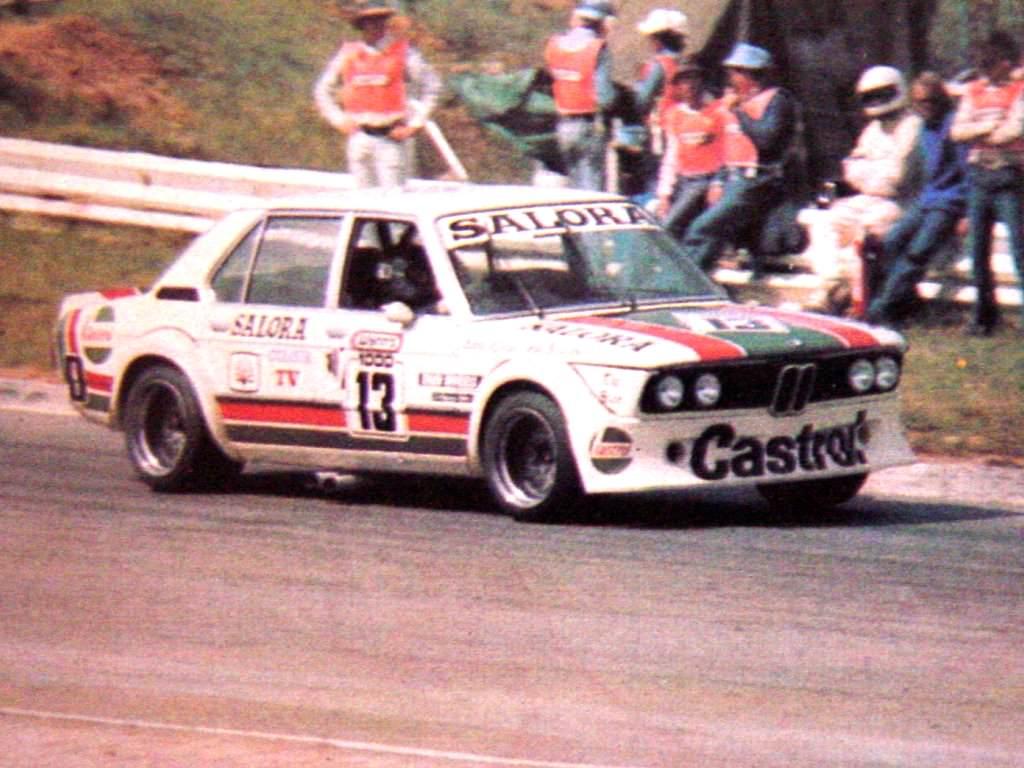
In the mid-1970s, Jochen Neerpasch—the legendary head of the newly formed BMW Motorsport GmbH—wanted to dominate the fiercely competitive Modified Production Series in South Africa. The tool chosen for the job was the E12-generation 5 Series saloon.

To satisfy strict racing rules, BMW had to build and sell at least 100 road-going versions to the public. The result was the BMW 530 MLE (Motorsport Limited Edition). It arrived in 1976, two full years before the iconic mid-engine M1 supercar.
To make this heavy executive sedan a weapon, the Rosslyn factory outside Pretoria threw out the luxury playbook. They went on a radical weight-saving crusade that borders on automotive insanity:
- The “Swiss Cheese” Treatment: Factory workers literally took hand drills to the bodywork. They drilled holes straight through the C-pillars, the rear parcel shelf, and even the clutch pedal to shave off every single gram.
- Stripped Luxury: Air conditioning, power windows, and heavy sound insulation were completely deleted.
What She Accomplished
Powered by a factory-tweaked 3.0-liter inline-six pushing 197 horsepower, the 530 MLE was an absolute monster. When it rolled up to the starting line in 1976, it didn’t just win—it obliterated the field. It secured 15 consecutive race wins in its debut season, capturing three consecutive championship titles. It retired as the most successful racing 5 Series in global history, laying down the blueprint for what an M car should be: a civilized wolf in sheep’s clothing.
1977: Enter the Rally Professor and the E21 Fleet
With Motorsport DNA rapidly pumping through the brand’s veins, BMW realized something critical: What good is building the ultimate driving machine if the human behind the wheel doesn’t know how to tame it?

In April 1977, BMW became the first car manufacturer in the world to launch a professional, factory-backed driver training academy for the public. Neerpasch tapped Rauno Aaltonen—the legendary Finnish rally driver known across the paddock as the “Rally Professor”—to be the chief architect of the curriculum.
[ Theory First ] ───► [ Target Braking ] ───► [ Catching Oversteer ]
To ensure students didn’t destroy their own cars while learning the art of the drift, BMW supplied a unified training fleet. The weapon of choice for the class of ’77 was the crisp, nimble E21 BMW 320i. Fitted with upgraded sports suspension and a crucial 40% locking limited-slip differential, these little four-cylinders spent their lives sideways on wet skid pads, teaching everyday drivers how to balance a chassis at the knife-edge of physics.
What It Has Aspired to Today: AREA M
Fast forward nearly half a century, and that humble 1977 driving school has mutated into Area M—a high-tech, global performance ecosystem operating on almost every continent.

Area M represents the absolute pinnacle of what those early engineers dreamed about. It takes the fundamental lessons taught by the Rally Professor in 1977 and amplifies them with cutting-edge telemetry and performance machinery like the manual M2, M4 CS, and the hybrid M5.
Inside the Modern Area M Ecosystem
The program has evolved from simple orange cones in an empty parking lot into a heavily gamified, multi-million-dollar global playground.
1. The Proving Grounds
While the academy travels to extreme outposts—like frozen ice-drifting circuits in Arjeplog, Sweden, or the Kyalami Grand Prix Circuit in South Africa—its beating heart is the massive, state-of-the-art facility in Memmingen, Germany. This playground features seven specialized wet skid pads, four high-speed dynamic handling zones, and three dedicated drift circles designed for continuous, tire-shredding slides.
2. The Games of Drift
The biggest shift in modern Area M is the transition from standard safety training to high-stakes gamification. Drivers are no longer just evaluated by an instructor with a clipboard. Instead, real-time vehicle telemetry tracks your steering angle, slip angle, and throttle modulation.
Area M Discipline | Objective | The Technical Challenge |
|---|---|---|
The Drift Spiral | Maintain a continuous slide around an expanding radius | Requires absolute throttle-steering balance to modulate weight transfer. |
The Ring Drop | Hit precise clipping points while sliding sideways | Tests peripheral vision and micro-corrections under hard oversteer. |
The Ideal Line | Chasing tenths of a second on GP circuits | Teaches trail-braking and geometric apex clipping. |
Your scores are uploaded directly to a live, global digital leaderboard on the BMW M platform, allowing an enthusiast drifting an M4 in Munich to compare their slip-angle efficiency with a driver tearing up an apex at the Thermal Club in California.
The Verdict
When you are hanging the tail out of a modern M car at an Area M event today, you aren’t just participating in a premium track day. You are interacting with a lineage that tracks straight back to the guys drilling holes in structural steel panels in South Africa and thrashing 125-horsepower 320i’s around orange cones in 1977.
It’s unpretentious, technically rigorous, and deeply serious about the joy of speed. Jochen Neerpasch and the Rally Professor would look at the global leaderboard today, smile, and tell you to keep your foot down.