As the Formula 1 circus descends on the narrow, barrier-lined streets of Monte Carlo, the high-stakes “silly season” driver market has officially kicked into overdrive. While Charles Leclerc’s massive, multi-year extension with Scuderia Ferrari closed one major door, it blew the paddock conversation wide open regarding who will occupy the remaining premium seats for the 2026 technical era.
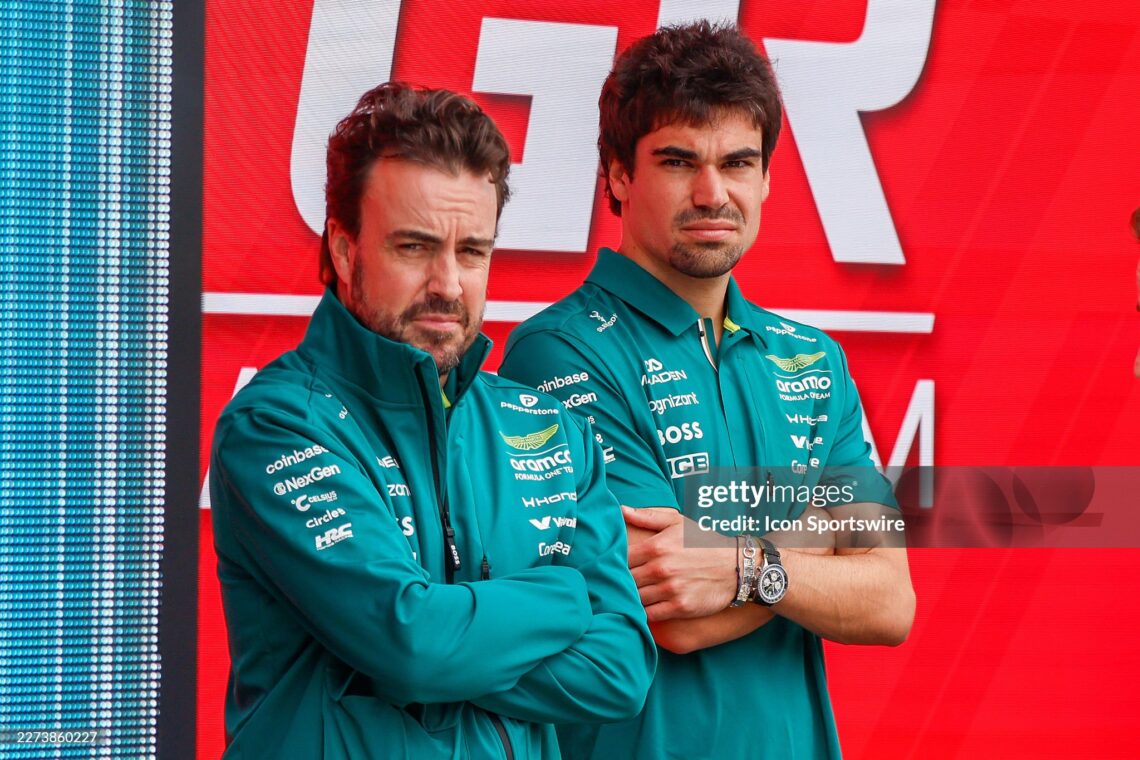
When the media confronted Fernando Alonso about Leclerc locking down his long-term future in red, the two-time World Champion offered a characteristically calculated, pragmatic perspective on the grid’s landscape:
“There will come a day when we all have to sit down and make a decision, and that day might be coming soon. But as for now, we remain entirely focused on the car.”
— Fernando Alonso
Alonso’s composure masks what has undeniably been a brutal, nightmare start to the 2026 campaign for Aston Martin Aramco.
The 2026 Reality: A Technical Nightmare at Silverstone
On paper, 2026 was supposed to be the coronation year for Lawrence Stroll’s ambitious project. With design mastermind Adrian Newey steering the ship, a brand-new state-of-the-art wind tunnel online, and a highly anticipated works engine partnership with Honda, the team looked primed to fight for championships.

Instead, the opening five rounds have unraveled into an unmitigated reliability crisis. The team has consistently failed to see both cars cross the finish line, plagued by an unyielding mechanical gremlin.
[ Honda Works Power Unit ] ───► High-Frequency Vibrations ───► Component Stress
│
┌─────────────────────────── Critical Failures ────────────────────┘
▼
[ Battery Degradation ] ──► [ Electrical Shutdowns ] ──► [ Chronic Race DNFs ]
At the core of the AMR26’s woes is a severe, high-frequency vibration radiating from the new Honda power unit. This internal shaking has triggered a catastrophic domino effect: cracking exhaust mounts, degrading the energy recovery battery packs, and causing complete electrical shutdowns.
During the opening flyaway races, Alonso openly noted that the violent vibrations inside the cockpit became so severe that they were rapidly reaching the limits of physical endurance. With the team starved of clean telemetry data due to truncated race distances, Aston Martin’s engineering department has been forced to treat Grand Prix weekends as glorified test sessions just to diagnose basic software bugs.
The Fork in the Road: Veteran Stability vs. Youthful Evolution
While Ferrari had an extensive list of marquee options on their radar before solidifying Leclerc’s future, Aston Martin faces an entirely different, highly existential driver dilemma. Alonso has made his desires clear: he wants to remain in the cockpit and see this regulation cycle through.

However, team owner Lawrence Stroll now stands at a critical strategic crossroad. Does he extend the grid’s most seasoned veteran, or is it time for a generational pivot?
[ THE ASTON MARTIN DRIVER DILEMMA ]
│
┌───────────────┴───────────────┐
▼ ▼
[ THE VETERAN ROUTE ] [ THE YOUTH ROUTE ]
• Fernando Alonso • Emerging Talents / Rookie Pool
• Elite technical feedback • Long-term development curve
• Immediate pace extraction • Adaptable to new simulator tools
• Demands a reliable car • Forged in modern digital aero
The Case for Extending Alonso
In a regulatory reset year defined by a drastic 20% reduction in downforce and a complex 50/50 electrical power split, telemetry data is gold. Alonso possesses an almost superhuman ability to “drive around” a car’s handling defects and provide pinpoint engineering feedback. For a team struggling to establish a baseline, losing a driver who can accurately isolate a chassis flaw from a power unit vibration could plunge their development curve into total blindness.
The Case for a Younger Switch
Conversely, performance in modern Formula 1 is deeply cumulative. With Honda hinting that a definitive combustion upgrade won’t arrive until after the summer break, 2026 is rapidly transitioning into a foundational rebuilding year for Aston Martin. A younger driver offers the team a long-term development horizon that aligns with Adrian Newey’s multi-year design roadmap, allowing a fresh talent to grow with the Honda power unit rather than demanding immediate, race-winning execution.
Alonso is right—the day to make a definitive career choice is approaching rapidly. But until Honda and Aston Martin can build a car capable of reliably surviving 300 kilometers on a Sunday, the legendary Spaniard’s immediate battle isn’t against the driver market; it’s against the mechanical limits of his own machinery.