The Lifestyle

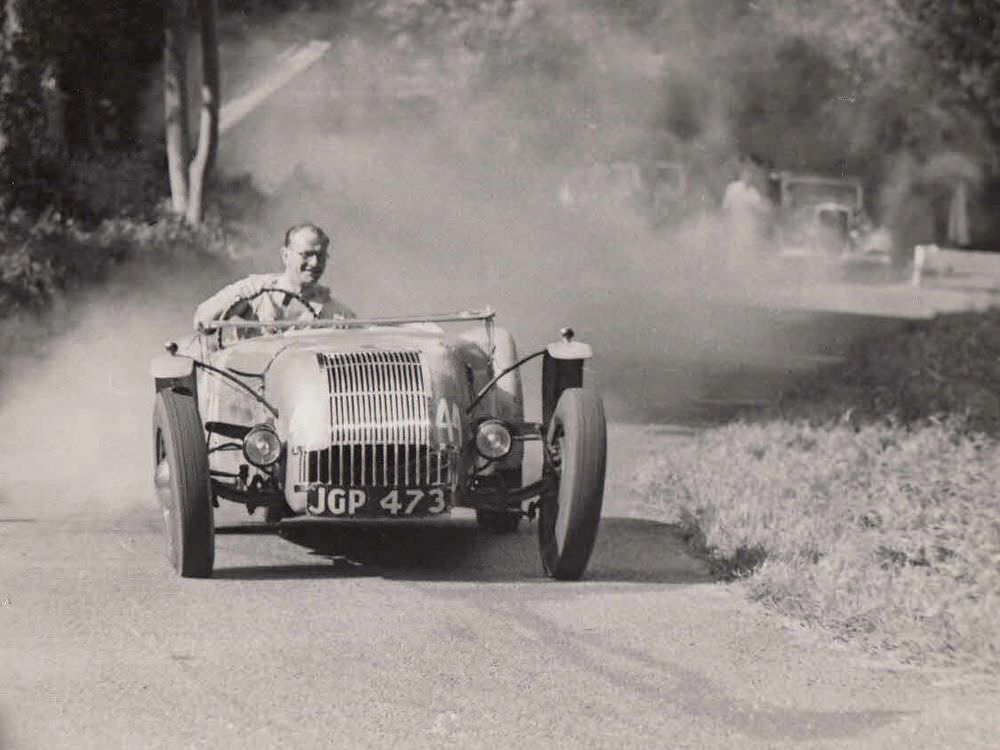
Forgotten Icons: The Handcrafted History of Allard Motor Company (1945–1958)

To see a car is to see more than formed sheet metal, glass, and chrome. To those who truly understand them, a car is an anchor to our past. It is the steady companion, the “old girl,” the mechanical sibling or parent parked in the driveway, holding memories as securely as it holds its chassis together. Some look at a machine and see mere paint and paneling; others look and see a statement designed to outrun time itself. Where most look at a classic silhouette and see a iconic marque, others see a grandfather, a summer road trip, and the roots of a family tree.

Yet, history is often written by the survivors. The world easily remembers the giants that stayed on the assembly lines, while the brilliant, unyielding dreamers who burned bright and faded are left to gather dust. This featured segment is dedicated to those lost marques the legendary collectibles, the barn-find holy grails, and the ultimate “what-ifs” of automotive lore.

First up: The Allard Motor Company (1945–1958).

The Genesis: A Family Built on Bricks, Mud, and Gasoline

Long before the world ever heard the thunderous roar of an Allard sports car, the Allard family was building the physical landscape of South London. Sydney Allard, born in 1910, was the son of Arthur Allard, a prosperous property developer and builder. Arthur envisioned a neat, respectable future for his sons in the family construction trade.

Sydney, however, had the scent of high-octane fuel in his blood.

Instead of blueprints for houses, Sydney obsessively studied engines. His passion caught fire at age 19 when he inherited a three-wheeled Morgan trike from his older brother, Jack. Sydney and his brother Dennis promptly entered a race at the famous banked Brooklands circuit in 1929—and won. Recognizing that his son was utterly unmovable from his automotive path, Arthur helped Sydney set up a garage in Clapham.

When the Second World War broke out, Sydney’s obsession met patriotic duty. The Allard family’s workshop in Fulham was requisitioned to repair and overhaul thousands of military vehicles, predominantly Fords, for the Allied war effort. Working round-the-clock under the shadow of the Blitz narrowly dodging Luftwaffe strikes that shattered surrounding streets Sydney and his small team became masters at tearing down, modifying, and rebuilding Ford V8s with blinding speed.

When peace finally returned in 1945, Sydney was left with a vast stockpile of surplus Ford components, an unmatched mastery of high-torque V8 engines, and a singular vision. On February 14, 1945, The Allard Motor Company was officially born.

Inside the Works: The Life of a Factory Worker (1945–1958)

To step into the Allard factory on Clapham High Street in the late 1940s was not to enter a sterile, automated assembly line like Ford’s Dagenham or GM’s Detroit. It was to step into a dimly lit, high-energy artisan sanctuary that smelled of coal smoke, machine oil, raw aluminum, and stale tea.

The mechanics and fabricators many of them ex-RAF engineers and wartime servicemen—worked in a facility that journalists affectionately described as the realm of an “inspired blacksmith.” There were no robotic arms or conveyor belts. Each car was hand-crafted on wooden trestles and chalked outlines on the concrete floor.

How an Allard Came to Life

  1. The Skeleton: Workers bent, notched, and hand-welded heavy steel frame rails, frequently using repurposed steel water piping for cross-members.
  2. The Heart: Massive American V8s—sourced from Ford flatheads, or shipped across the Atlantic as raw Cadillac 331 and Chrysler FirePower Hemi engines—were lowered in on hand-cranked chain hoists.
  3. The Muscle: Suspension components were sculpted by hand. Sydney’s signature front axle was famously created by taking a heavy-duty truck axle and sawing it in half to create an independent split-beam swing axle setup.
  4. The Skin: Metal-shapers draped sheets of raw aluminum over wooden buck forms, hand-hammering the sweeping wings and dramatic grilles using English wheels and wooden mallets.

A worker would personally stay with a single chassis from its bare frame until it was fired up for the first time. The finish on an Allard was intentionally raw and utilitarian—paint was applied sparingly, and welds were left un-smoothed as badges of honor. These weren’t delicate garage queens; they were weapons designed to be thrashed through trials, rally mud, and road courses.

The Thunderous Legacy: Collectibles & The Cobra Inspiration

Sydney Allard pioneered a formula that would change American and European motorsport forever: shoehorning massive, high-torque American V8 powerplants into ultra-lightweight, spartan British chassis. Without Sydney Allard, there would likely be no AC Cobra. A young Texan racer named Carroll Shelby drove Allards in the early 1950s, explicitly citing his time behind the wheel of Sydney’s raw V8 roadsters as the direct inspiration for the Shelby Cobra a decade later. Chevrolet’s legendary Corvette engineer, Zora Arkus-Duntov, also worked for Allard and raced for their factory team at Le Mans before going on to shape the Corvette.

The Crown Jewels for Collectors Today

  • The Allard J2 & J2X (1950–1954): The quintessential British hot rod. Minimalist, cycle-fendered roadsters built primarily for the North American market. Often fitted with 331 cu in Cadillac or Chrysler Hemi V8s, these beasts possessed terrifying power-to-weight ratios. Combined production was just under 190 units, making surviving, matching-numbers J2s multi-million-dollar holy grails today.
  • The Allard JR (1953): A ultra-rare, purpose-built Le Mans racer with a sleek, aerodynamic aluminum body and a tuned Cadillac V8. Only 7 original units were ever constructed, making them among the most elusive barn-find rumors in the classic car ecosystem.
  • The Allard P1 (1949–1952): A large, imposing aluminum-bodied sports saloon. Driven personally by Sydney Allard, a P1 won the grueling 1952 Monte Carlo Rally, making Sydney the only person in history to win the Monte Carlo Rally in a car bearing his own name.

Why the Lights Went Out

By the mid-1950s, the automotive landscape was shifting rapidly. Major manufacturers like Jaguar, Aston Martin, and Chevrolet were pouring millions into integrated mass production, monocoque chassis, and sophisticated disc brakes.

Allard’s hand-hammered, low-volume approach could no longer compete on cost or production scale. Importing heavy American V8s to England, fitting them into hand-built chassis, and exporting them back to the United States incurred devastating shipping tariffs and logistics delays. After a disastrous attempt to venture into microcars with the three-wheeled Allard Clipper, the company succumbed to insolvency in 1958, closing its factory doors after producing roughly 1,900 cars.

A Statement That Stands the Test of Time

The Allard Motor Company may have faded from main-street memory, but its DNA echoes every time a modern supercar fires up a big-displacement V8.

For the mechanics who spent their youth in the cold Clapham workshop shaping aluminum by hand, and for the lucky few who still hold the key to a surviving J2, an Allard isn’t just a collector’s piece—it’s a living artifact of British grit, American muscle, and a family that refused to build anything ordinary.

Leave a Reply

Your email address will not be published. Required fields are marked *