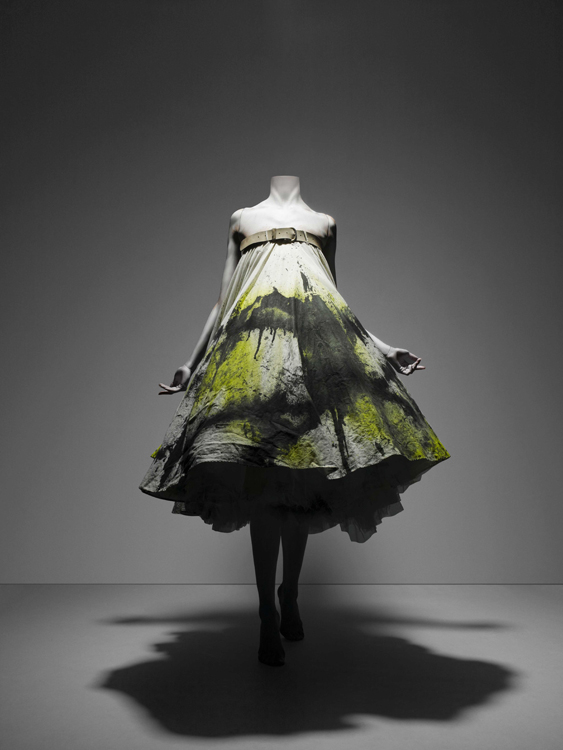
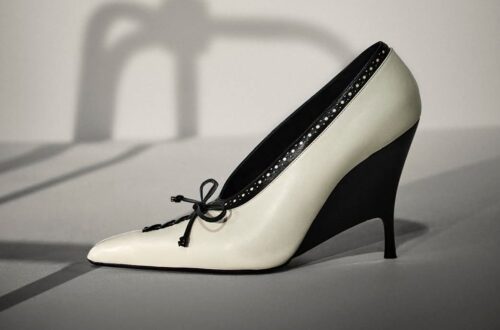
In the pantheon of modern design, few names carry the weight of Alexander McQueen and Vera Wang. While their aesthetics operate at opposite ends of the emotional spectrum one a master of Gothic subversion, the other the architect of the modern romantic dream they share a unique status: they have moved beyond being mere brands to become cultural milestones.
Alexander McQueen: The Savage Beauty
For many following the house today, it is easy to forget that Lee Alexander McQueen’s journey began in the humble workrooms of Savile Row. He founded his eponymous label in 1992, following a groundbreaking graduation show at Central Saint Martins that was famously bought in its entirety by the legendary Isabella Blow.


McQueen wasn’t just a designer; he was a storyteller who used tailoring as his medium. Since his passing in 2010, the house has continued to evolve. Long-time collaborator Sarah Burton steered the ship for over a decade with a softer, more organic touch, while the current creative direction under Seán McGirr looks to recapture the raw, avant-garde energy that first defined the “l’enfant terrible” of British fashion.
Vera Wang: The Household Revolution
Then there is Vera Wang. If McQueen is the storm, Wang is the clarity of the morning after. Growing up, her name became synonymous with the pinnacle of bridal and evening wear a household name that resonates with the same effortless familiarity as a cinematic icon like Julia Roberts. Different in execution, perhaps, but the same in their ability to define an era.


Wang didn’t actually enter the bridal industry until the age of 40, opening her flagship salon in 1990. Before that, she was a senior fashion editor at Vogue and a design director at Ralph Lauren. Her genius lay in taking the “fairytale” wedding gown and stripping away the excess, replacing it with high-fashion sophistication. Like McQueen, she understood that a garment is not just fabric; it is a transformative vessel for the person wearing it.
The Innovation of Influence
Both designers represent a “beyond rules” philosophy. McQueen broke the rules of the runway with performance art, while Wang broke the rules of the traditional bridal industry by making high-fashion accessible and aspirational at a global scale.
Whether it is the sharp, aggressive shoulder of a McQueen blazer or the ethereal, structured tulle of a Wang gown, these labels remain innovation platforms. They are the benchmarks we use to measure how far fashion can push against the boundaries of tradition.