When we discuss “heritance” in fashion, we rarely mean dust and static. In the world of Alexander McQueen, heritage is a living, breathing, and terrifyingly brilliant force. To understand the house, one must look past the modern red carpet noise and examine the structural and emotional scaffolding built by the master himself.
THE CORE HERITAGE
The definition of Alexander McQueen’s work is a delicate, “freaky” tension. It’s the “swapped” identity of beauty and horror. It embodies a few immutable laws:
1. The Flawless Savile Row Foundation
Before the theatrics, Lee McQueen was an impeccably trained tailor. Every avant-garde jacket, every “swapped” silhouette, was anchored in master-class construction. The heritage is defined by razor-sharp shoulders, defined waistlines, and jackets that fit like armor even when they are made of lace.
2. The Obsession with History
His favorite themes were derived from his own heritage: the tragic history of Scotland’s Highland clearances (which inspired Highland Rape, AW95) and the French Revolution. This is where we see the “brilliant” inclusion of corsetry, frock coats, and Napoleonic influence, often deconstructed and distressed.


3. The Sublime and The Animalistic
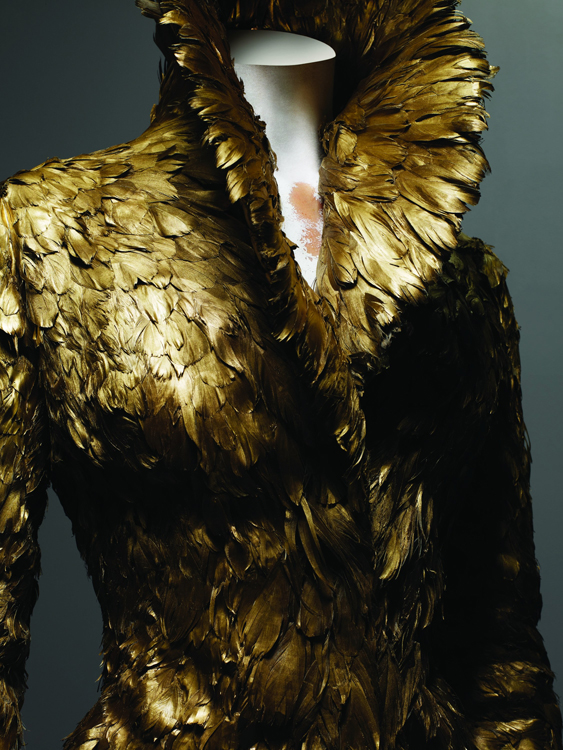
McQueen was fascinated by The Sublime the romantic terror of nature. His work incorporated elements that were beautiful yet intimidating: feathers, shells, horns, and leather that made the wearer look “nimble but hesitant,” like a beautiful, wild creature trying to pass as human.


FAVORITE AND DEFINING PIECES
These are not just garments; they are artifacts of a legacy that continues to influence the 2026 paddock aesthetic and beyond. They are raw, technically brilliant, and utterly authentic to the founder’s vision.
I. The “Bumster” Trousers (SS94, Nihilism)
Perhaps the most “freaky” and defining silhouette of early McQueen heritage.

- The Intent: These were not low-rise jeans; they were a study in anatomy. McQueen intended to lengthen the torso and show the coccyx.
- The Look: It was a “childish but brilliant” rebellion against standard fashion proportions.
II. The Spray-Painted Dress (No. 13, SS99)
This piece was a performance. Model Shalom Harlow stood on a rotating platform, her pristine white cotton dress “swapped” from white to a violent mix of black and yellow spray paint by two industrial robots.
- The Meaning: A profound statement on art, industrialization, and the “human vs. machine” conflict that resonates with the tactical downshifts discussed earlier in the 2026 season.
III. The Armadillo Boots (AW10, Plato’s Atlantis)
The “final and defining” accessory. These were 12-inch, sculptural heels resembling the shells of the creature.
- The Vibe: They looked incredibly nimble yet required the bravery of a champion to walk in. They perfectly captured the animalistic yet technical brilliance that defines the McQueen aesthetic. Only a handful were ever made for the runway.
IV. The Oyster Dress (AW03, Scanners)


A true masterpiece of construction, this dress is made from seemingly endless tiers of organza, deconstructed, distressed, and gathered to form a structure that looks like an oyster shell. It was a flawless execution of the “Sublime nature” theme, looking like something a “sea monster” (in the most beautiful sense) might wear.
“Kurky, Weird and Unique, Simply Perfect.”