Asphalt - Cars - Fun Stuff - The Lifestyle

The Century-Old Phantom: How Britain’s AC Cars Defies Mass Production with Bespoke Ultra-Luxury

When enthusiasts debate the true grandfathers of the automotive world, Mercedes-Benz almost always claims center stage. Tracing its lineage directly back to Carl Benz’s 1886 Patent-Motorwagen, the Stuttgart giant has spent roughly 140 years defining mass-market luxury.

Yet, tucked away in the United Kingdom sits a manufacturer that is virtually just as old—founded in 1901—that stands at the total opposite end of the philosophy spectrum.

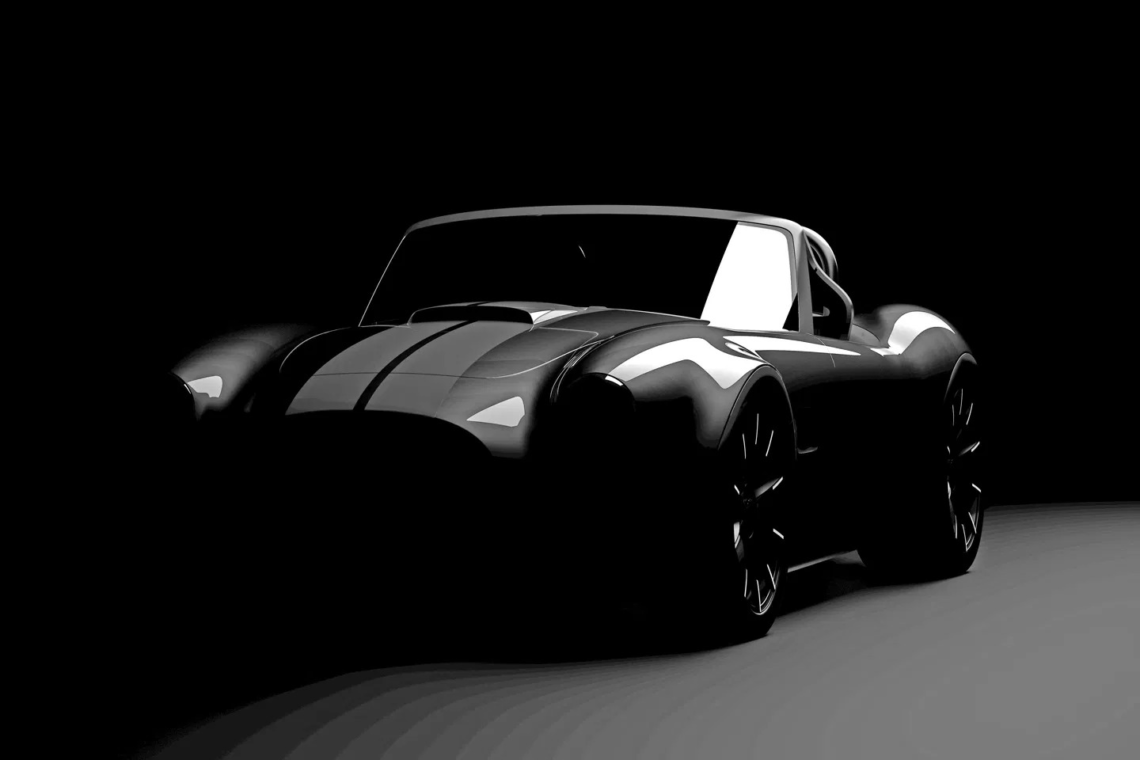
While Mercedes crafts hundreds of thousands of vehicles a year on automated assembly lines, AC Cars (Britain’s oldest active vehicle manufacturer) refuses mass production entirely. Instead, they operate as a low-volume, ultra-bespoke coachbuilder, hand-assembling hyper-exclusive grand tourers that rival—and in many ways surpass—the cabin artistry of Rolls-Royce, complete with rare mechanical choices for the modern era.

The 125-Year Heritage: From Auto-Carriers to the Cobra Legend

Founded by the Weller brothers and John Portwine as Autocars and Accessories in 1901, AC Cars predates almost every modern luxury brand. While they earned immortality in the 1960s when Carroll Shelby stuffed a Ford V8 into their lightweight AC Ace chassis—creating the iconic AC Cobra—the company never succumbed to corporate conglomerate consolidation.

Today, AC operates on a strict limited-production, built-to-order model. There are no showroom floors stacked with excess inventory, no mass-stamping body presses, and no robotic paint booths. Every single vehicle that leaves the factory is individually commissioned by an ultra-high-net-worth client.

Cabin Artistry: Better Than a Rolls-Royce?

Rolls-Royce sets the standard for whisper-quiet, wafting luxury. But AC Cars’ newest flagship—the AC Cobra GT (in both Roadster and Coupe configurations)—approaches interior design not as a quiet living room, but as a piece of bespoke, tactile equestrian art.

Where mass-production luxury relies on synthetic veneers, soft-touch plastics hidden beneath the dash, and digital screens taking over every physical control, AC Cars turns to master artisans:

1. Equestrian Saddle-Bag Craftsmanship

Instead of standard molded plastic door panels, the interior features hand-stitched, full-grain leather door cards inspired by high-end English saddlery. They incorporate functional slide pockets, integrated leather handles, and competition-style pull straps.

2. Machined Metal & Analog Precision

Every switch, knob, and bezel inside the cockpit is individually machined from solid billet aluminum. Rather than burying essential controls behind complex touchscreen menus, AC blends analog gauges with modern digital driver displays, giving every button a heavy, mechanical, satisfying throw.

3. Tailored Carbon Shells

The seating architecture consists of custom carbon-fiber shells trimmed in hand-finished leather, offering a level of bespoke fitment where the owner can specify exact thread counts, contrast stitching, and custom-embossed family crests or logos.

The Mechanical Anomaly: Pure Manuals & Modern Semi-Automatics Side-by-Side

In an era where even supercar titans like Ferrari, Lamborghini, and McLaren have completely abandoned manual gearboxes, AC Cars preserves the purist’s ultimate privilege.

Underneath the long, sculpted carbon-fiber hood sits a 5.0-liter V8 engine—available as a naturally aspirated 456-horsepower cruiser or a supercharged 720-horsepower monster. To deliver that power, AC gives buyers a choice that virtually no other modern luxury maker offers:

The 6-Speed Manual

For drivers who demand complete mechanical involvement, AC engineers a heavy-duty, short-throw 6-speed manual transmission. Paired with a weighted aluminum gear lever, it delivers the raw, visceral connection of a 1960s Le Mans racer built with modern engineering tolerances.

The 10-Speed Semi-Automatic / Paddle-Shift

For long-distance grand touring, buyers can choose a 10-speed semi-automatic transmission. Calibrated with bespoke software specifically for the vehicle’s lightweight chassis, it offers seamless, effortless self-shifting in traffic while giving the driver immediate manual control via wheel-mounted paddle shifters on the open road.

The Verdict: Unmatched Exclusivity

If Mercedes-Benz represents the absolute peak of modern automotive industrialization, AC Cars represents the enduring power of the independent artisan.

By combining a 125-year-old pedigree with carbon-fiber chassis engineering, hyper-exclusive production caps (~250 units annually), an interior that feels more like a luxury yacht than a car, and a choice between a 6-speed stick or a paddle-shifted 10-speed, AC proves that the golden age of coachbuilding never truly died.

Leave a Reply

Your email address will not be published. Required fields are marked *