The shift toward hydrogen is no longer a distant theoretical exercise confined to laboratory testing; it is a mechanical reality now hitting the water. While the automotive sector has watched Toyota double down on hydrogen internal combustion, and the aviation industry has begun showcasing hydrogen-electric demonstrators for short-haul flight, the maritime world is finding its own rhythm. As highlighted by SuperYacht Times, Volvo Penta’s recent move into hydrogen-powered inboard technology signals a pivot away from the “all-electric or nothing” narrative, offering a high-torque, engineering-led alternative for the next generation of vessels.
The Tech: From Skies to Seas
The transition to hydrogen isn’t happening in a vacuum. Similar propulsion concepts are gaining traction in aviation, where companies like Beyond Aero and ZeroAvia are utilizing hydrogen fuel-cell and combustion systems to overcome the weight penalties of heavy battery packs. Just as these aircraft require high power-to-weight ratios for sustained flight, marine vessels particularly inboards require immense torque and endurance that current lithium-ion technology often struggles to provide in a compact footprint.

How Volvo Penta’s System Works
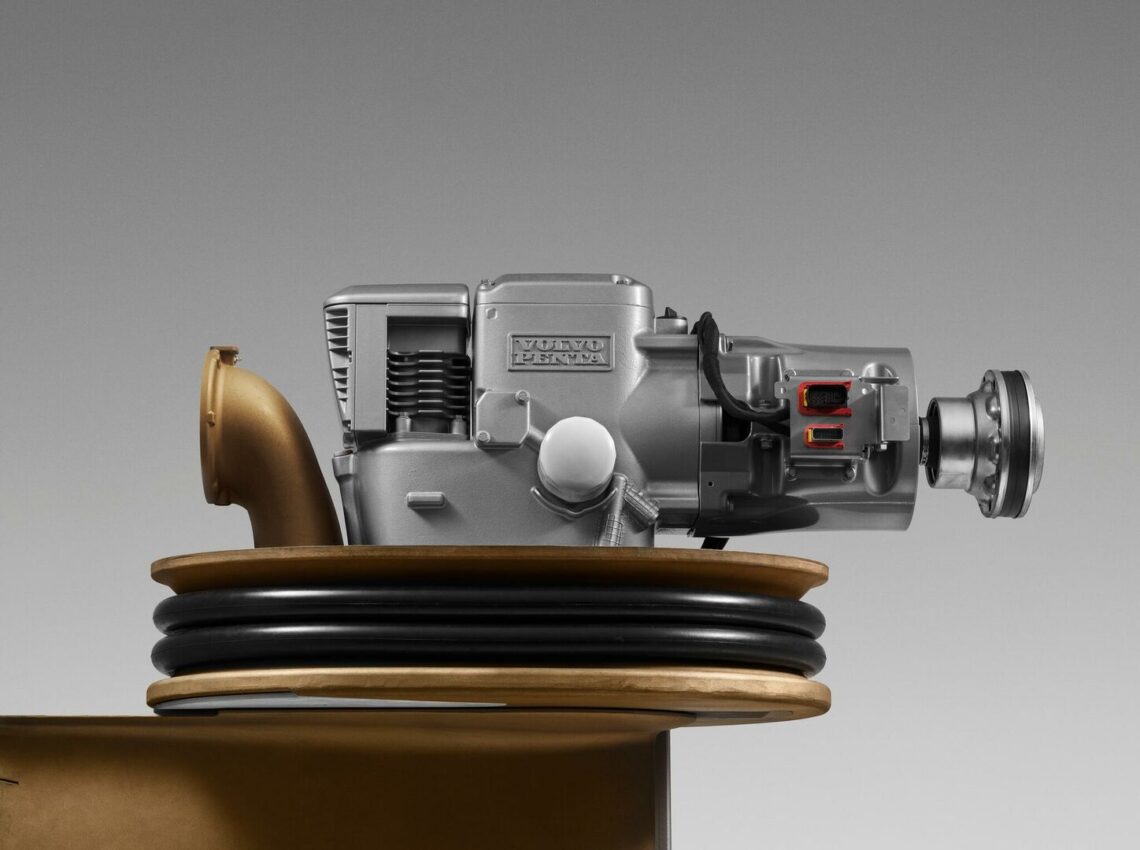
The Volvo Penta prototype, often featured in discussions regarding the CMAL (Caledonian Maritime Assets Ltd) ferries and smaller utility crafts, utilizes a dual-fuel configuration. By adapting a proven engine block to run on a mix of hydrogen and HVO (Hydrotreated Vegetable Oil), the system can achieve up to an 80% reduction in CO2 emissions.

According to SuperYacht Times, the beauty of this “inboard variant” lies in its scalability. Unlike massive fuel-cell arrays found on experimental cargo ships, this compact setup is designed to fit within the standard engine rooms of mid-sized yachts and tenders. It offers the familiar mechanical reliability of a traditional engine while significantly cleaning up the exhaust trail.
Bridging the Infrastructure Gap
One of the primary hurdles for hydrogen has always been storage and bunkering. However, the modular nature of this tech allows for a “crawl-walk-run” approach. By utilizing a dual-fuel system, owners can still rely on traditional fuels if hydrogen bunkering is unavailable in remote marinas, effectively solving the “range anxiety” that has hindered pure-electric marine adoption.
The “Pinkies Down” Perspective
While the industry often focuses on the “green” marketing of these systems, the real story is the engineering. Moving to hydrogen in an inboard format isn’t just about sustainability; it’s about preserving the visceral experience of power and mechanical feedback. It acknowledges that for many, the future of luxury travel isn’t a silent, sterile battery it’s the continuation of high-performance engineering, re-tooled for a new atmosphere.

As maritime infrastructure begins to catch up with aviation and automotive pioneers, the Volvo Penta hydrogen project serves as a clear signal: the future of the engine room is no longer a choice between fossil fuels and batteries. It’s about the intelligent application of the most abundant element in the universe.