The Lifestyle

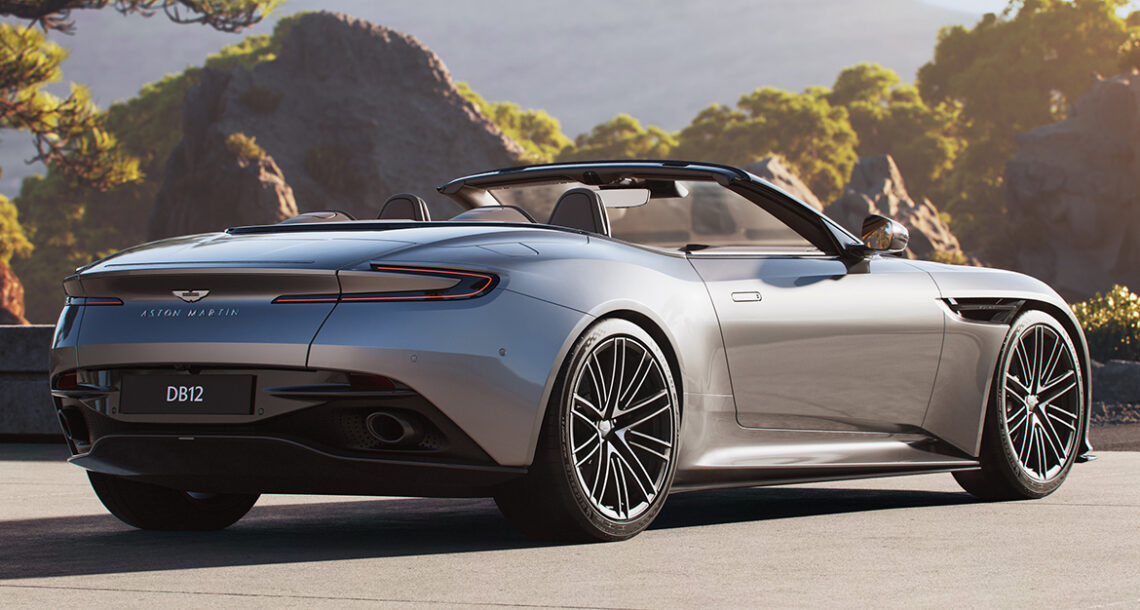
The Aston Martin DB12 Volante

Wednesday, May 6, 2026

For the better part of a decade, buying an Aston Martin required a certain level of cognitive dissonance. You had to convince yourself that a stunning exterior and a soulful badge were enough to forgive a cabin filled with hand-me-down Mercedes electronics and a chassis that felt more like a grand tourer having a mid-life crisis than a precision instrument. To drive a Volante was to drive a beautiful apology.

But with the arrival of the DB12 Volante, the excuses have been retired. Aston Martin has shed the “GT” label in favor of a new, more aggressive identity: the “Super Tourer.” This isn’t just marketing fluff; it’s a fundamental shift in philosophy. The DB12 Volante is a car that finally feels real tactile, technologically competent, and visceral enough to make you forget the apology ever existed.

The Death of the “Softer” Choice

Traditionally, the “Volante” (convertible) version of an Aston was the compromise the one you bought for cruising the Riviera, accepting that the loss of a roof meant a loss of structural integrity.

The DB12 Volante changes that narrative through:

  • Structural Rigidity: Lateral stiffness at the front axle has been increased by 140%. This isn’t a mere facelift; the mounting points for the suspension have been fundamentally re-engineered to allow for a non-isolated steering column, providing a level of feedback previously reserved for the Vantage.
  • The “Intelligent” Chassis: The new Bilstein DTX adaptive dampers offer a 500% increase in bandwidth compared to the DB11. This means the car can be genuinely plush in GT mode, but when you toggle to Sport+, the suspension tightens into a focused, aggressive platform that resists mid-corner wallow.

Performance: The “V12” Argument is Over

Purists lamented the loss of the 5.2-liter V12, but the AMG-sourced, Aston-tuned 4.0-liter twin-turbo V8 makes a compelling case for its own supremacy.

  • Power Output: 671 hp and 590 lb-ft of torque.
  • Acceleration: 0-60 mph in just 3.6 seconds.
  • Top Speed: 202 mph.

By shortening the final drive ratio and implementing an Electronic Rear Differential (E-Diff), Aston Martin has given the DB12 a level of “in-gear punch” that the old V12 simply couldn’t match. It is louder, more responsive, and—crucially—shaves weight off the front end, making the car much more eager to turn in.

The Interior: A Triumph of Ergonomics

The most significant evidence that the DB12 is a “real” car lies in the cockpit. Gone is the frustrating touchpad and the pixelated screen from the 2010s. In its place is:

  • The Waterfall Console: A beautifully designed bridge of physical, knurled metal switches for gear selection, drive modes, and climate control. Aston Martin has wisely kept the most important functions as “real” buttons.
  • In-House Tech: A 10.25-inch high-definition touchscreen running Aston Martin’s first proprietary infotainment system. It is fast, supports wireless Apple CarPlay and Android Auto, and finally looks like it belongs in a vehicle costing a quarter of a million dollars.
  • Craftsmanship: From the Bridge of Weir leather to the optional 15-speaker Bowers & Wilkins system, the cabin feels expensive in a way that suggests a new level of build quality for the Gaydon-based manufacturer.

The Verdict: No More Excuses

The DB12 Volante is a statement of intent. It proves that Aston Martin can combine their legendary “Golden Ratio” design with engineering that actually holds up under scrutiny. It doesn’t just look like a supercar; it drives like one, thinks like one, and—for the first time in a long time—works like one.

If the DB11 was a graceful ghost of Aston’s past, the DB12 Volante is the loud, sharp, and very real future of the brand.