The Lifestyle

The Mercedes Myth: Why the Gearbox, Not the Suspension, Is the W17’s Secret Weapon

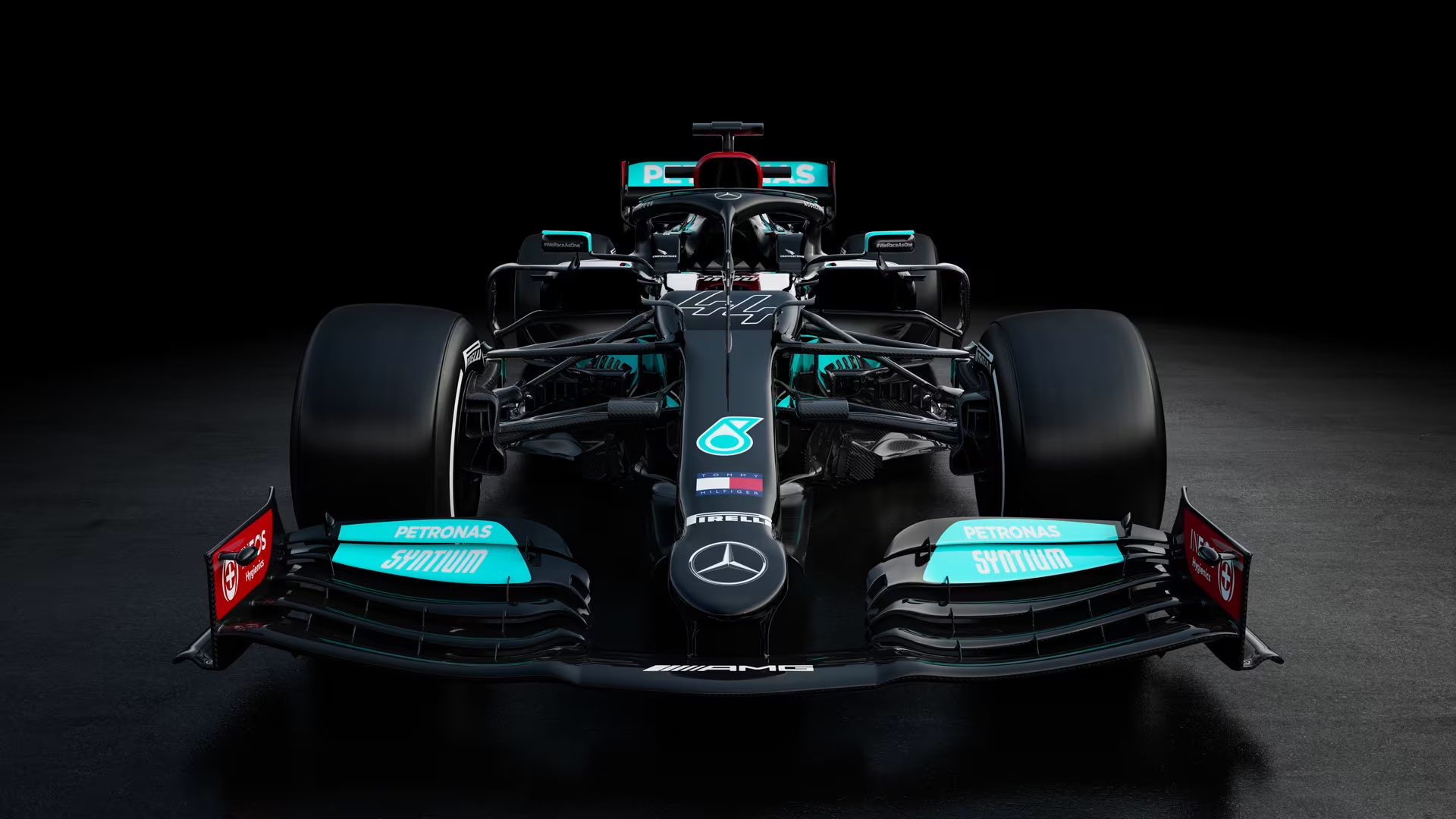
The debate over the W17’s sudden resurgence has centered almost entirely on their radical suspension geometry. The paddock is obsessed with anti-dive, anti-squat, and the “magic” mechanical grip Mercedes supposedly found over the winter.

But if we peel back the carbon fiber and look at where the power actually meets the pavement, the narrative shifts. While everyone is looking at the springs, the truth is found in the gearbox.


The Heart of the Drag: More Than Just Shifts

In modern Formula 1, especially under the technical reset of 2026, the gearbox isn’t just a housing for cogs; it is the structural spine of the car. It is the piece that literally “drags” the car along, translating the violent output of the 50/50 power unit into forward motion.

Regardless of whether Mercedes chooses to drop back into the dirty air to manage temperatures or hold a commanding lead, the suspension is merely a passenger to the transmission’s efficiency.

Why the Gearbox Wins the War

  1. Torque Management: With the 2026 engines relying so heavily on electrical deployment, the gearbox has to manage massive, instantaneous torque spikes. If the gearbox isn’t bulletproof and ultra-efficient, the most advanced suspension in the world won’t save your tires from being shredded.
  2. Structural Rigidity: The rear suspension members are bolted directly to the gearbox casing. If that casing flexes, your “revolutionary” suspension geometry is compromised. Mercedes hasn’t just built a better ride; they’ve built a stiffer, more reliable anchor.
  3. The “Drag” Factor: The gearbox is the mechanical link that dictates how that power is dragged through the corners. It’s the difference between a car that “stutters” on exit and one that pulls like a freight train.

Strategic Illusion: Leading or Trailing?

There is a theory that Mercedes is playing a tactical game falling back on purpose in certain stints to gather data or save energy, only to “hook up” and disappear.

When they do choose to turn it on, it isn’t a suspension adjustment that closes the gap. It is the seamless transition of gears and the optimization of the drivetrain. The facts are the facts: you can have the smoothest ride on the grid, but if your gearbox can’t handle the “drag” of the 2026 power curve, you’re just a comfortable car at the back of the pack.


The “Pinkies Down” Take

In a sport that loves to over-engineer its explanations with talk of “aerodynamic maps” and “kinetic recovery,” the gearbox represents the raw, mechanical reality of racing. It’s unpretentious, it’s high-stress, and it’s the hardest working component on the car.

Mercedes might be selling the world a story about “suspension miracles,” but the real power move is happening in the casing. It’s the gearbox that does the heavy lifting, dragging the Silver Arrows back toward the front of the grid.