
The global EV landscape is currently a battlefield, and nowhere is the fighting more intense than in China. Faced with domestic titans like BYD and Geely, Hyundai has officially hit the “reset” button. This April, the South Korean giant unveiled a radical localized strategy: the launch of Ioniq as a dedicated sub-brand for China, anchored by two striking new concept vehicles: the Venus and the Earth.

Departing from the pixel-heavy design language seen in the West, these “planetary” concepts signal a shift toward what Hyundai calls its “In China, For China” philosophy.
The Concepts: Venus and Earth
Hyundai is moving away from the alphanumeric naming convention (like Ioniq 5 or 6) in favor of a “planetary” naming scheme, designed to symbolize an ecosystem where the customer is the center of the universe.

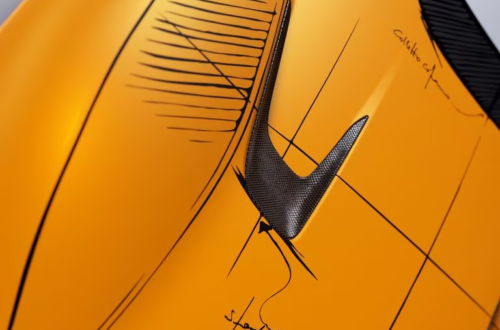
- The VENUS Concept: A sleek, “trend-setting” sedan finished in a signature Radiant Gold. It features a single-curve silhouette and a wraparound cockpit designed to evoke the luminous atmosphere of its namesake planet. It is aimed at the premium, tech-forward young professional.
- The EARTH Concept: A robust, upright family SUV designed for durability and space. It adopts a “cab-forward” layout to maximize interior volume, aiming to compete directly with the large family SUVs currently dominating Chinese sales charts.
Technical Pivot: The Rise of the EREV
Perhaps the most significant news isn’t the design, but the hardware. In a major departure from its global “all-electric” Ioniq stance, Hyundai has confirmed that these Chinese models will offer Extended Range Electric Vehicle (EREV) powertrains alongside pure battery-electric (BEV) options.

By including a small combustion engine as a generator to charge the battery, Hyundai is directly addressing “range anxiety” a key factor that has allowed Chinese brands like Li Auto to surge ahead.
Localized High-Tech Partnerships
To compete with the “Smart Cabin” expectations of Chinese consumers, Hyundai is ditching some of its global software in favor of local expertise:
- Autonomous Driving: Partnering with Chinese startup Momenta to develop self-driving systems specifically calibrated for China’s complex urban environments.
- Battery Tech: Reports suggest the use of LFP (Lithium Iron Phosphate) cells supplied by BYD’s FinDreams subsidiary for localized production, prioritizing cost-efficiency and thermal stability.
The Performance Laboratory: Meet the RN24
While the Venus and Earth focus on the mass market, Hyundai hasn’t forgotten its performance roots. Also making waves this morning is the RN24 “Rolling Lab.” This is essentially the monstrous 650 hp powertrain from the Ioniq 5 N stuffed into a chassis that is 340mm shorter—roughly the size of a compact rally car. With an exposed roll cage and 3D-printed structural reinforcements, the RN24 is a “test bed” for a future, more affordable electric N-brand car intended to bring “rally-bred” excitement to the electric era.
Hyundai’s 2026 Outlook
| Concept | Primary Mission | Market Goal |
| VENUS | Premium Sedan | Rival the Tesla Model 3 and Xiaomi SU7. |
| EARTH | Family SUV | Capture the “outdoor adventure” family segment. |
| RN24 | Performance Tech | Prove that small EVs can be “fun” and “affordable.” |
The Verdict: Hyundai is no longer trying to sell “global cars” to China. By embracing local battery suppliers, EREV technology, and a distinct aesthetic, they are playing the Chinese brands at their own game.