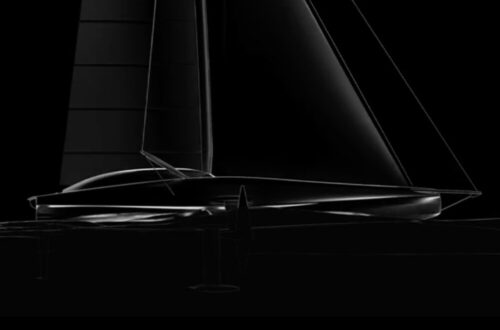
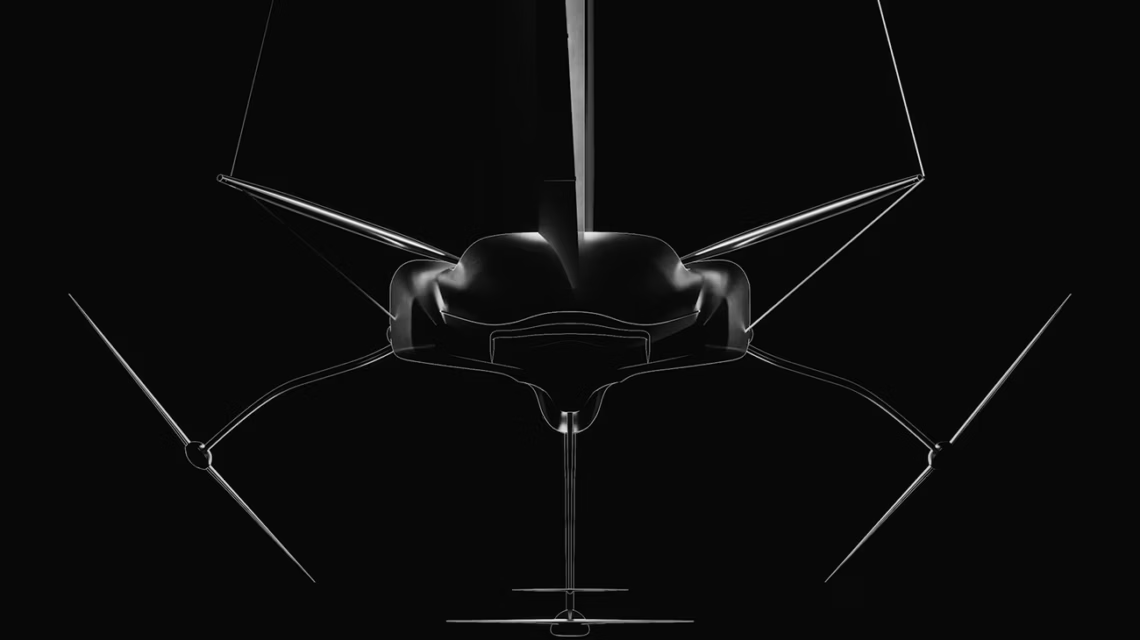
Renowned ocean racer Giovanni Soldini has conquered nearly every corner of the maritime world, yet his latest venture the Ferrari Hypersail represents a dive into the unknown. This 100-foot sailing vessel isn’t just a boat; it is a laboratory for Ferrari’s elite automotive technology, aiming to become the most electronically sophisticated craft ever to hit the water.
As the project nears its late-summer 2026 debut, the 59-year-old team principal shared insights into the fusion of Italian motorsport precision with the unpredictable nature of the open sea.
Bridging the 30-Year Gap
Soldini is blunt about the current state of maritime engineering. He notes that the world of sailing is roughly three decades behind the automotive industry in terms of automation and procedure. While modern supercars manage complex functions like active suspension and gear shifts seamlessly, sailing has remained a largely manual, “analogue” discipline. The Hypersail aims to change that by making the transition from human-controlled mechanics to intelligent, automated systems.
The Challenge of “Maritizing” Ferrari Tech
The primary hurdle isn’t just installing electronics; it’s ensuring they survive. The Hypersail features miles of intricate cabling and communication networks inspired by Ferrari’s racing division. However, these components must be hardened against the ocean’s most corrosive elements:
- Constant Saltwater Exposure
- Extreme Humidity
- Electrolysis and Vibration
Unlike an America’s Cup yacht that returns to a climate-controlled hangar after a few hours of racing, the Hypersail is built for resilience. It must operate autonomously and maintain peak performance for 30 consecutive days in punishing weather.
Revolutionary Wings and Sustainable Power
Soldini highlights two major breakthroughs that set the Hypersail apart:
- The Adaptive Twin Mainsail: Drawing inspiration from aviation, the boat uses a specialized system to alter the sail’s shape in real-time. During “take-off”—when the boat lifts onto its foils—it requires a deep, powerful sail. Once airborne and accelerating, the system flattens the profile to reduce drag, much like an aircraft retracting its flaps.
- Carbon Fiber Innovation: While many high-speed foiling boats use steel for their underwater wings, Ferrari and Soldini have opted for advanced lightweight carbon foils, presenting a massive structural engineering puzzle that the team solved through 3D modeling and cross-collaboration between Maranello and Pisa.
- The “Elettrica” DNA: The vessel utilizes compact, high-power components derived from Ferrari’s electric vehicle research, allowing the boat to remain self-sufficient through renewable energy sources.
A Vision Beyond the Trophy
For Soldini, the project has required a temporary hiatus from his life at sea—a sacrifice he finds difficult but necessary. The goal isn’t just to win a race, but to create a technological blueprint that the rest of the maritime industry can follow.
“We are bringing a purely mechanical world into a modern, intelligent era,” Soldini explains. “The innovations we are perfecting now will eventually be available to everyone. That, to me, is the true definition of success.”
The Ferrari Hypersail is currently undergoing final assembly in Pisa and is on track for its historic launch in late summer 2026.