Scuderia Ferrari: Development Ends for the SF-26 as Maranello Turns Its Attention to 2027
Ferrari draws a line under its 2026 challenger, with reports suggesting that even experimental 2027 aerodynamic components will not be tested during the remaining races.
For Scuderia Ferrari, the 2026 Formula 1 season is approaching a defining moment, although perhaps not the one fans were expecting.
For months, the message coming out of Maranello was that development of the SF-26 would continue, even as the team’s championship ambitions became increasingly difficult to sustain. Fred Vasseur had previously defended that approach, explaining that much of the development work being undertaken on the current car could be transferred into the 2027 project.
In September, Vasseur even suggested that approximately 80% of the development work could carry over into next year’s challenger.
But things have changed.
Following the introduction of Ferrari’s final significant aerodynamic package at the United States Grand Prix in Austin, new reporting from Italian motorsport publication AutoRacer suggests that Maranello has effectively concluded development of the SF-26.
More importantly, Ferrari reportedly has no intention of using the remaining Grand Prix weekends to introduce experimental aerodynamic components designed for its 2027 challenger, Project 679.
It is a significant shift in strategy, particularly when compared with the direction Ferrari had previously communicated.
Austin marked the end of an aerodynamic chapter
The decision did not happen overnight.
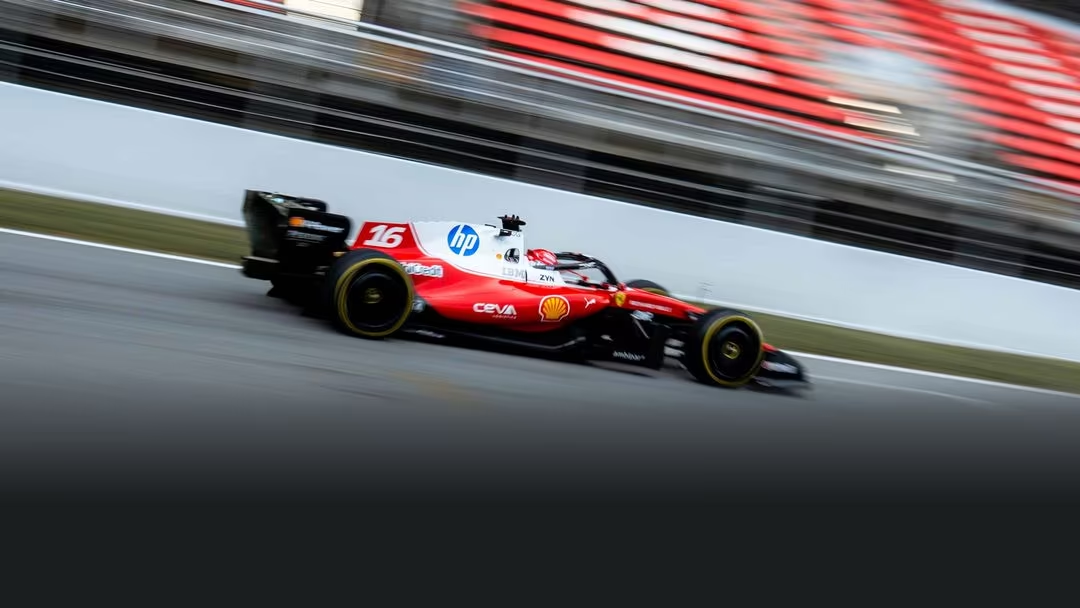
Ferrari’s final major aerodynamic package arrived at the Circuit of the Americas in October. The changes concentrated on the floor, sidepods and upper bodywork, with the intention of extracting more performance from the existing aerodynamic architecture.
According to The Race, this was the final significant development package planned for the SF-26.
The team had explored several alternative aerodynamic concepts throughout the season, including different sidepod geometries and solutions inspired by competitors. However, rather than committing substantial resources to a fundamental redesign, Ferrari concentrated on refining its existing platform.
The floor remained a particularly important area of development, with engineers looking to improve downforce, aerodynamic balance and the car’s operating window.
Following Austin, the expectation was that further work would concentrate on circuit-specific adaptations rather than introducing another substantial package.
Now, according to AutoRacer, even the opportunity to test experimental 2027 aerodynamic components during the remaining races has been ruled out.
Project 679 takes priority
Behind the scenes, Ferrari’s attention is moving towards Project 679, the internal designation associated with its 2027 Formula 1 challenger.
Under the technical direction of Loïc Serra, the team is looking to address several compromises identified throughout the SF-26 programme.
The important distinction is that Ferrari is not abandoning development altogether. It is changing where its development resources are being directed.
The remaining races will still provide valuable information. Engineers can continue studying aerodynamic behaviour, tyre performance, cooling requirements and the relationship between simulations and what happens on the circuit.
However, Ferrari reportedly does not intend to introduce significant new components simply to validate potential solutions for next year’s car.
That is a particularly interesting decision when compared with McLaren, which has reportedly been using recent race weekends to evaluate experimental aerodynamic components associated with its 2027 development programme.
Ferrari appears to prefer keeping its current machinery focused on delivering results while the next generation of its technical package is developed separately.
What happened to the 80% development carryover?
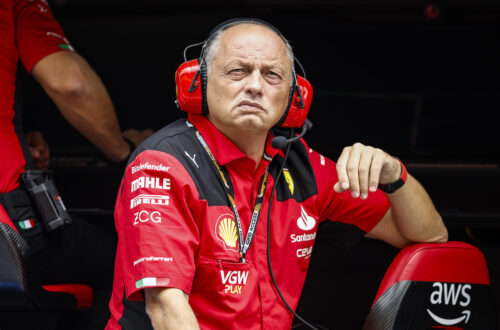
One of the questions surrounding this decision is how it fits with Fred Vasseur’s earlier comments.
In September, the Ferrari team principal explained that the Scuderia was not ready to abandon development of the SF-26.
His reasoning was straightforward: the team could continue improving its current car while carrying much of that engineering work into the next project.
Vasseur suggested that 80% of the development work could be carried over.
That does not necessarily mean 80% of the physical components would appear on the 2027 car. Rather, it highlights the value of engineering knowledge, development solutions and information gathered during the current programme.
The September strategy and November decision therefore represent different stages of the same development process.
Ferrari continued working on the SF-26, introduced its final significant aerodynamic package in Austin and is now directing its remaining resources towards Project 679.
A different approach to the final races
For Charles Leclerc and Lewis Hamilton, the consequences are relatively straightforward.
There will be no expectation of another major aerodynamic package transforming the SF-26 during the closing rounds of the championship.
Instead, the responsibility falls on the drivers and engineers to extract the maximum from the existing machinery.
Set-up choices, tyre management, aerodynamic configuration and adapting the car to individual circuit characteristics will become increasingly important.
Ferrari must also protect its position in the Constructors’ Championship, with Red Bull and McLaren remaining relevant competitors.
The final races are therefore not without importance. They simply have a different purpose for the engineering department.
Is Ferrari making the right decision?
There is an argument for both approaches.
McLaren’s willingness to use race weekends to evaluate future components offers an opportunity to gather real-world information before the next season. But introducing experimental parts can also complicate an already demanding race weekend, particularly when a team is still trying to extract performance from its current car.
Ferrari’s approach is more conservative.
Rather than using the remaining races as an extension of its 2027 testing programme, Maranello appears determined to concentrate its resources on completing Project 679.
There is also a bigger question hanging over the Scuderia.
Ferrari has spent considerable time identifying the limitations of its current package. It has examined aerodynamic efficiency, power-unit performance and the compromises associated with its overall design philosophy.
The challenge is ensuring those lessons translate into a genuinely competitive successor.
For Hamilton and Leclerc, the immediate task is to finish the season strongly. For Serra and the engineering department, the real examination is already taking shape behind the doors of Maranello.
Ferrari has drawn a line under the SF-26’s major development programme. Whether Project 679 represents the beginning of a genuine competitive recovery, however, is something the team will have to prove on track.
The Scuderia has stopped looking for another major step from its current car. Now it must make sure that the next one is worth the wait.