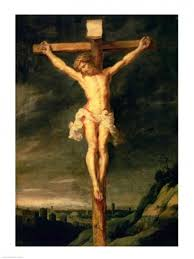
In the world of art, there are pieces that transcend time, speaking to the very soul of humanity. Rubens’ “Crucifixion” is one such masterpiece, a poignant and powerful depiction of Christ’s sacrifice that has been rediscovered and restored to its former glory.

A BRIEF HISTORY
The “Crucifixion” is a painting by the Flemish master Peter Paul Rubens, created around 1617-1618. It is believed to have been commissioned by the Infanta Isabella Clara Eugenia, daughter of Philip II of Spain, for the Convent of the Holy Trinity in Madrid. The painting was likely intended to be a devotional piece, meant to inspire contemplation and reverence in the viewer.
THE PAINTING
The “Crucifixion” depicts Christ on the cross, surrounded by a crowd of figures. The composition is dynamic, with the figures arranged in a spiral that draws the viewer’s eye upwards to Christ’s face. The painting is characterized by its dramatic lighting, vivid colors, and intense emotions.
Rubens’ use of chiaroscuro, a technique that emphasizes contrasts between light and dark, adds depth and drama to the painting. The figures are rendered with incredible detail, from the textures of their clothing to the expressions on their faces.
RESTORATION AND RECOVERY
The “Crucifixion” had been lost to the art world for centuries, its whereabouts unknown until it was rediscovered in a private collection. The painting underwent a meticulous restoration process, which revealed the full extent of Rubens’ genius.
The restoration team worked tirelessly to remove layers of grime and overpainting, revealing the vibrant colors and delicate brushwork that make the “Crucifixion” such a masterpiece. The result is a painting that is both hauntingly beautiful and deeply moving.
A SYMBOL OF FAITH
The “Crucifixion” is more than just a work of art – it is a symbol of faith, a reminder of the power of sacrifice and redemption. For centuries, it has inspired countless viewers, evoking feelings of compassion, contrition, and awe.
As you gaze upon the “Crucifixion”, you are struck by the sheer intensity of the scene. Christ’s face is contorted in agony, yet his eyes are turned upwards, towards heaven. The figures surrounding him are equally expressive, each one conveying a sense of grief, shock, or devotion.
A MASTERPIECE REDEEMED
The rediscovery and restoration of Rubens’ “Crucifixion” is a triumph for the art world. This masterpiece has been returned to us, its beauty and power intact. It is a reminder that even in the darkest of times, there is always hope, always redemption.
As we gaze upon the “Crucifixion”, we are reminded of the enduring power of art to inspire, to uplift, and to transform. This painting is a testament to the genius of Rubens, and to the enduring legacy of Baroque art.