
Formula 1 is already looking beyond its current power-unit cycle, and Mattia Binotto appears to be thinking about more than simply what the next engine should look like. He is asking a more fundamental question: when a driver gets alongside another car, will he actually have the power to complete the pass?
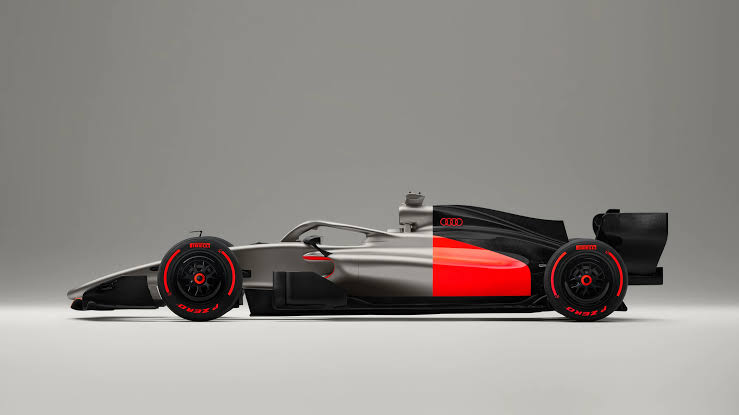
That conversation came into focus on Thursday in Baku, where Audi F1 chief Mattia Binotto confirmed that a push-to-pass system is being discussed for Formula 1’s next engine cycle.
The proposal is still very much in development. Binotto made clear that neither the technology nor its precise operation has been agreed with the FIA. The possibilities being discussed include additional turbo boost, an evolution of a DRS-style system or an electrical power deployment mechanism.
The objective, however, is considerably clearer: Formula 1 wants drivers to have a meaningful burst of additional performance when an overtaking opportunity presents itself.
As reported by F1inGenerale, Binotto said the system was “on the table for discussion,” specifically because Formula 1 needs to avoid races where cars become trapped in trains with no realistic opportunity to pass.
That is an important distinction.
This would not necessarily mean bringing back the old DRS system in its previous form. Instead, the sport appears to be examining whether the power unit itself can become part of the overtaking solution.
The question Formula 1 needs to answer
The challenge with any overtaking aid is finding the point between giving a driver the tools to attack and simply handing him an artificial pass.
Formula 1 has spent years attempting to solve this problem through aerodynamics. The 2026 regulations took a different approach, introducing active aerodynamics and a major increase in electrical power while removing the MGU-H from the power unit.
But the next generation of engines could take another step.
Rather than relying entirely on aerodynamic characteristics to create an overtaking opportunity, the driver could potentially be given a controlled amount of additional power at precisely the moment when it matters.

That is where Binotto’s comments become particularly interesting.
The exact mechanism is still undecided. As Binotto explained, it could involve turbo pressure, an aerodynamic system or electrical energy. The final solution will have to be negotiated between Formula 1, the FIA and the manufacturers.
And that means the push-to-pass conversation is actually part of a much larger debate.
Binotto’s bigger argument: simplify the engine without removing the technology
On Thursday, Binotto also spoke about the next generation of Formula 1 power units and called for the regulations to be agreed and voted on before the end of 2026.
That timing matters because the current discussion is looking toward a possible 2030 introduction.
According to Grandprix.com, Binotto expects a V8 to form the basis of the next engine formula, with 2030 currently the earliest possible introduction. However, the details surrounding turbocharging and the hybrid system remain unresolved.
This is where I find Binotto’s argument particularly interesting.
He is not advocating the removal of hybrid technology altogether.
Quite the opposite.
Binotto has argued that the hybrid component should remain, while simultaneously pushing for a substantial reduction in the cost of developing the next generation of engines. Turbocharging, meanwhile, remains a possibility rather than a confirmed component of the final regulations.
And, frankly, that approach makes sense within the direction Formula 1 has already established.
The sport has spent more than a decade turning its power units into some of the most sophisticated racing engines ever built. The 2026 regulations removed the MGU-H, but dramatically increased the electrical contribution, with the FIA describing the new architecture as more road-relevant while retaining a cutting-edge hybrid philosophy.
The question now is whether Formula 1 needs to keep adding complexity simply because it can.
Binotto appears to be asking whether the sport can preserve the technological challenge while making the engines cheaper, lighter and more accessible to manufacturers.
And then there is the turbo
This is the part of the discussion that deserves more attention.
The MGU-H disappeared with the 2026 regulations, and manufacturers consequently lost one of the most sophisticated pieces of technology ever incorporated into a Formula 1 power unit.
The MGU-H was capable of recovering energy from the turbocharger’s exhaust-gas flow and could also be used to control turbo speed. It was incredibly effective, but its complexity and limited adoption in road cars were among the reasons Formula 1 moved away from it.
But removing the MGU-H does not necessarily mean Formula 1 has to abandon turbocharging itself.
And that appears to be one of Binotto’s arguments.
Audi has been pushing for turbocharging to remain part of the sport’s future engine philosophy, particularly because the manufacturer wants the next generation of power units to retain technological relevance and efficiency. Motorsport.com previously reported that Audi sees efficiency as a central part of the 2030 discussion.
That distinction is important.
Turbocharging does not have to mean bringing back the MGU-H.
A future engine could theoretically combine a conventional turbocharger with a much smaller electrical system, creating a power unit that is mechanically simpler than the previous generation while retaining forced induction and hybrid technology.
The 3.0-litre turbo V8 proposal
And this is where the emerging picture for 2030 becomes particularly interesting.
Motorsport.com reported this week that the preliminary direction for the next engine cycle is a 3.0-litre turbocharged V8, paired with a smaller electric motor and a power unit expected to be around 50kg lighter than today’s unit.
The naturally aspirated alternative has reportedly fallen away from the main proposal, while discussions continue over the turbocharger and electrical architecture.
That should be treated as a developing proposal rather than final regulation.
Grandprix.com makes that distinction clear: the V8 is the expected foundation, but the turbo and hybrid details have not yet been settled, and the FIA has not published the final regulations for the next cycle.
If the concept eventually becomes reality, however, Formula 1 could be heading toward a fascinating compromise.
A larger internal-combustion engine.
A smaller electrical component.
A turbocharged V8.
Sustainable fuel.
A significantly lighter power unit.
And potentially a controlled push-to-pass system.
That is a very different philosophy from the increasingly complex power units of the previous era.
The cost question may be just as important as the technical one
For me, this is where Binotto’s comments go beyond simply being an engineer’s argument about engines.
Formula 1’s manufacturers are spending enormous sums developing power units, and every new engine cycle effectively creates another technological arms race.
That creates an obvious problem for the sport.
The more expensive the engine becomes, the more difficult it is to justify participation to existing manufacturers and potential newcomers.
Binotto is therefore talking about reducing the cost of developing the next engine while preserving a meaningful technological challenge.
That is an important balance.
Make the engine too simple and manufacturers lose one of the reasons to participate.
Make it too complicated and expensive and the sport risks creating a technical competition that only the largest manufacturers can comfortably sustain.
The emerging 2030 concept appears to be searching for the middle ground.
When could we actually see it?
Not yet.
The current power-unit regulations cover the 2026-2030 championship seasons, while the next-generation proposal is being discussed for 2030 or potentially 2031.
Binotto’s push for a vote before the end of 2026 is therefore about giving manufacturers enough certainty to begin designing the next generation of engines. It is not, according to Grandprix.com’s reporting, a demand to bring the new engine into competition immediately.
There is still considerable work to do.
The precise V8 specification.
The turbocharger.
The size and role of the electrical system.
The overtaking mechanism.
The cost structure.
The fuel regulations.
And ultimately the performance targets.
All of those pieces have to fit together.
The interesting part is that Formula 1 is thinking about the driver again
The push-to-pass discussion may ultimately be the most important part of this entire conversation.
Formula 1 can build the most technically sophisticated car in the world, but if a driver catches another car and cannot get close enough to actually attack, the technology becomes irrelevant to the person watching the race.
Binotto’s argument appears to be that the next generation of power units should not simply produce impressive numbers on a dyno. They should give the driver the tools to race.
That could mean an electrical deployment.
It could mean turbo boost.
It could mean another solution that has not yet been agreed.
What matters is that Formula 1 is considering an overtaking system that is integrated into the performance of the power unit rather than treating overtaking as purely an aerodynamic problem.
And perhaps that is why Binotto’s comments are worth watching.
He isn’t simply talking about bringing back the V8.
He is talking about simplifying the engine, reducing its cost, retaining hybrid technology, potentially retaining turbocharging, reducing weight and giving drivers usable power when they need it most.
If the emerging 2030 proposal survives the negotiations, Formula 1 could end up with an engine that is simultaneously more traditional in character and more deliberate in how technology is used.
For a sport that has spent years chasing technological complexity, that could be one of its most significant changes yet.




