Athena Pathway vs Luna Rossa: Naples Is Where the Real Questions Begin
The second Preliminary Regatta of the 38th America’s Cup arrives in Naples on September 24–27, and this time the water itself may be as important as the result.
The Louis Vuitton 38th America’s Cup is moving into a fascinating phase.
After the opening Preliminary Regatta in Sardinia gave the teams their first serious opportunity to measure themselves against one another, the fleet now moves to Naples for the second and final Preliminary Regatta of 2026.
For Luna Rossa Prada Pirelli and Athena Pathway, there is an additional layer to the story.
This is not simply another regatta.
Naples is the 2027 America’s Cup racecourse.
The teams will therefore be learning about the very water on which the Louis Vuitton Cup and America’s Cup Match will be contested next year. The official format calls for fleet racing in AC40s, followed by a winner-takes-all match race between the top two crews.
And that makes this week particularly interesting.
Luna Rossa arrives with something to protect
Luna Rossa enters Naples after an impressive first Preliminary Regatta in Sardinia.
The Italian senior team won the overall event, while its Women & Youth team also took its divisional trophy. It was effectively a Luna Rossa double, giving the Italian programme an early indication that its approach to the new AC40 campaign was producing results.
But there is an important distinction between winning Sardinia and proving what will happen in Naples.
Sardinia was the first competitive benchmark of the cycle.
Naples is different.
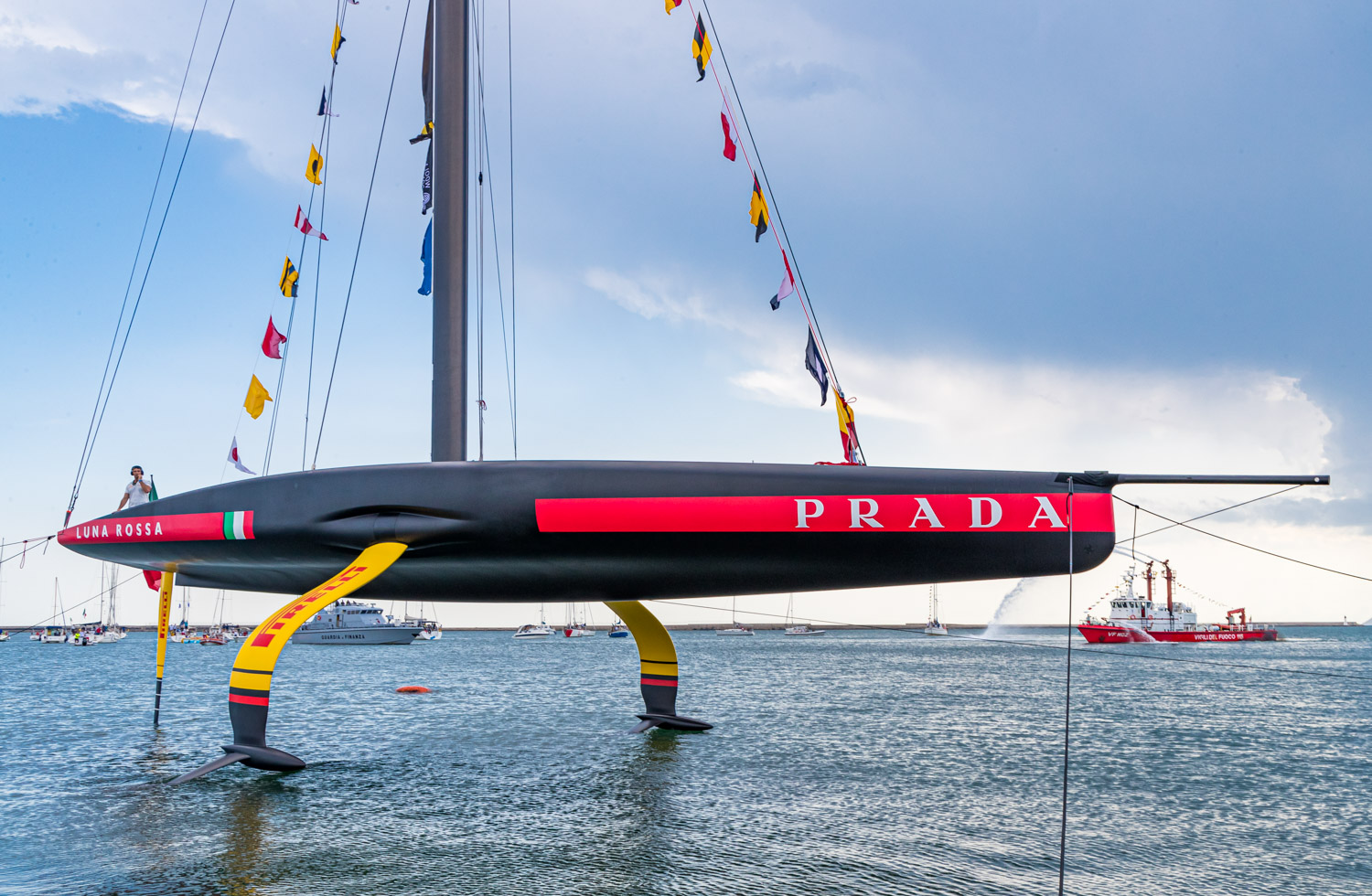
The teams have now had months more training, more data and considerably more time to understand their AC40s. Luna Rossa has also been working simultaneously on its AC40 programme in Naples and its AC75 development programme in Cagliari.
The Italian team has already moved its operation to Nisida, where it will continue its preparation for the regatta. Luna Rossa has also announced a rotating group of sailors for the Preliminary Regatta, including Peter Burling, Marco Gradoni and Ruggero Tita among the helmsmen, with the final daily combinations to be determined.
That rotation is significant.
Luna Rossa is not simply trying to win races. It is developing a group of sailors who may become increasingly important as the America’s Cup campaign progresses.
Athena Pathway has a different story to tell
Athena Pathway’s Sardinia campaign was considerably more complicated.
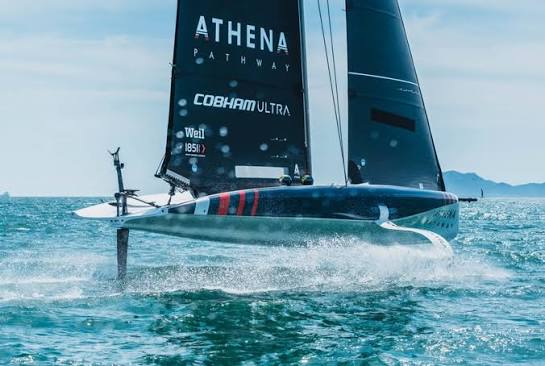
The British Women & Youth crew experienced difficult moments, including a capsize, but they also demonstrated exactly the sort of ability that becomes important in foiling competition: keeping the boat flying when others cannot.
That came dramatically in Race 5.
With the breeze dropping into the 7–10-knot range and conditions becoming increasingly unpredictable, Athena Pathway managed to stay on the foils while much of the fleet struggled. Hannah Mills and Ellie Aldridge kept the boat moving through the difficult sections and ultimately took the race win.
That race may have been one of the most useful pieces of information Athena Pathway took from Sardinia.
The lesson wasn’t simply that the team could win.
It was that the team could exploit changing conditions.
And Naples could provide plenty of opportunities to demonstrate that again.
What should we expect in Naples?
The biggest difference is that there is considerably less room for teams to rely on a technical safety net.
In Sardinia, teams had access to a five-minute delay card that could be used in fleet racing if technical problems occurred.
That system has been removed for Naples.
The expectation is therefore simple: if the boat is supposed to be on the starting line, it needs to be there.
The fleet races will be contested in winds between approximately 7.5 and 21 knots, with race management retaining the ability to cancel racing if the sea state becomes unsuitable for foiling. The races have a 25-minute maximum duration, and the course will use windward/leeward gates, with the precise configuration adjusted according to conditions.
That creates several potential battlegrounds.
1. Staying on the foils
This may be the first major separator.
At the America’s Cup level, a boat doesn’t necessarily need to be dramatically faster to win.
It needs to lose less speed.
A splashdown, poor manoeuvre or failure to reconnect with the wind can destroy an advantage almost instantly.
Athena Pathway demonstrated in Sardinia that it can keep the boat flying when conditions deteriorate.
Luna Rossa, meanwhile, showed across the Sardinia regatta that it can combine speed with consistency.
Naples will test both.
2. The start
Expect the starting box to become extremely important.
With nine AC40s involved, there will be traffic, pressure and very little opportunity to recover from a poor opening.
The difference between entering the first leg with clear air and entering it behind another boat could be enormous.
And because the fleet races award 10 points for first place, cascading down to two points for ninth, every race matters.
There is no luxury of throwing away several races and simply waiting for the final.
3. Reading Naples
This could ultimately be the most important part.
The 2026 Preliminary Regatta is not the America’s Cup.
But it is the first competitive opportunity to learn the Naples racecourse.
Teams will be looking at wind shifts, pressure, current, sea state, shoreline effects and how the local conditions interact with the AC40.
The data gathered now could become extremely valuable when the much larger AC75s return for the 2027 America’s Cup.
Luna Rossa vs Athena Pathway
There is also an interesting subplot between the two programmes.
Luna Rossa’s Women & Youth team was one of the revelations of Sardinia, while Athena Pathway showed that it could challenge the fleet when the conditions became difficult. The two crews also have history: Luna Rossa defeated Athena Pathway in the inaugural Puig Women’s America’s Cup final in Barcelona in 2024.
But Naples is not simply about repeating Barcelona.
The teams are developing.
The sailors are gaining experience.
And the boats are becoming more familiar.
That means we could see a considerably more polished contest than we saw during the opening stages of the season.
What could Naples mean for Luna Rossa?
For Luna Rossa, another strong performance would reinforce the picture emerging from Sardinia: that the Italian programme has developed a strong AC40 operation and a deep pool of talent.
But there is another consideration.
How much does Luna Rossa actually want to show?
The team’s leadership has already acknowledged that it is conscious of revealing too much of its development work. Luna Rossa CEO Max Sirena has described Emirates Team New Zealand as the benchmark while also making clear that the Italian team must first deal with the challengers around it.
That makes Naples something of a balancing act.
Win, learn and collect data — but don’t necessarily reveal every card.
For Luna Rossa, the value of the event may therefore extend well beyond the trophy.
And what does it mean for Athena Pathway?
For Athena Pathway, Naples represents another opportunity to establish itself as a serious force within the developing British America’s Cup programme.
A strong regatta would provide valuable evidence that the Sardinia Race 5 victory was not an isolated moment.
More importantly, the team can continue developing the sailors who may become central to the wider British campaign.

The Women’s & Youth programmes are no longer simply supporting acts around the America’s Cup.
They are becoming an important part of the development pipeline.
The 2026 preliminary events are giving these sailors real America’s Cup racing experience, and that experience could become increasingly valuable as the 2027 campaign develops.
The bigger picture: 2026 is the laboratory
Perhaps the biggest mistake would be to treat the Naples result as a direct prediction of what will happen in the 2027 America’s Cup.
The AC40s are one-design boats.
The America’s Cup will ultimately be fought with AC75s.
That means today’s results cannot simply be transferred into tomorrow’s championship.
But the information can.
The teams are learning how their sailors work together.
They are learning how quickly crews can respond to changing conditions.
They are learning how their race strategies hold up under pressure.
And, perhaps most importantly, they are learning Naples.
That is why this particular Preliminary Regatta could be so valuable.
The final race of 2026
The Naples Preliminary Regatta runs from September 24 to 27, with fleet racing leading into a winner-takes-all final between the top two boats.
It is the final Preliminary Regatta of 2026.
And unlike Sardinia, nobody arrives completely unknown.
Everyone has data.
Everyone has watched everyone else.
Everyone has had time to improve.
That should make Naples a very different contest.
For Luna Rossa, the challenge is to demonstrate that Sardinia was the beginning of something rather than the high point.
For Athena Pathway, it is an opportunity to turn flashes of brilliance into sustained performance.
And for the America’s Cup as a whole, Naples represents something even bigger:
the first competitive glimpse of the battlefield for 2027.
The trophies may belong to 2026.
The lessons could belong to 2027.