Tropical Wave Dolly: What It Means for Bahamas Term Charters
By DLifeStyle Magazine
For anyone operating, booking or planning a term charter in The Bahamas, the latest weather development is a reminder that the Atlantic does not need to produce a major hurricane to affect a yacht itinerary.
Tropical Storm Dolly has already lost its organized circulation and has been downgraded to an open tropical wave. According to the National Hurricane Center, the remnants were moving rapidly westward, with the system expected to continue across the Atlantic and into the Caribbean.
For the Bahamas, that distinction matters.
Dolly is not currently a direct threat to The Bahamas, and there is no reason at this stage for charter guests to panic or automatically cancel an itinerary. But for captains, brokers and charter managers, the system is worth watching because tropical waves can still produce significant changes in wind, rain, sea state and visibility well beyond the center of a formally designated storm.
The Bahamas: Don’t Confuse “Not a Storm” With “No Weather”
The remnants of Dolly are moving westward at roughly 20–25 knots, with showers and thunderstorms associated with the wave. The National Hurricane Center has also highlighted strong to gale-force winds and rough to very rough seas within portions of the system.
That is particularly relevant for Bahamas charter operations.
A term charter through the Exumas, Abacos, Eleuthera or the wider island chain isn’t simply about whether a storm’s projected center crosses the destination. Captains have to consider the entire weather pattern — wind direction, fetch, wave development, thunderstorms, squalls and how those conditions interact with the shallow waters and exposed passages around the islands.
The Bahamas’ appeal is precisely its geography: hundreds of islands, cays, shallow banks, protected anchorages and open-water passages. That gives experienced crews enormous flexibility when conditions change.
And that flexibility becomes one of the biggest advantages of using a professionally managed charter yacht.
For Charter Guests, Flexibility Is the Luxury
One of the easiest mistakes to make when looking at a tropical system is focusing exclusively on the forecast cone.
For a Bahamas charter, the better question is:
Where can we safely and comfortably be if the weather changes?
A seven-day charter doesn’t necessarily have to follow a rigid route.
If conditions become less favorable on one side of the island chain, the captain can potentially adjust the itinerary, alter departure times, seek shelter, change anchorages or reposition the yacht toward another cruising area.
That is one of the fundamental differences between a yacht charter and a conventional vacation itinerary.
You’re not locked into one hotel.
You’re moving with the conditions.
Why This Matters More As We Approach the Peak of Hurricane Season
The timing is also important.
The Atlantic hurricane season is approaching its climatological peak, which means charter operators should be watching the tropics more closely regardless of whether Dolly itself becomes a concern for The Bahamas.
Dolly’s evolution is actually a useful illustration of why that vigilance matters. The system briefly reached tropical-storm status before losing its closed circulation and becoming an open wave. The National Hurricane Center subsequently issued its final advisory on the system.
In other words, not every tropical system becomes a hurricane — and not every system needs to become a hurricane to influence a charter itinerary.
For guests, that distinction is important.
For captains, it is standard operating procedure.
The Bahamas Charter Market Remains Active
The weather discussion comes at a time when the Bahamas remains firmly positioned as one of the Caribbean’s premier yacht-charter destinations.
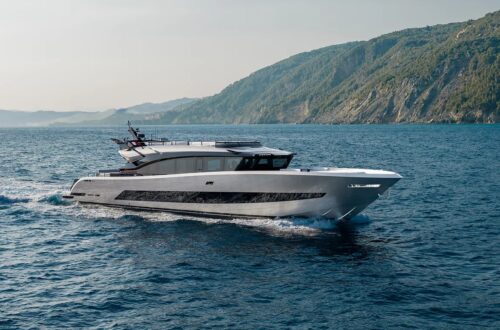
New charter inventory continues to enter the market. The 39.2-metre WHITE STAR, for example, has opened bookings for her inaugural Bahamas winter season, with itineraries including the Exumas, Nassau and the Abacos.
The 37-metre TEMPTATION has also announced year-round Bahamas charter availability, reinforcing the growing ability to position larger yachts in Bahamian waters outside the traditional winter window.
That makes weather intelligence increasingly important for the charter industry.
The Bahamas isn’t simply a winter destination anymore.
It is becoming a year-round charter proposition, and that means operators need to be equally comfortable managing the less predictable portions of the calendar.
There Is Another Change Charter Operators Need to Remember
Weather isn’t the only thing that has changed for visiting yachts.
The Bahamian government introduced revised cruising-permit and anchorage-fee structures effective April 1, 2026, applying to foreign vessels entering The Bahamas. The government has encouraged operators to review the updated requirements before entering Bahamian waters.
The official Bahamas boating guidance also makes clear that foreign vessels require the appropriate cruising permit, while charter operations are subject to Bahamian tax and charter-fee requirements.
For term-charter clients, much of that happens behind the scenes.
But for brokers, captains, management companies and owners, compliance remains part of delivering the seamless experience clients expect.
So, Should Bahamas Charters Be Concerned About Dolly?
At this point, no — but they should be paying attention.
The remnants of Dolly are not being forecast as a developing hurricane threat to The Bahamas. The immediate concerns associated with the system are farther east and south, particularly across the Leeward Islands and subsequently parts of the northeastern Caribbean.
For Bahamas term charters, the appropriate response isn’t alarm.
It’s awareness and flexibility.
Captains should continue monitoring updated forecasts, particularly wind and sea conditions. Charter brokers should keep communication open with guests whose departures coincide with unsettled weather. And clients should understand that an itinerary may change — not because the charter has failed, but because the captain is doing exactly what they are supposed to do.
The Bigger Picture
Dolly may ultimately become little more than a footnote in the 2026 Atlantic hurricane season.
But for the Bahamas charter industry, it serves as another reminder that the best luxury isn’t simply the yacht, the destination or the itinerary — it’s having the ability to adapt.
The turquoise water will still be there.
The sandbanks will still be there.
The Exumas will still be there.
And with the right captain and charter team, a changing weather pattern doesn’t necessarily mean the end of the experience. It can simply mean the route changes.
For those of us following Bahamas term charters, that is the update that matters most:
Watch the weather, respect the ocean, and let the captain do what the captain does best — put the yacht and its guests where they need to be.
DLifeStyle Magazine will continue monitoring the Atlantic and Bahamas marine conditions as the 2026 charter season progresses.