There is an undeniable, dark magnetism to modern monster lore. From late-night Cartoon Network marathons to the rain-slicked, blue-tinted gothic corridors of Underworld, screen monsters have quietly raised us. They represent an odd kind of universal language—a shared mythology of silver bullets, moonlit transformations, and the eternal clash between raw instinct and human intellect.

When MTV’s Teen Wolf dove into the Dread Doctors arc in Season 5, it introduced a generation of viewers to the ultimate apex predator: La Bête du Gévaudan. While the show dialed up the shadowy, shadow-borne magic to fit its supernatural universe, the core concept wasn’t an invention of the writers’ room. Long before Hollywood started rendering fangs in CGI, a real-world nightmare stalked 18th-century France—and its DNA is woven into almost every monstrous lycanthrope we watch today.
[ 1764: Historical Nightmare ] ──> [ Early Cinema: The Wolf Man ] ──> [ Modern Cinema: Apex Monsters ]
Real attacks in Gévaudan; Established silver & moon Massive, quadrupedal beasts
unnatural size & aggression. transformations. (Van Helsing, Underworld).
The Real Terror: What Happened in Gévaudan?
Between 1764 and 1767, in the misty, forested Massif Central region of southern France, over a hundred people—mostly young women and children—were brutally slaughtered by a creature known simply as the Beast.

Eyewitnesses didn’t describe a normal wolf. They spoke of a creature the size of a steer, with a reddish-brown coat, an unnaturally broad chest, a panther-like tail, and a head that looked almost demonic. It possessed incredible agility, leaping over high stone walls, bypassing livestock, and deliberately hunting humans. The panic grew so severe that King Louis XV deployed royal troops and professional hunters, while locals whispered of a loup-garou—a human shapeshifter impervious to iron and lead.
The terror only ended when a local hunter named Jean Chastel shot a massive, bizarre canine using bullets allegedly cast from a melted silver medal of the Virgin Mary. The attacks stopped, but the legend was permanently burned into global folklore.
┌────────────────────────────────────────────────────────────────────────┐
│ THE GÉVAUDAN INFLUENCE ARCHETYPE │
│ │
│ Traditional Folklore Wolf ──> The Gévaudan Monster │
│ • Normal size ──> • Massive, bull-like frame │
│ • Purely animalistic ──> • Unnatural aggression/smarts │
│ • Standard grey coat ──> • Unique coloration & tail │
└────────────────────────────────────────────────────────────────────────┘
From History to the Screen: The Gévaudan Pattern
Before the Beast of Gévaudan became a household name in modern horror, cinematic werewolves were largely human-sized. Lon Chaney Jr.’s classic 1941 Wolf Man was essentially a tragic guy in makeup walking on two legs. But whenever filmmakers want to portray a werewolf as an unstoppable, primeval force of nature, they instinctively return to the physical template set in 18th-century France.

Consider the towering, monstrous transformations that have defined modern creature design:
- Hugh Jackman’s Van Helsing (2004): The werewolf transformation in Van Helsing is a direct descendant of the Gévaudan archetype. Instead of a sympathetic man-wolf, the film gives us a massive, jet-black beast with insane leaping ability, heavy shoulders, and an elongated snout. It isn’t just a cursed man; it is a giant, quadrupedal war machine capable of ripping through stone—echoing the exact reports sent to Louis XV.
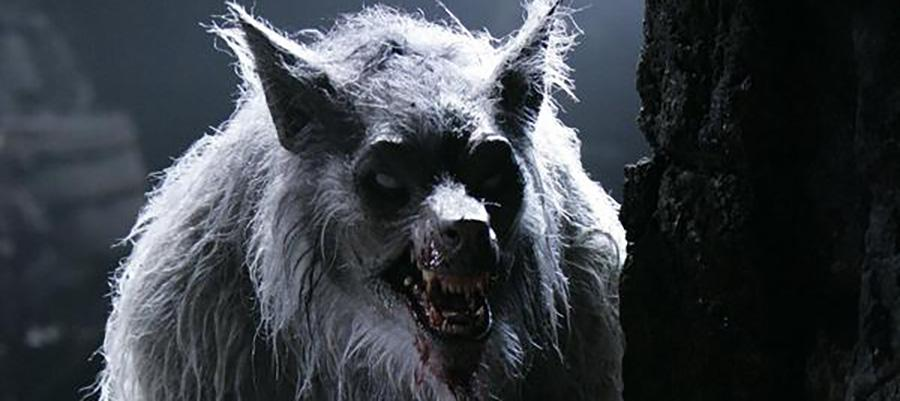
- William Corvinus in Underworld: Evolution: As the original, ancestral werewolf of the Underworld franchise, William is pure, untamed rage. Unlike the sleek, bipedal Lycans created by his descendants, William is a massive, albino beast with a heavy, brutal frame that operates on pure predatory instinct. He embodies the historical fear of an ancient, uncontrollable animal that cannot be reasoned with.
- Teen Wolf’s Sebastien Valet: The show’s rendition of the Beast—originally a ruthless 18th-century French soldier—embraces the myth’s dark roots while adding an aura of shadow magic. By explicitly tying the Dread Doctors’ chimera experiments back to Sebastien Valet, the series paid homage to the historical rumor that the real Beast was a wicked man whose dark heart manifested as a monster.
Why the Beast Still Haunts Us
The reason the Beast of Gévaudan continues to inspire every trailer, film, and series we obsess over comes down to one simple truth: it bridges the gap between historical reality and myth.
We know wolves exist, but the reports from Gévaudan describe something that defied the natural order. It represents the terrifying idea that nature can produce something far darker than our science can neatly explain.
Whether you are revisiting classic horror movies, rewatching high-stakes TV arcs, or just looking for a fascinating story to pass the night, the Beast of Gévaudan remains the ultimate blueprint. It reminds us that long before the silver screen brought ghouls and monsters into our living rooms, the real world had already given us a story worth fearing in the dark.