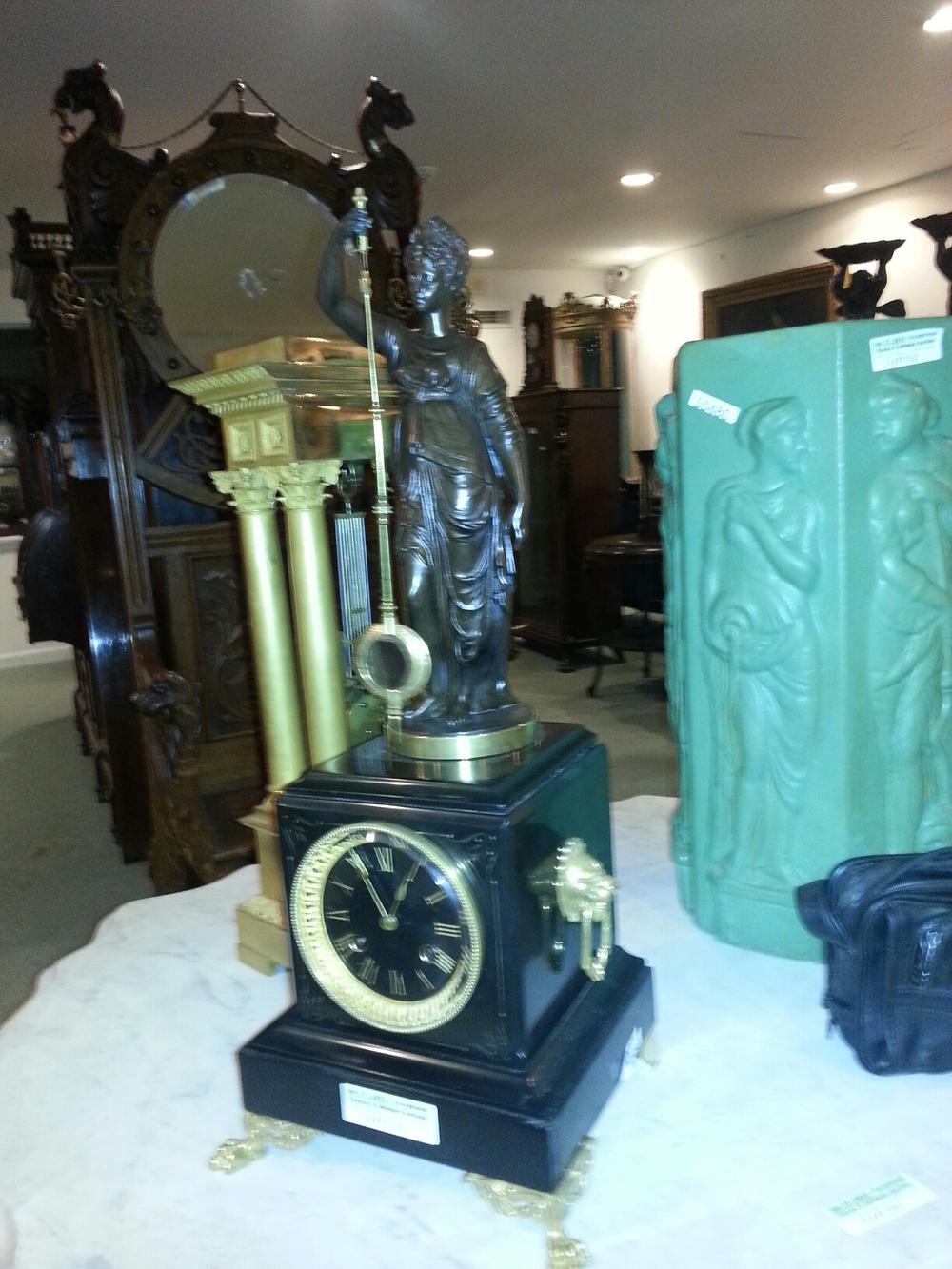
In the late 19th century, Paris was the undisputed capital of both fine art and industrial ambition. Wealthy Victorian elite gathered in salons not just to debate philosophy, but to marvel at the latest mechanical wonders of the Belle Époque. Among the most mesmerising creations of this era was the swinging mystery clock—a timepiece that appeared to defy the laws of gravity and physics.
While thousands of knockoffs and later variations flooded European parlors over the following decades, collectors and horological historians agree on one undeniable truth: the original masterworks created by French inventor André Romain Guilmet stand as the absolute holy grail of the genre.
Who Was André Romain Guilmet?
André Romain Guilmet was a visionary French horologist, engineer, and artisan active in Paris from the 1860s through the turn of the century. Rather than viewing clocks merely as functional tools to measure time, Guilmet saw them as canvases for micro-engineering and illusion.
He became world-famous for fusing high-end horology with the industrial momentum of his era. Beyond his mystery clocks, Guilmet is celebrated for his iconic Industrial Series—crafting working clocks shaped like steamships, locomotives, lighthouses, and beam engines, complete with moving pistons and rotating propellers driven by internal clockwork.
To bring his imaginative designs to life, Guilmet partnered with Paris’s premier bronze foundries, stamping his most prized creations with his official hallmark: “GLT Breveté” (Guilmet et Cie).
The Holy Grail: The Original 1867 “Glass-Bob” Patent
Before Guilmet’s breakthrough, mystery clocks relied on obvious visual tricks. On March 15, 1867, Guilmet revolutionized horology by securing French Patent (Brevet) No. 78311 for a swinging-figure mystery mechanism.
What makes these original 1870s masterworks vastly superior—and infinitely rarer—than the later 19th-century versions is where and how the clock actually operates.
The Magic of Micro-Kinetic Engineering
In cheaper, mass-produced versions from the late 1880s and 1900s, the entire clock mechanism was sealed inside the swinging brass orb held in the statue’s hand. But Guilmet’s original 1867 design hid the magic entirely out of sight:
- The Concealed Engine: Guilmet housed the entire 8-day precision movement, mainsprings, and escapement inside a heavy, solid slab of black Belgian marble or onyx at the clock’s base.
- The Imperceptible Pivot: The bronze statue standing atop the base did not sit rigid. Instead, Guilmet mounted the figure on a hidden, micro-pivoting platform beneath her feet.
- The Unseen Impulse: As the clock movement inside the marble base ticked, it rotated the hidden footplate back and forth by less than 0.5 millimeters—a motion completely imperceptible to the human eye.
This microscopic kinetic energy traveled silently up through the solid bronze statue, out into her extended arm, and gave just enough impulse to keep a stunning, bevel-cut glass or rock-crystal pendulum swinging in endless, effortless midair motion.
Why Surviving Originals Are Museum-Grade Rarities
Today, finding an authentic 1870s Guilmet “Glass-Bob” mystery clock is a monumental event in the antique world. Several factors contribute to their elite status:
- Materials Matter: While late 19th-century mass-market versions used cheap spelter (a soft white metal alloy) painted to look like bronze, Guilmet’s originals used heavy, solid cast gilt-bronze, frequently sculpted in collaboration with master artists.
- The Glass-Bob Pendulum: The clear, bevel-cut glass or carved rock-crystal pendulum bobs were exceptionally fragile. Over a century of household moves, many were lost or broken, making complete, original glass-bob assemblies exceptionally scarce.
- The “GLT Breveté” Stamp: Authentic pieces bear Guilmet’s official patent marks stamped into the movement plates and bronze bases.
When a verified Guilmet original surfaces at major international auction houses in London, Paris, or Geneva, it commands fierce bidding from horological museums and private collectors alike—frequently fetching tens of thousands of dollars.
Guilmet didn’t just build a clock; he captured time in a state of weightless, mechanical magic that continues to enchant over 150 years later.