The short answer is yes.
Walking into a three-hour epic based on Western literature’s oldest survivor, it’s hard to know exactly what to expect. But leaving, the scale of what just unfolded leaves you momentarily speechless, struggling to put the experience into words. Watching this narrative come together on screen is unlike anything contemporary cinema has offered in a generation. It is a story told in the way of old, yet reinvented with a visceral intensity that feels entirely new.
There is a primitive, enduring magic to these ancient elements—the terrifying scale of the Cyclops, the sheer brute force of giants, and the untamed horror of sea monsters. But Nolan doesn’t just treat them as visual effects blockbusters. He brings them to bear as massive, psychological forces to ground a deeply human tragedy.

The Architecture of Isolation
At its core, Nolan’s The Odyssey balances its grand, mythological scale against the crushing weight of profound isolation. He strips the narrative down to three painful human realities:
- A Wife in Mourning: Penelope’s quiet desperation and resilience as she holds together a decaying home against a predatory court of suitors.
- A Son Without a Father: Telemachus, growing up under the shadow of a legendary ghost, searching for his own identity in the absence of a guide.
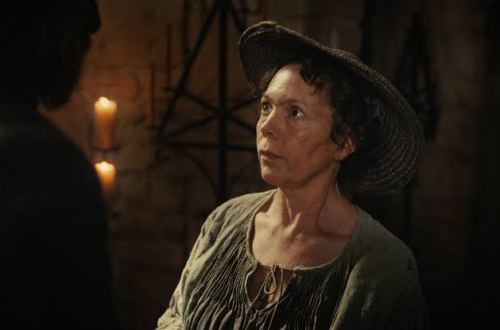
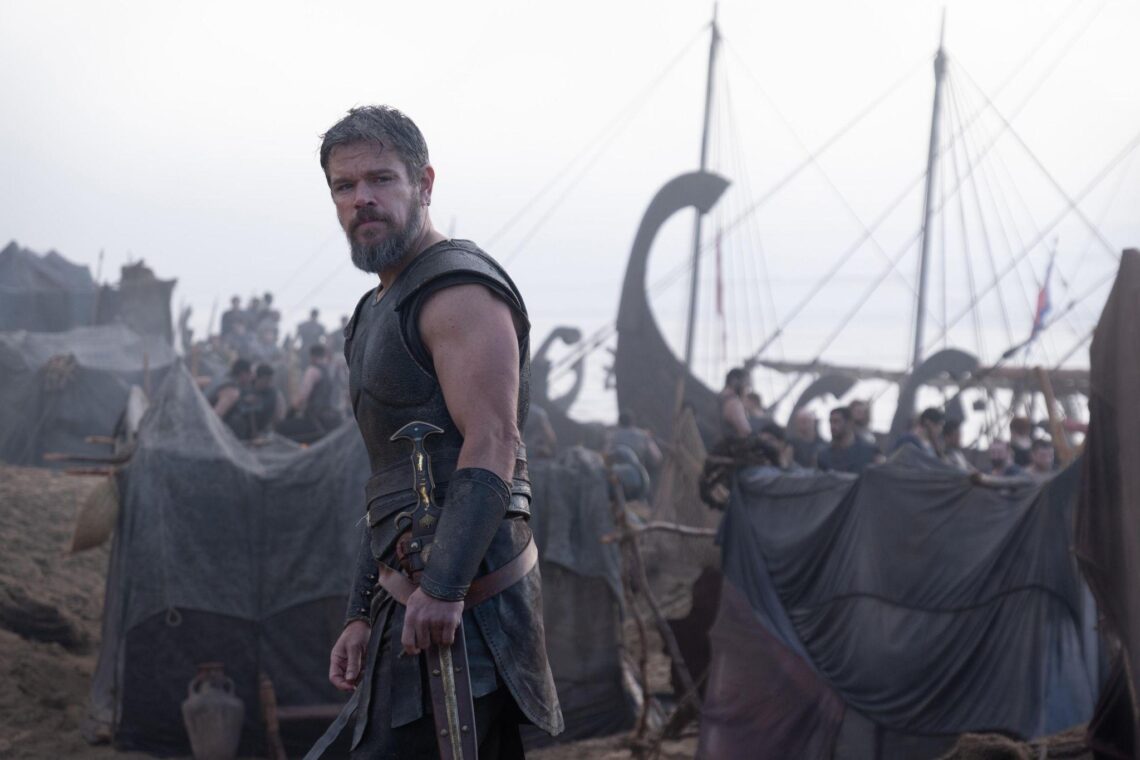
- A General Without an Army: Odysseus himself, stripped of his men, his power, and his bearing, drifting through a hostile universe.
The Cost of Returning Home

Most classic depictions of Homer’s epic focus entirely on the physical journey the clever tricks, the physical battles, and the geographical distance crossed. But Nolan pivots the camera inward. Ultimately, this is a profound story of self. It is a desperate psychological battle to remember who you are when the world is stripping away every piece of your identity. It doesn’t just chronicle the adventure; it counts the cost. The Odyssey tells the brutal truth of what it means to return home as someone else entirely. The sea and the monsters don’t just delay Odysseus; they erode him, changing him so deeply that the man who finally steps back onto the shores of Ithaca is fundamentally different from the king who left for Troy.
A Cinematic Monument
Much like Troy recaptured the imagination of a generation before it, Christopher Nolan’s The Odyssey feels uniquely built to stand the test of time. By anchoring mythological monsters in real, agonizing human stakes, it transcends the typical Hollywood epic.
It is a demanding, massive, and breathtaking piece of filmmaking that reminds us why we tell these stories in the first place—not just to marvel at the monsters outside, but to understand the terrain of the soul within.