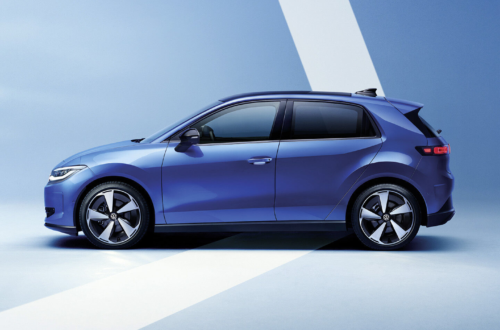
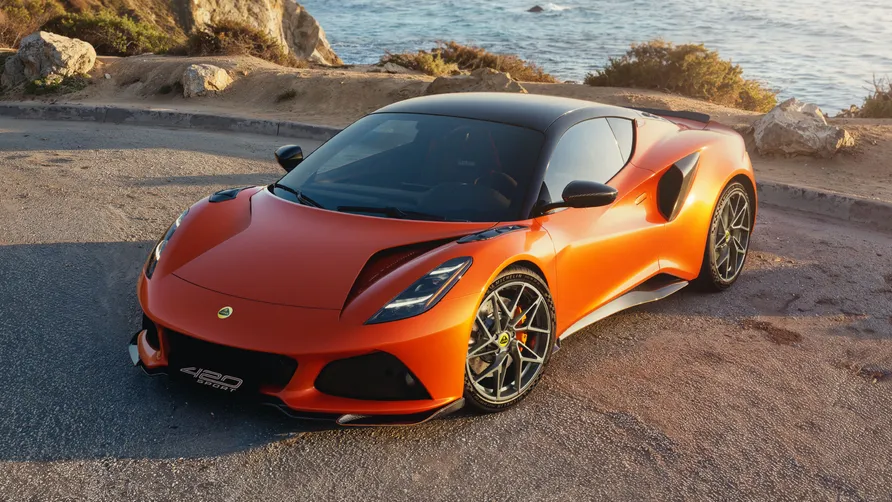
The geopolitical chess board between Ottawa and Beijing has just executed a massive, pragmatic pivot. Under a trade framework negotiated by Canadian Prime Minister Mark Carney and Chinese President Xi Jinping, the punitive $100\%$ tariffs slapped on Chinese electric vehicles in 2024 have been dismantled. In their place is a new quota system allowing up to 49,000 Chinese-manufactured EVs into Canada annually at a drastically reduced tariff rate of roughly 6%.

Dubbed the “canola-for-cars” deal, the agreement serves as a massive trade diversification play for Canada. In exchange for opening its automotive gates, Canada secured slashed duties and critical market access for major domestic agricultural exports, including canola meal, peas, and seafood.
While political shockwaves are reverberating across the U.S. border, the physical manifestation of this deal is already hitting Canadian docks.
The Spearhead: The Lotus Eletre Touches Down
The very first commercial fruit of this trade pact has arrived. A specialized vehicle carrier, the Glovis Treasure, has delivered the first 18 units of an initial wave of Chinese-built EVs bound for a launch ceremony in Montreal.
The vehicle leading the charge is the Lotus Eletre—an all-electric luxury “hyper SUV” manufactured by Lotus’s parent company, Zhejiang Geely Holding Group.
[Lotus Eletre Spec Sheet]
├── Powertrain: Dual-motor AWD
├── Output: Up to 905 electric horsepower
├── Footprint: Premium mid-size luxury crossover
└── Suspension: Track-tuned adaptive air suspension
For Lotus, this deal is an absolute game-changer. The Eletre previously carried a staggering Canadian sticker price starting around CAD $119,900 due to the old tariff regime. Under the revised 6% tariff structure, the tax burden drops precipitously, allowing Lotus to price the Eletre aggressively against established luxury EV staples from Porsche and Tesla.
For the broader EV market, Lotus is merely the canary in the coal mine. Behind Geely stand automotive giants Chery and BYD, both of which are already coordinating with Canadian regulatory bodies to homologate and ship their own vehicles by late autumn and into 2027. By 2027, the deal dictates that a growing portion of the 49,000-vehicle quota must be reserved for affordable mass-market models priced at CAD $35,000 or less, threatening to completely disrupt the North American entry-level EV sector.
Testing Canada’s Charging Infrastructure
Dropping 49,000 high-voltage Chinese EVs into the Canadian ecosystem every year will inevitably stress a charging network that is already battling regional reliability issues.
Vehicles like the Lotus Eletre utilize advanced, high-capacity battery packs designed for ultra-fast charging. To prevent massive bottlenecks at the pump, Canada’s infrastructure buildout must pivot hard toward high-output Level 3 DC fast-charging stations. The influx of these tech-heavy vehicles will place a premium on grid capacity, particularly during brutal Canadian winters when battery efficiency drops and thermal management demands spike.
The Physics of Efficiency: Gallons vs. Joules
When measuring the efficiency of these incoming vehicles, a common question arises: Do you get more miles per gallon or miles per joule?
From a purely mathematical and physical standpoint, you will always get exponentially more miles per gallon than per joule.
A joule ($J$) is an incredibly tiny, standardized metric unit of energy. To put it into perspective:
- 1 Joule is roughly the energy required to lift a small apple one meter straight up.
- 1 Gallon of Gasoline contains approximately 132,000,000 joules (132 megajoules) of chemical energy.
If an incredibly efficient electric vehicle achieves around 4 miles per kilowatt-hour, we can convert that into joules because 1{ kWh} = 3,600,000\{ Joules}.
$$\frac{4\text{ miles}}{3,600,000\text{ Joules}} \approx 0.0000011\text{ miles per joule}
Traveling on a single joule would move the Lotus Eletre a microscopic fraction of an inch. While EVs use their energy far more efficiently than internal combustion cars—converting over 80% of their electrical energy into propulsion versus a measly $20-25% thermal efficiency for a gas engine—the sheer scale of a gallon of fuel completely dwarfs a single unit of raw energy.