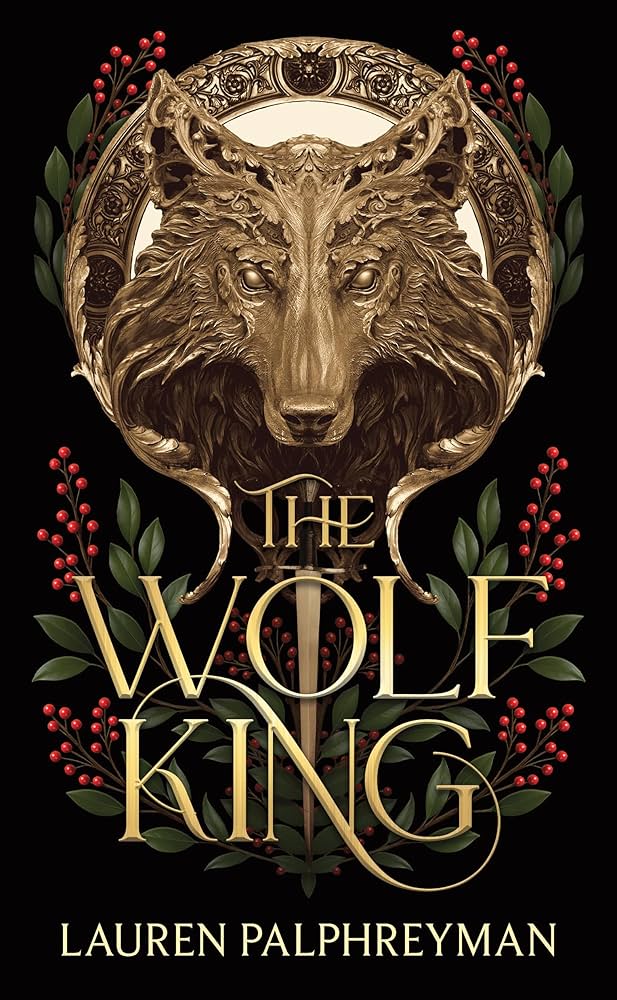
I’ll be honest: The Wolf King is not my kind of read. On paper, it’s outside my usual orbit, the sort of book I’d normally pass over without a second glance. But every now and then, a piece of writing pulls off a spectacular ambush. You open the first page expecting nothing, and within a few paragraphs, you’re pinned to the wall.
It wasn’t a slow burn; it was an immediate strike.
The book opens with an unflinching look at a dog fight. It’s barbaric, visceral, and unapologetically grim. The narrative instantly draws a line between that raw animal cruelty and the human fighters who step into the ring, men who genuinely revel in the violence of the canvas. It’s a heavy, dark way to open a story, but it’s masterfully efficient. Within just a few lines, you don’t just understand the setting; you feel the weight of it. The modern world evaporates, and you can see the dusty, blood-soaked arenas of an older, harsher era unraveling right in front of you.
But beneath the grim grit of the old-world setting, the book uncovers an entirely different kind of tension—one that is intensely human, raw, and equally captivating.
It’s found in the way Sebastian looks at his soon-to-be wife. That specific gaze is something I get completely. There is a universal truth in the way a man looks at a woman and finds himself utterly fascinated by the parts of her that a structured dress or a tight corset keeps hidden from the rest of the world. It’s a brilliant capture of pure lust and sexual appeal, stripped of polite pretense. It’s the magnetic pull of wanting to dismantle the boundaries, to see the wildness beneath the formality.
Which brings us to the real hook—the main protagonist, the princess.
On the surface, a royal protagonist in a historical setting feels distant. But strip away the titles, and her core conflict mirrors that same raw intensity. She is defined by a fierce, quiet longing to be entirely free and wild. She wants to exist beyond the manicured borders of her expected life, past the walls built to keep her contained.
That is where the book stops being an “outside my comfort zone” experiment. That ache for absolute autonomy, the desire to break clean away from the structure and just run—coupled with that unvarnished, physical desire—is entirely relatable.
The Wolf King might have started as an unlikely choice, but its opening pages prove that great writing doesn’t care about your preferred genres. It just demands that you look.