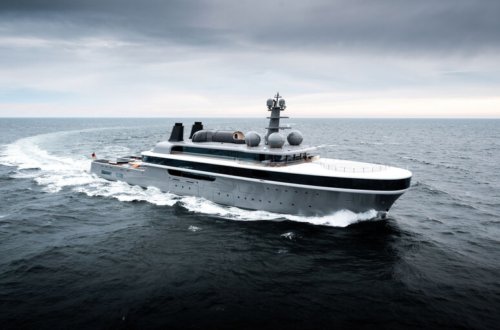
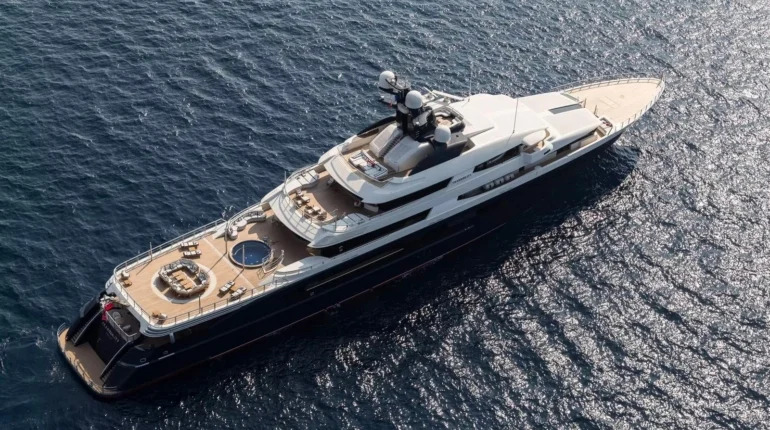
The conversion of a multi-million-dollar superyacht usually involves a fresh coat of paint, modernized interior fabrics, and perhaps an updated entertainment system. However, Valve billionaire Gabe Newell’s recent project represents a radical de-yachting. Newell has taken his 304-foot (92.8-meter) Oceanco superyacht—originally launched as Equanimity and later known as Tranquility—and completely stripped away its traditional luxury hallmarks.
Reborn as Draak (Dutch for “Dragon”), the vessel has just completed an intensive 2.5-year overhaul at Oceanco’s facilities in the Netherlands. Estimated to have cost more than $35 million, the project completely redefines the vessel’s mission from pleasure craft to a specialized research and deep-diving support platform. Operating under Newell’s marine science organization, Inkfish, Draak will act as the operational workhorse alongside his 364-foot flagship, Leviathan.
The $35M Engineering Overhaul: Swapping Spas for Subsea Gear
To transform a world-class passenger yacht into an unpretentious, high-utility support vessel, shipbuilders effectively had to open up the entire structural framework of the ship. The changes prioritize heavy logistics, underwater deployment, and long-duration functionality at sea:
- Helipad Removal & Heavy Lifting: In an unusual move for a vessel of this scale, the upper aft helideck was completely removed. In its place, engineers created a vast operational tender deck on the main deck aft. This area is now equipped with heavy-duty C-davits and a massive 12.6-ton upper-deck jib crane designed to launch and recover heavy scientific tenders, autonomous submersibles, and subsea gear.
- The Dive Center & Decompression Chamber: The yacht’s original experiential beach club and wellness spa—once the pinnacle of elite leisure—have been completely torn out. The space is now a fully equipped, professional dive center outfitted with an onboard decompression chamber to safely manage deep-sea diving physiological limits.
- Structural and Deck Redesign: To accommodate wet, heavy, and repetitive research work, the traditional high-maintenance teak decks were replaced with durable, low-maintenance Bolidt synthetic decking. Additionally, the stern was extended by one meter to incorporate a new, safer boarding platform with retractable fenders and heavy-duty swim stairs.
- Interior Repurposing: The luxury lounges have been re-engineered for communal, functional living. The main deck saloon has been turned into a large crew mess to feed rotating personnel. Another salon was converted into a technical “chef’s lab” for intimate dining and food science experimentation. Furthermore, high-end guest suites were restructured into adaptable cabins to handle fluctuating teams of scientists, engineers, and dive specialists.
Why These Changes Matter for Deep-Sea Research Teams
Conventional research vessels are often cramped, industrially harsh, and limited in their dual-vessel coordination. Conversely, standard superyachts are entirely unsuited for science because their glossy finishes, delicate teak decks, and lack of lifting infrastructure make deploying heavy machinery impossible.

The radical rebuild of Draak solves these issues, offering distinct advantages for scientific teams preparing for their next deep-sea expeditions:
1. Separation of Science and Grunt Work
Operating as a tightly integrated two-vessel ecosystem, Draak acts as the primary shield for the mothership, Leviathan. Draak is specifically outfitted to handle the loud, wet, and disruptive operational tasks. It can carry additional dive teams, transport massive technical tenders, and process heavy equipment deployment. This allows scientists and guests aboard Leviathan to remain focused on data analysis, laboratory work, and hospitality without deck operations interrupting their workflow.
2. Advanced Technical Diving and Safety Infrastructure
For expedition teams conducting manned subsea exploration, having a decompression chamber instantly accessible on the support vessel drastically minimizes the risks associated with decompression sickness (the bends). Teams can stage complex dive operations ahead of the primary vessel, support diver recovery in rougher seas, and stay out on location longer because they possess full medical and technical redundancy right on the water.
3. Enhanced Launch and Recovery Capabilities
The 12.6-ton jib crane and heavy-duty C-davits give expedition teams the mechanical muscle needed to deploy advanced remotely operated vehicles (ROVs), autonomous underwater vehicles (AUVs), and heavy oceanographic sampling arrays. Because the tender deck is designed around industrial-grade clearing paths, scientists can seamlessly transition gear through the wave zone without risking damage to delicate digital sensors or umbilical cables.
With Draak officially delivered and embarking toward its new operational base, Newell’s Inkfish organization has successfully converted a symbol of pure billionaire leisure into a highly capable asset for global ocean exploration. Data uncovered during these expeditions is intended to be open-sourced, meaning the grunt work handled by this retrofitted platform will ultimately benefit the wider scientific community for free.