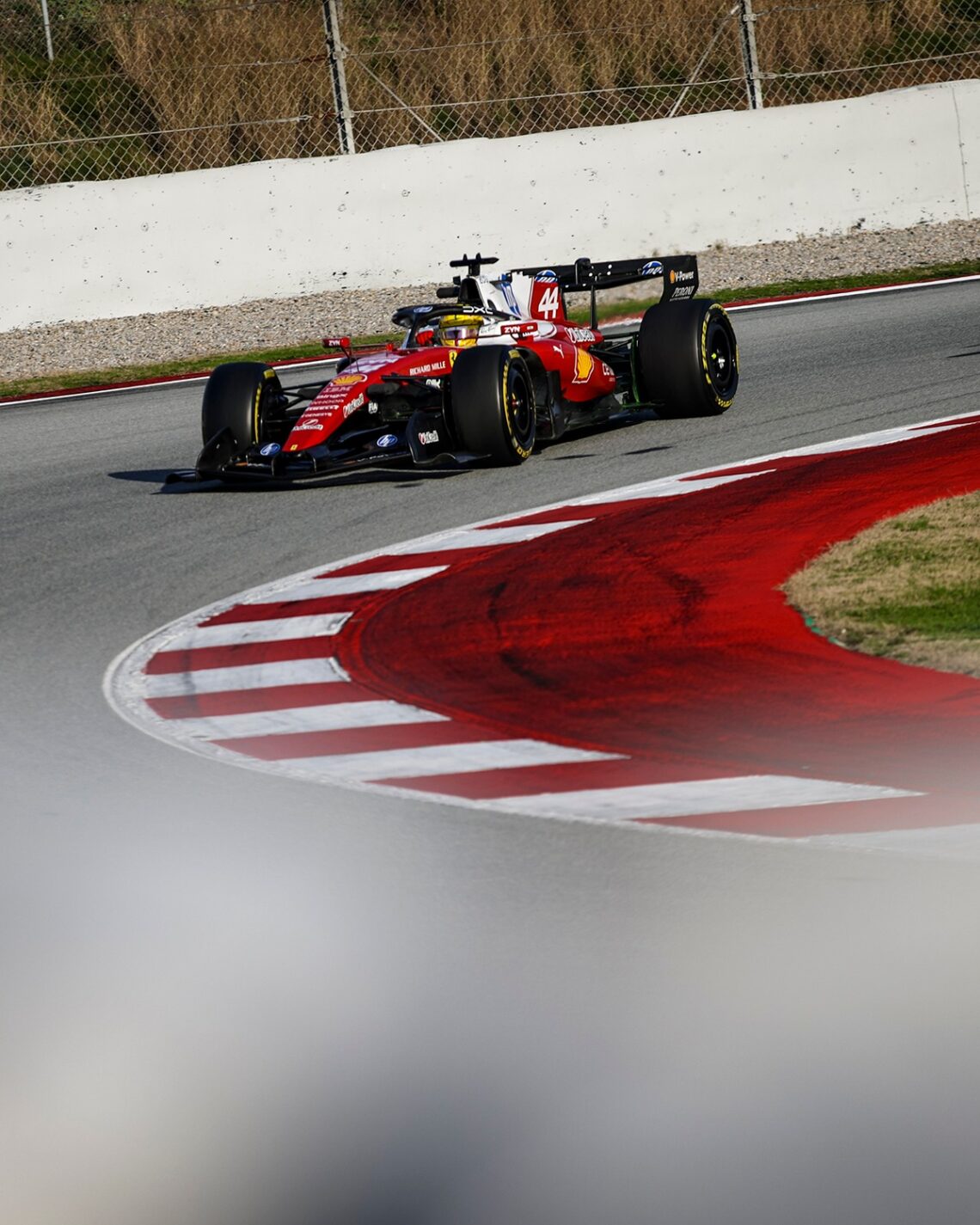
The 2026 Austrian Grand Prix has wrapped up at the Red Bull Ring, and while a double-points finish for Lewis Hamilton and Charles Leclerc looks respectable on paper, the telemetry and trackside tape tell a far more sobering story. For Scuderia Ferrari, the SF-26 is rapidly turning into a puzzle with missing pieces.

Going into the weekend, expectations were sky-high for Maranello’s heavily revised power unit. The paddock knew Ferrari had doubled down on their long-term technical partnership with Shell, pioneering a highly sophisticated fully immersive cooling system for the Energy Store (the battery pack). By keeping the cells and critical switching solenoids fully submerged in a specialized dielectric fluid, the goal was total thermal stability allowing the battery to be harvested to its absolute limit and deployed without the dreaded thermal throttling that plagues high-output electrical systems.
Instead, the Spielberg clips painted a brutal picture of a car caught in no-man’s-land.
The Corner-Exit Trap
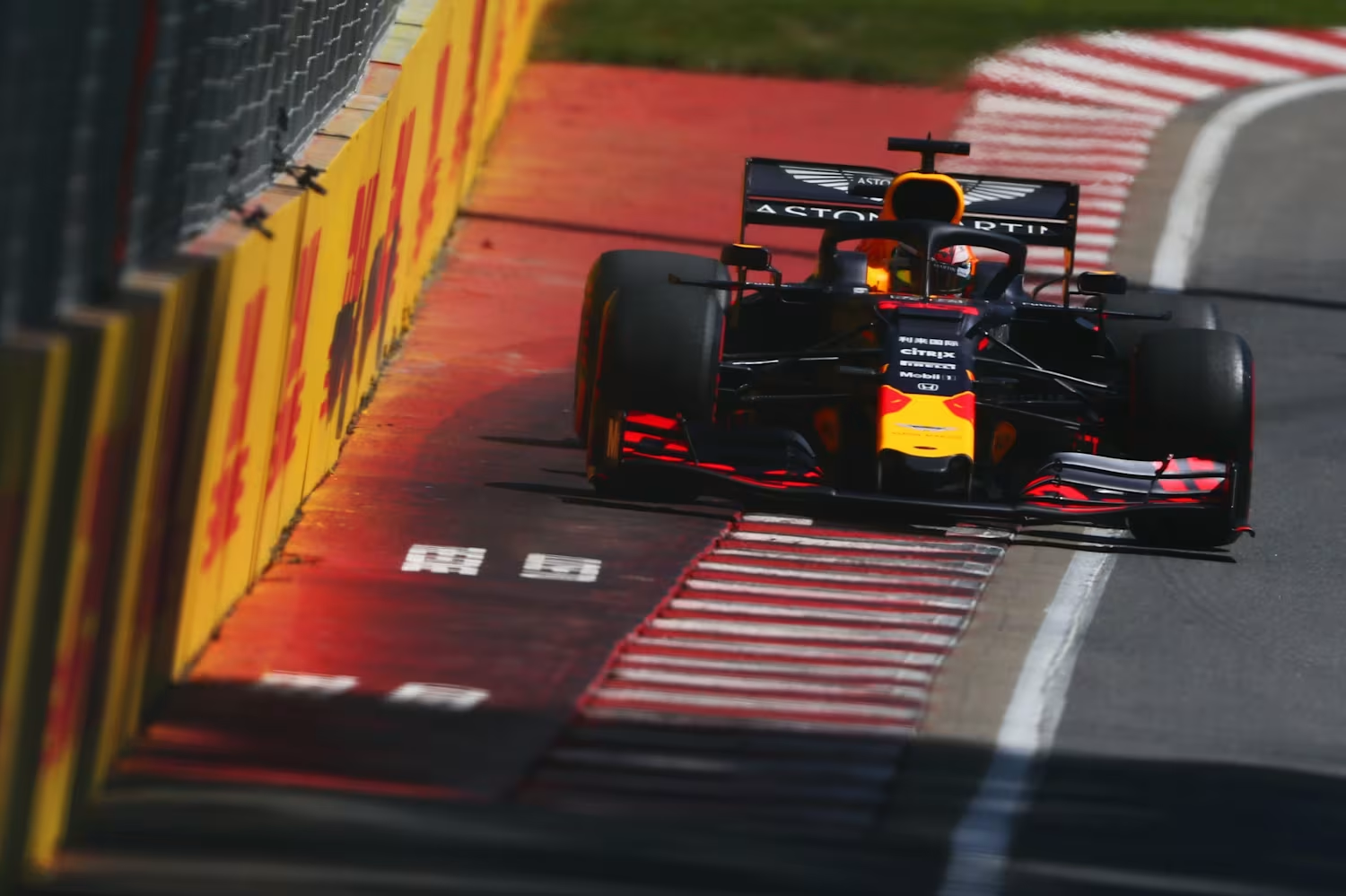
The most damning evidence came when Charles Leclerc found himself defending against Max Verstappen, Oscar Piastri, and remarkably, the surging Red Bull junior Isack Hadjar.

In the tight, traction-dependent sequences of Turns 3 and 4, the SF-26 looked visibly heavy and synthetically sluggish. It wasn’t just a lack of mechanical grip; it was a fundamental mismatch in how energy was being deployed.
Watching Hadjar’s Red Bull-backed machine slice past Leclerc highlighted Ferrari’s current Achilles’ heel: deployment lag and early clipping.
[Corner Entry] -> [Apex] -> [Ferrari Initial Hit] -> [Sudden Power De-rate (Clipping)]
└── Red Bull / McLaren Sail Past
In modern F1’s 50/50 power split between the internal combustion engine (ICE) and the electrical systems, if your software or hardware hesitates for even a microsecond to release those megajoules, you are a sitting duck. Ferrari appeared to suffer from a double-whammy:
- The Harvest Bottleneck: The battery doesn’t seem to be holding its charge efficiently under maximum MGU-K harvesting load.
- The Delivery Hesitation: When the drivers stomp on the throttle, the system is holding back, resulting in an unpredictable power curve that destroys the drivers’ confidence in tight corners.
Solenoids in the Deep: Why Immersion Tech is Stalling
The irony is that Ferrari’s fully immersive technology should be their ultimate weapon. Keeping the battery cells and solenoids entirely submerged in Shell’s fluid is designed to eliminate localized hot spots. When solenoids get hot, their electrical resistance skyrockets, causing erratic switching times and massive energy loss.
If the solenoids are fully submerged and running cool, the transfer of power from the battery to the electric motor should be seamless and instantaneous. So why is the power delivery still problematic?
Technical whispers from the paddock suggest two distinct possibilities:
- Fluid Dynamics & Churn Losses: Immersive cooling adds physical weight and fluid resistance inside the casing. If the internal management of the fluid isn’t perfect, the sheer kinetic energy of the car’s movement can cause internal pressure imbalances, ironically stressing the very solenoids meant to be protected.
- Software Conservatism: Because the 2026 regulations punish deployment inefficiencies so harshly, Ferrari’s engineers might be running overly defensive software maps. If the control electronics sense even a minor spike in resistance or fluid pressure, the system aggressively trims the electrical deployment to prevent a catastrophic thermal runaway.
More Questions Than Answers
An impressive drive from Hamilton and Leclerc can mask a car’s deficiencies over a single lap, but over a race distance in Austria, raw engineering honesty wins out. Ferrari’s rivals have clearly figured out how to extract and deploy their electrical energy with a sharper, more linear curve, leaving the SF-26 looking vulnerable on corner exits.
Maranello has the hardware concept right—immersion cooling is the future of high-performance EV and hybrid tech. But until they can get the fluid physics and deployment software to dance in harmony, the Red Bulls and McLarens will keep finding it all too easy to maneuver around them when the lights go green.