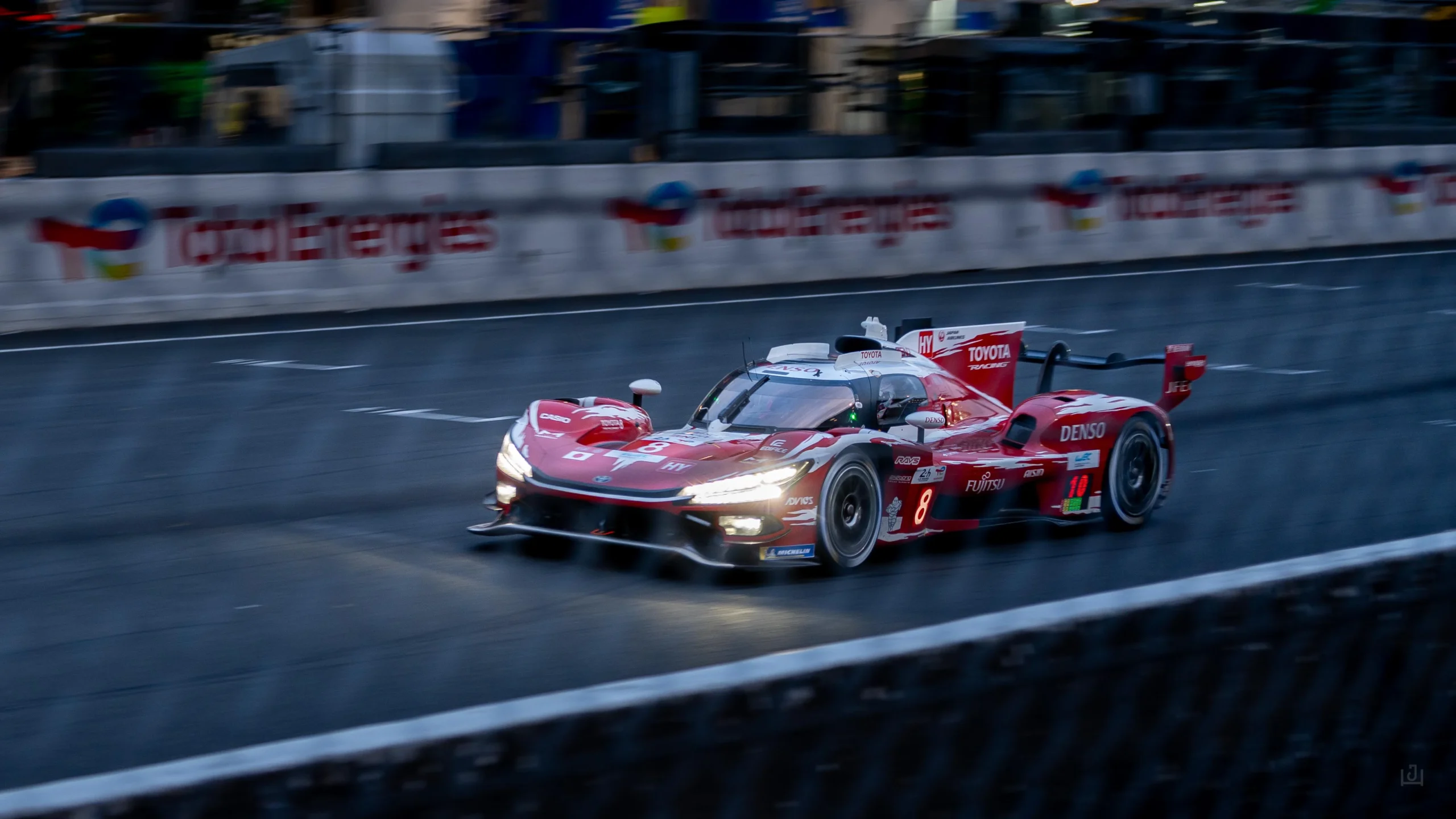
The Automobile Club de l’Ouest (ACO) and its president, Pierre Fillon, have confirmed a major shift in the timeline for hydrogen’s integration into the pinnacle of endurance racing. The official debut of the “H2 Hypercar” category has been pushed back to 2030 to give regulators and manufacturers more breathing room.
However, Fillon threw a massive bone to tech enthusiasts: a dedicated Garage 56 experimental entry for a hydrogen prototype remains a distinct possibility well before 2030.
The 3-Hour Refueling Myth (An Institutional Misunderstanding)
There is a widespread rumor in the paddock that hydrogen race cars require up to three hours to refuel, which would naturally make endurance racing completely impossible.
That three-hour figure is actually a mix-up regarding a completely different mechanical crisis. Actual liquid hydrogen refueling takes only about 90 seconds to 2.5 minutes firmly within a standard endurance pit window.
The “three hours” actually refers to the grueling amount of time it originally took Toyota’s mechanics to completely replace the onboard liquid hydrogen pump when it catastrophically degraded during early 24-hour race attempts.
Battling Pump Degradation: Toyota’s Dual-Drive Fix
Operating with liquid hydrogen requires keeping the fuel at a mind-boggling -253°C. Pumping a liquid that cold at the immense pressures required by a high-performance racing engine tears standard mechanical components to pieces.
The Engineering Redesign
To solve this, Toyota’s Gazoo Racing engineers redesigned the entire assembly with a dual-drive crank mechanism. By applying motor torque symmetrically from both ends of the crank, the boosting piston moves in a perfectly balanced manner. This single structural change skyrocketed pump durability from 8 hours to over 24 hours, eliminating the need for mid-race pump swaps entirely during their latest endurance runs.
The Financial Reality: What Does It Cost Every Weekend?
Running a hydrogen program at a competitive weekend level right now is a massive financial black hole, which is precisely why the ACO is relying on multi-billion-dollar manufacturer backing.
| Expense Category | Estimated Structural Cost Impact | The Operational Hurdle |
| Infrastructure | Millions per circuit | Traditional pit lanes lack cryogenic venting. Tracks must build specialized, isolated hydrogen fueling stations with custom safety perimeters. |
| Logistics & Transport | Triple standard freight costs | Transporting liquid hydrogen requires specialized, heavily insulated cryogenic tankers that must actively maintain -253°C over long distances. |
| Material Scarcity | High R&D premium | Components like custom elliptical carbon-fiber fuel tanks and aerospace-grade carbon-ceramic cooling systems are bespoke, non-commercial prototypes. |
Because the technology is in its infancy, running an independent hydrogen entry over a standard race weekend is virtually impossible for a privateer team. It requires the depth of a manufacturer budget like Toyota—who is concurrently using the project to pioneer consumer-facing technologies like synthetic e-fuel atomization and carbon-dioxide capture devices integrated right into the chassis.
The road to 2030 is incredibly steep, but by separating the refueling time from the component lifespan, the engineering framework of hydrogen racing is finally starting to look viable.