The Lifestyle

Style & Fashion: What it Means to be Fabulous

To overtake in “incredible style and fashion”—to be genuinely fabulous behind the wheel—is an art form that goes beyond the mechanical. It demands an unpretentious blend of supreme car control, absolute confidence, and a refusal to pull off a pass that looks ordinary.

While the word “fabulous” is often used to describe high-fashion aesthetics, in motorsport it means something much sharper: a blinding, audacious charisma that completely rewrites how a race car can be driven.

Throughout history, a rare group of iconic drivers and machines have earned this exact mantle. Here is the blueprint of what it truly means to be fabulous on the track, illuminated by the legends who defined it.

The Birth of the Moniker: The Original “Fabulous” Pioneers

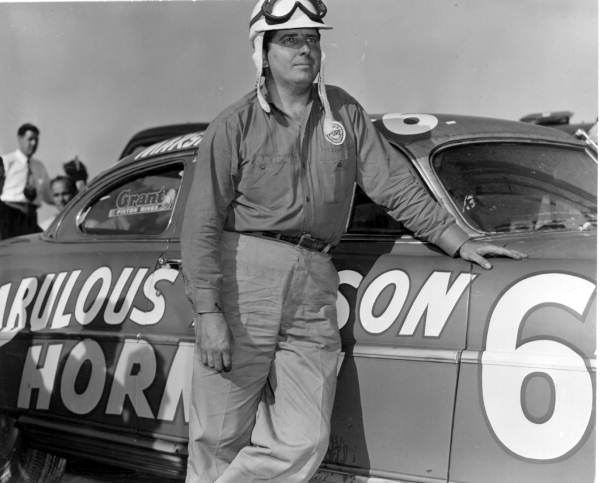
Long before the word was associated with modern style icons, it was literally painted on the side of a race car. In the early 1950s dawn of NASCAR, Marshall Teague, Herb Thomas, and Tim Flock completely dominated the sport driving the legendary “Fabulous Hudson Hornet.”

_..——-.._

.’ _..—.._ ‘.

/ .’ ‘. \

| / \ |

| | FABULOUS | |

| \ HORNET #92 / |

\ ‘. .’ /

‘. `’—–‘` .’

`’———‘`

What made them fabulous wasn’t a corporate marketing budget; it was a total subversion of the rules. While rival teams relied on massive, heavy V8 engines, these drivers weaponized a humble inline-6. Because the Hudson used a revolutionary “step-down” design, it possessed the lowest center of gravity of any car on the grid.

Thomas and Teague would slide these massive full-sized cars sideways around brutal dirt ovals with an effortless, physics-defying grace, completely humiliating the corporate giants of Detroit. They proved that true style comes from mechanical harmony and an unpretentious defiance of the status quo.

1. Lewis Hamilton: The Modern Master of Style & Substance

No modern driver embodies the fusion of high fashion and trackside lethalness quite like Lewis Hamilton. Whether pulling up to the paddock in custom couture or slicing through the field on Sunday, Hamilton has made “fabulous” his baseline.

[ PADDOCK WALK: COUTURE ] =========> [ APEX: UNCOMPROMISING ]

The Style of the Overtake:

Hamilton’s overtaking style is defined by an absolute, clinical elegance. He doesn’t rely on chaotic, dive-bomb lunges that force other drivers off the asphalt. Instead, his passes are choreographed deep in the braking zones—often positioning his car with millimeter precision to execute beautiful, switch-back maneuvers. It is an approach that relies heavily on a deep trust in his machinery, late-braking discipline, and the sheer audacity to make a pass look completely effortless.

2. Ayrton Senna: The Spiritual Perfectionist

If Hamilton brought fashion to the style, Ayrton Senna brought an intense, almost spiritual theatre to the act of overtaking.

“If you no longer go for a gap that exists, you are no longer a racing driver.”

— Ayrton Senna

The Style of the Overtake:

Senna didn’t just pass his rivals; he hypnotized them. His driving style was famously erratic on the throttle—staccato stabs of power that kept the turbo spooled and unsettled the driver ahead. To see Senna in the wet, dancing a car on the absolute ragged edge of adhesion at Donington Park in 1993, was to watch a master craftsman working in a different dimension. His style was fabulous because it was utterly uncompromising, poetic, and fiercely theatrical.

3. Gilles Villeneuve: The Beautiful Maverick

Enzo Ferrari famously saw shades of Tazio Nuvolari in Gilles Villeneuve, a driver who treated every single lap like an existential duel.

The Style of the Overtake:

Villeneuve’s definition of style was pure, unadulterated spectacularism. He didn’t care about tire preservation or calculated mathematical point-scoring. If a car had four wheels and a steering wheel, Gilles was going to slide it. His legendary wheel-to-wheel battle with René Arnoux at Dijon in 1979—banging wheels, locking brakes, and swapping positions multiple times a lap—remains the gold standard of racing in “incredible style and fashion.” He was fabulous because he wore his heart on his sleeve and treated the laws of physics like minor suggestions.

The Anatomy of a “Fabulous” Overtake

When you boil down what connects the early dirt-track dominance of the Hudson Hornet crew to the high-stakes chess match of modern Grand Prix racing, being fabulous relies on a highly specific set of traits:

Element The Formula The Result
The Setup Utterly unexpected positioning; identifying an intersection of track space that rivals assume is unusable. Complete psychological breakdown of the defender.
The Execution Smooth, continuous steering inputs paired with masterful brake modulation. The car looks like it’s flowing on rails while everyone else is wrestling the wheel.
The Charisma Retaining complete composure, leaving just enough room to be fair, but not an inch more. A pass that looks like art, leaving the paddock completely speechless.

Ultimately, overtaking in style means rejecting the boring, predictable path. It is a declaration that you aren’t just out there to collect a trophy—you are out there to leave an indelible mark on the sport.

For a deeper dive into the roots of this racing philosophy, you can watch The Fabulous Hudson Hornet Full Documentary which details how a self-trained racer and an underdog car combined engineering innovation and raw grit to dominate the early days of American stock car racing.

Leave a Reply

Your email address will not be published. Required fields are marked *