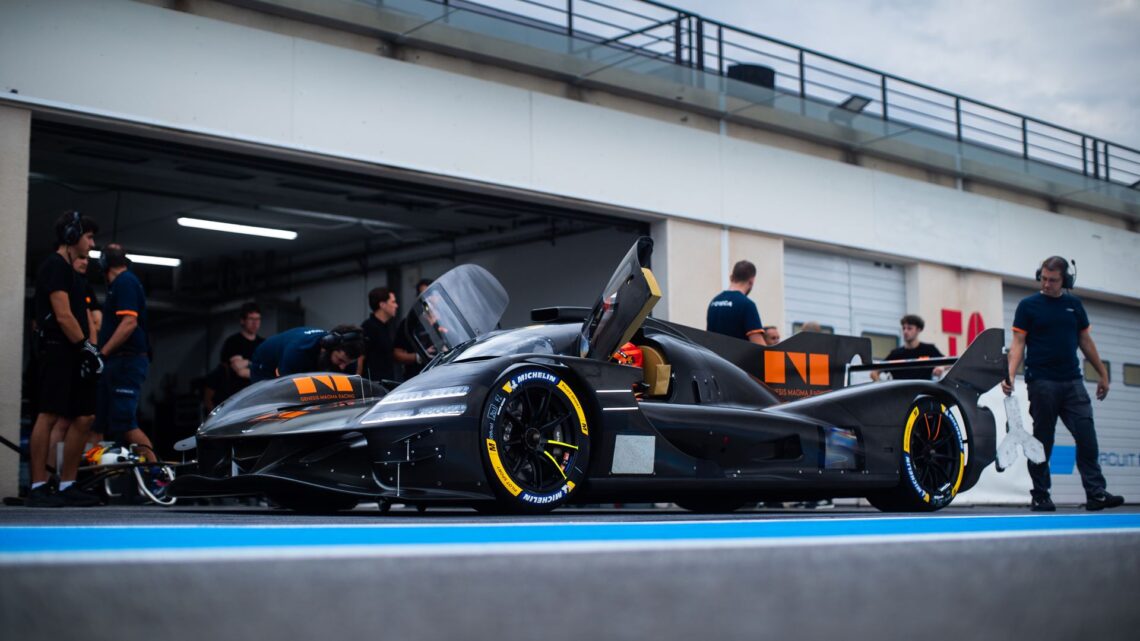
The strategy paid off brilliantly. At their very first 24 Hours of Le Mans, the Korean debutants stunned heavyweights like Ferrari and Toyota by advancing both GMR-001 Hypercars through the knockout stages to lock out P6 and P9 on the grid for Hyperpole 2.
Here is how the “sandbagging” strategy worked, how it impacted their championship standing, and the hard data breakdown between the #17 and #19 sister cars.
The Morning “Slowdown”: Strategic Data Banking
During the morning practice sessions on Thursday, rival teams noticed the Genesis cars circulating well off the absolute pace. Rather than a performance deficit, Genesis was executing a strict endurance protocol. Because Le Mans rules allocate a limited tire matrix for the entire event, Genesis sacrificed headline lap times in the morning to focus on two critical parameters:

- MGU-K Hybrid Energy Optimization: Fine-tuning the 2026 super-clipping software loops down the Mulsanne straight.
- Thermal Dynamics Deficit Mitigation: Simulating high-temperature traffic runs to map out the WRC-derived 3.2-liter twin-turbo V8 engine maps under heavy thermal load.
Because Le Mans is a standalone double-points round on the WEC calendar, qualifying position takes a backseat to pure mechanical reliability. By prioritizing race distance data over empty morning glory laps, they preserved their fresh rubber for when it actually mattered: the evening Hyperpole sessions.
The Hyperpole Evolution: How Both Cars Made the Top 10
The unique 2026 Le Mans qualifying format uses a multi-tier elimination system. The initial 30-minute scramble feeds into Hyperpole 1 (Top 15 cars), which then cuts down to the definitive Hyperpole 2 session for the Top 10 grid spots.
- The Initial Surge: On Wednesday night, Dani Juncadella (#19) and Pipo Derani (#17) did the heavy lifting, securing 11th and 13th to comfortably slip both cars into the Hyperpole tiers.
- The Young Gun’s Masterclass: In the high-pressure Hyperpole 1 session, the team swapped drivers. Mathys Jaubert—the youngest driver on the entire Hypercar grid—clapped down an absolute flyer in the final minute of the session, briefly holding the top time before finishing 3rd quickest to hand the car over to the veterans for the final shootout.
- The Final Grid: In the ultimate Hyperpole 2 showdown, Paul-Loup Chatin and sports car legend André Lotterer extracted the maximum single-lap pace from the GMR-001 chassis.
[Row 3] #19 Genesis Magma (Chatin) — P6
[Row 5] #17 Genesis Magma (Lotterer) — P9
Driver Telemetry Face-Off: #19 vs. #17
When evaluating the pure stopwatch metrics across the entire qualifying matrix, the #19 Genesis Magma garage held the definitive upper hand over the #17 sister car.

Head-to-Head Qualifying Classification
| Car | Session Peak | Qualifying Driver | Ultimate Lap Time | Gap to Pole (BMW) | Grid Pos. |
| #19 Magma | Hyperpole 2 | Paul-Loup Chatin | 3:23.842 | +1.278s | P6 |
| #17 Magma | Hyperpole 2 | André Lotterer | 3:24.415 | +1.851s | P9 |
Who Was the Fastest Driver?
Looking at the data streams across the weekend, Paul-Loup Chatin emerged as the outright speed king for Genesis.
During the definitive Hyperpole 2 shootout, Chatin hooked up all three sectors cleanly, pulling a significant 0.573-second margin over his highly decorated teammate André Lotterer in the #17. Chatin found his major time advantage in Sector 2, showing immense bravery through the high-speed Porsche Curves—proving that the Oreca-developed Genesis chassis possesses immense high-speed stability despite the grid-wide 2026 mechanical grip limitations.
Championship Impact
Since World Endurance Championship points are only awarded for the final race classification (with a single bonus point awarded exclusively to the absolute Pole Position winner), Genesis’s morning data-gathering strategy didn’t cost them a single point. Instead, by locking down two top-10 starting spots and out-qualifying the factory Ferrari line-up, Genesis put themselves in prime position to reap a massive haul of double-points on Sunday afternoon.