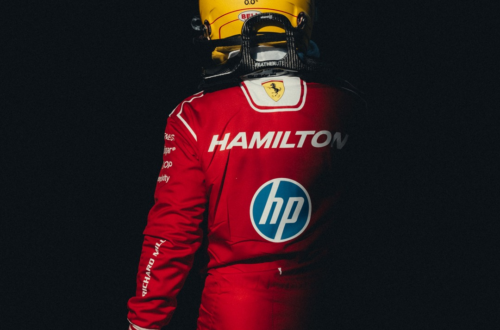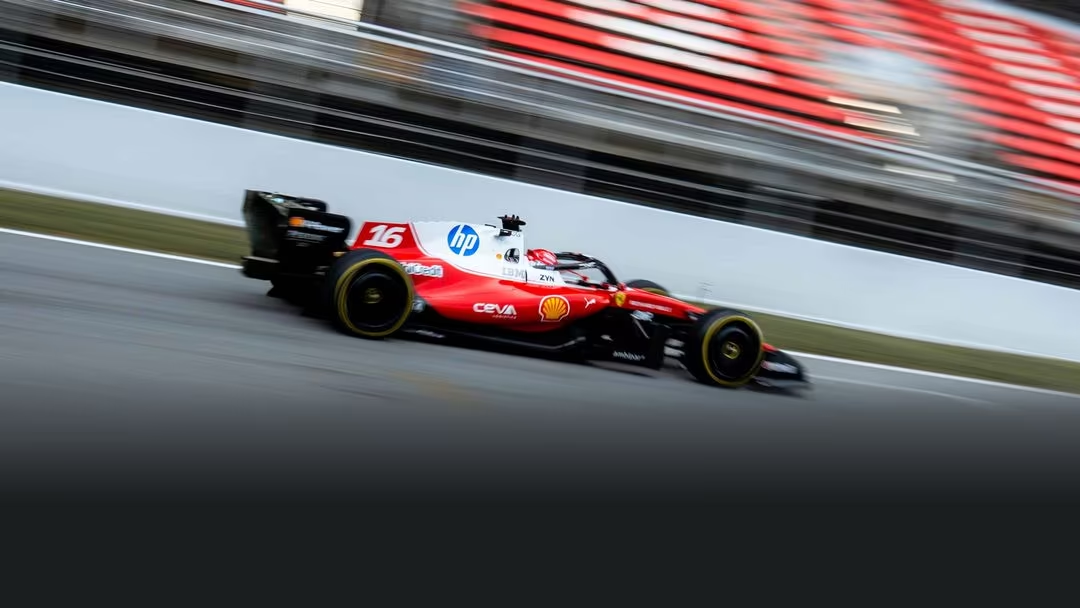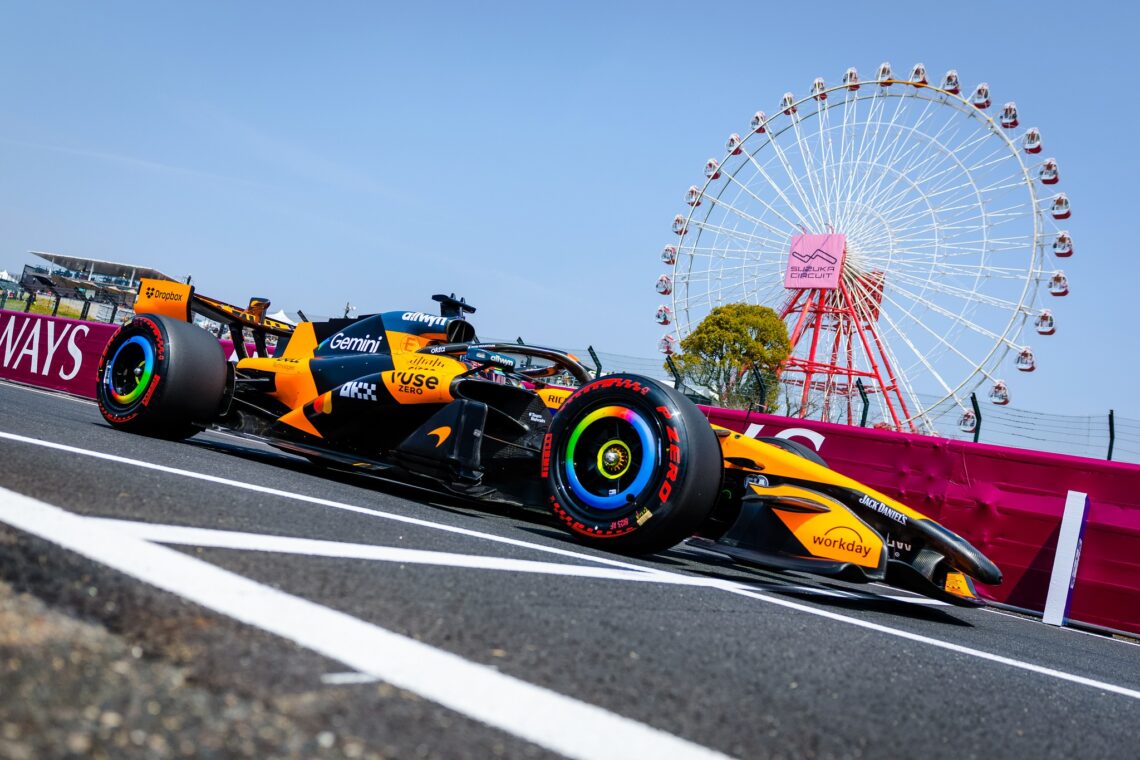
“With the RBW red lining for the top, Stella has choosen to brake hard and dive for the mid feilds, an all out war to scrap for points, a strat that has clearly payed out, with a massive reap in points. McLaren now sits 49 points between them and second in the world constructors championship.”

This high-stakes gamble executed by Woking’s pit wall has completely rewritten the tactical script for the 2026 regulation era. Andrea Stella recognized that chasing single-lap qualifying glory with a fragile package was a losing battle against Mercedes and Ferrari. Instead, by dropping the MCL40 straight into the brutal, high-attrition war of the midfield, McLaren has engineered a relentless points-harvesting machine that completely capitalizes on the mechanical failures of the frontrunners.
Overclocking the Energy Loop: 9.0 MJ vs. 4.0 MJ
While casual observers track the aero lines, the true battle for the podium steps is won or lost in the high-voltage electrical loops. In this new era, pure driver points and on-track overtakes are directly governed by how efficiently a car manages its severe electrical capacity constraints:

- The 9.0 MJ Harvesting Monster: The massive Motor Generator Unit-Kinetic (MGU-K) is legally permitted to harvest an astronomical 9.0 Megajoules (MJ) of energy per lap under braking.
- The 4.0 MJ Battery Bottleneck: The FIA strictly caps the internal battery storage capacity at just 4.0 MJ of useable energy.
This mathematical offset completely redefines racing strategy. Drivers cannot simply hoard electricity to press an overtake button down the straight. Instead, they are forced to engage in super clipping a counter-intuitive software strategy where the car heavily cuts electrical deployment at the end of long straights to harvest power back into the system while still at full throttle.
If a driver miscalculates this loop, they suffer from sudden “derating” (running out of electrical deployment before the braking zone), turning them into a sitting duck for a trailing car carrying a full tactical energy store. Overtakes are no longer just about bravery on the brakes—they are determined by who optimized their electrical harvesting three corners prior.
The Crisis of Mechanical Grip and Plummeting Lateral G’s
Shifting the battleground into the midfield has exposed the most jarring engineering bottleneck of the 2026 technical regulations: the dramatic loss of mechanical grip and the resulting collapse in sustained Lateral G-forces.
In the sport’s quest to create smaller, nimbler cars, the 2026 rules slashed 30kg off the minimum chassis weight and significantly narrowed the footprint of the cars. While this achieved the goal of better agility in low-speed chicanes, it dealt a massive blow to the cars’ cornering dynamics:
- The Shrinking Contact Patch: Pirelli’s 2026 tires have been narrowed by 25mm at the front and 30mm at the rear. This structural down-sizing drastically shrinks the tire’s contact patch with the asphalt, severely lowering the fundamental mechanical grip available to the driver before aerodynamic downforce even enters the equation.
- The Lateral G Deficit: Because overall downforce has been slashed by roughly 30% through the restriction of ground-effect venturi tunnels, the cars can no longer pin themselves to the tarmac in high-speed sweeps. The combination of narrower rubber and reduced aero load means cornering speeds have tanked. Drivers are recording significantly lower peak Lateral G-forces through daunting sectors like Barcelona’s Turn 3 or Silverstone’s Copse compared to the previous generation of heavy, high-downforce machinery.
Compounding this mechanical deficit is the violent implementation of the new active aerodynamics. When the front and rear wings instantly snap from high-drag “Straight Mode” (X-Mode) back to high-downforce “Corner Mode” (Z-Mode) under hard braking, a massive aerodynamic shockwave slams through the chassis. This creates instant structural load spikes on the suspension and tires, causing handling instability that the diminished mechanical grip struggle to contain.
The Absolute Test of Thermal Dynamics
This aggressive energy flow and reduced grip threshold have transformed modern grand prix racing into a pure test of thermodynamics for the sport’s engineering elite. Shoving a 350 kW hybrid motor tightly against a 1.6-liter V6 internal combustion engine creates an absolute furnace under the carbon fiber engine cover.
When running down in the dense, turbulent air of the midfield, cooling efficiency becomes just as critical as aerodynamic downforce. Managing the intense heat soak of the inverter components and battery packs requires predictive engine mapping and meticulous thermal management. If the systems get too hot, the electrical power scales back, and the lap time falls off a cliff.
Ultimately, teams can run multi-million dollar simulations back at the factory all weekend, but computers don’t score points on Sunday. When the five red lights extinguish, the complex algorithms and thermodynamic models step aside, and the top teams must rely on the ultimate biological variable to step up and do their job: drive.