Whenever a massive streaming giant like Netflix secures the streaming rights to legendary anime properties or collaborates heavily with their creators, a wave of collective skepticism naturally ripples through the community. We’ve been burned before by rushed pacing and corporate interference. But looking at the current landscape—especially with Netflix locking down a massive worldwide streaming release for Daemons of the Shadow Realm, the brilliant new dark fantasy anime from Fullmetal Alchemist creator Hiromu Arakawa—the narrative is shifting. Moving this tier of storytelling toward Netflix might honestly be the best thing to happen to it in years.

If the platform applies the exact same structural blueprint, patience, and budget that went into a masterpiece like Castlevania, we could be on the verge of a renaissance for high-end dark fantasy adaptations.
The Castlevania Blueprint: Giving Arcs Room to Breathe
The biggest fear with any prestige anime adaptation is the compression of complex narrative arcs. Shonen and seinen series live or die by their world-building, and you cannot rush the slow-burn realization of political conspiracy, existential dread, or magical theory.

This is exactly why the template laid out by Castlevania is so reassuring. Netflix proved that when they allow an animation team to treat a dark fantasy property with cinematic reverence, the results are staggering.
- Pacing: Castlevania didn’t try to sprint through its lore; it dedicated entire multi-episode stretches simply to philosophical debates, atmospheric dread, and meticulous character development before unleashing pure mechanical and magical violence.
- Tone: It didn’t sanitize the raw, visceral nature of its universe.
- The Seasonal Structure: Splitting a story into deliberate, high-budget “cours” or seasons gives production houses like Studio BONES—who are animating Daemons of the Shadow Realm—the breathing room to maintain god-tier animation consistency rather than suffering the mid-season quality dips common in traditional weekly broadcast runs.
Applying that level of structural freedom to an expansive, lore-heavy world is exactly how you capture lighting in a bottle a second time.
A Legacy of Blood Brothers: Honoring the Original Runs
Any modern treatment of Arakawa’s creative footprint carries an immense historical debt. The core of what makes her writing resonate so deeply is an unbreakable, foundational bond. In Fullmetal Alchemist, it was Edward and Alphonse Elric—blood brothers who went all the way back to a childhood tragedy, bound by the ultimate taboo of human transmutation and the crushing weight of equivalent exchange. In her new work, Daemons, that focal point shifts to separated twins, Yuru and Asa, anchoring a dark, folklore-driven world in that same raw, familial devotion.
To appreciate where we are going, you have to look at the massive trail blazed by the animated adaptations that came before:
[2003 Original Anime] —> [2009 Brotherhood] —> [Modern Streaming Era]
(Anime-Original) (Manga Faithful) (Global Simuldubs)
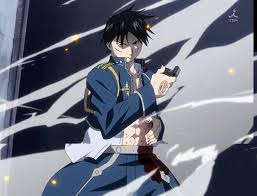
The 2003 original anime run of Fullmetal Alchemist was a fascinating cultural milestone. Because it caught up to the ongoing manga incredibly early, the team at Studio BONES had to pivot, crafting an entirely anime-original second half. It was darker, deeply existential, and chose a bittersweet, reality-bending conclusion that divided purists but anchored the show as a standalone emotional masterpiece.

Then came 2009’s Fullmetal Alchemist: Brotherhood, a panel-for-panel faithful execution of the complete manga that set the gold standard for how cohesive, macro-level anime storytelling should operate.
The Streaming Evolution
Back in the mid-2000s, tracking down these narrative arcs meant dealing with erratic cable broadcast schedules or hunting for physical DVD box sets. Today, a global platform infrastructure means a series can drop worldwide with multiple high-quality dubs simultaneously, allowing a massive, unified audience to experience complex dark fantasy on day one without losing momentum.
If a streaming giant is willing to fund top-tier studios, respect the slow geometric build of long-form story arcs, and maintain the raw emotional core that made the Elric brothers’ journey legendary, then giving them the reins isn’t just worth a try—it’s the logical next step for the genre.