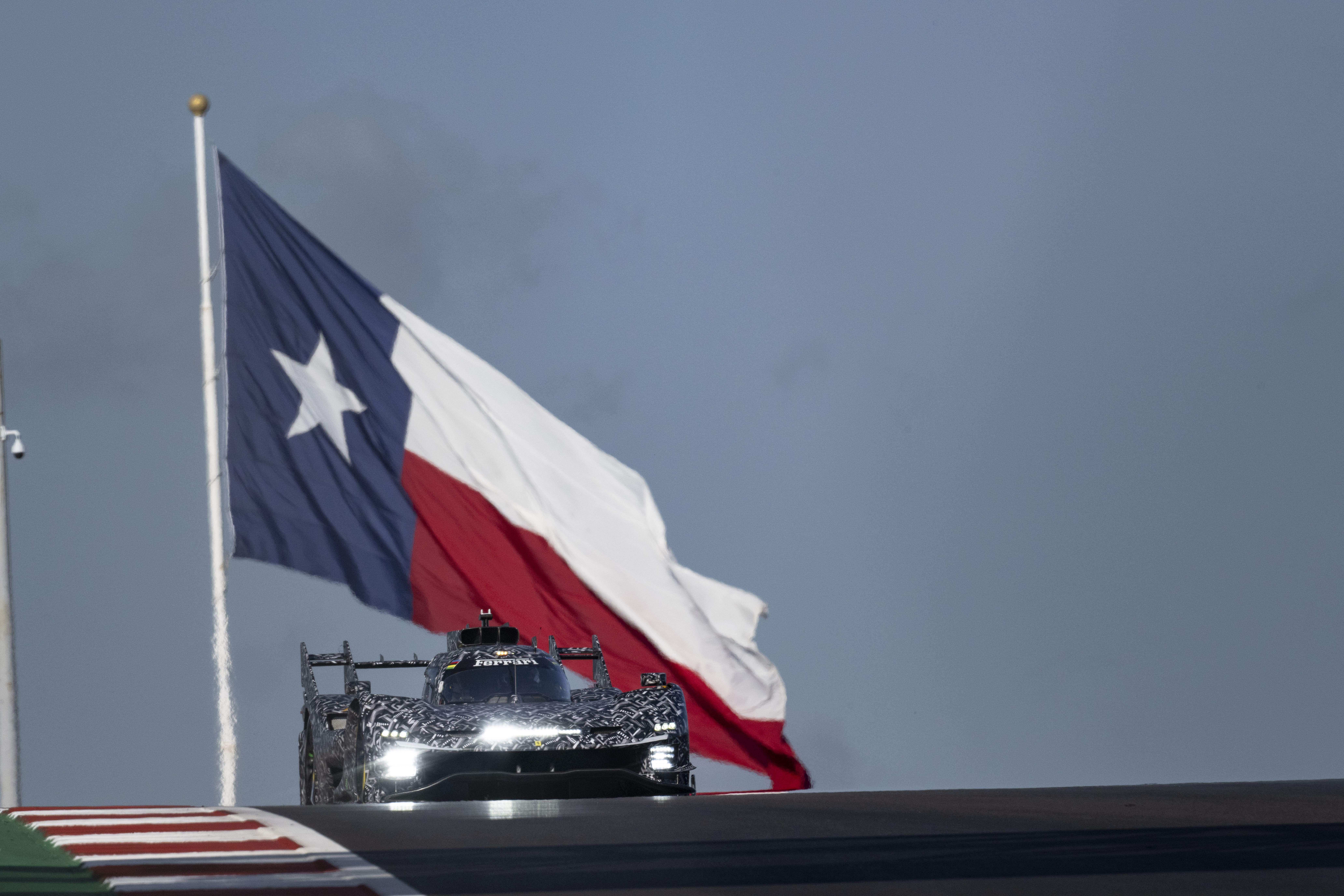
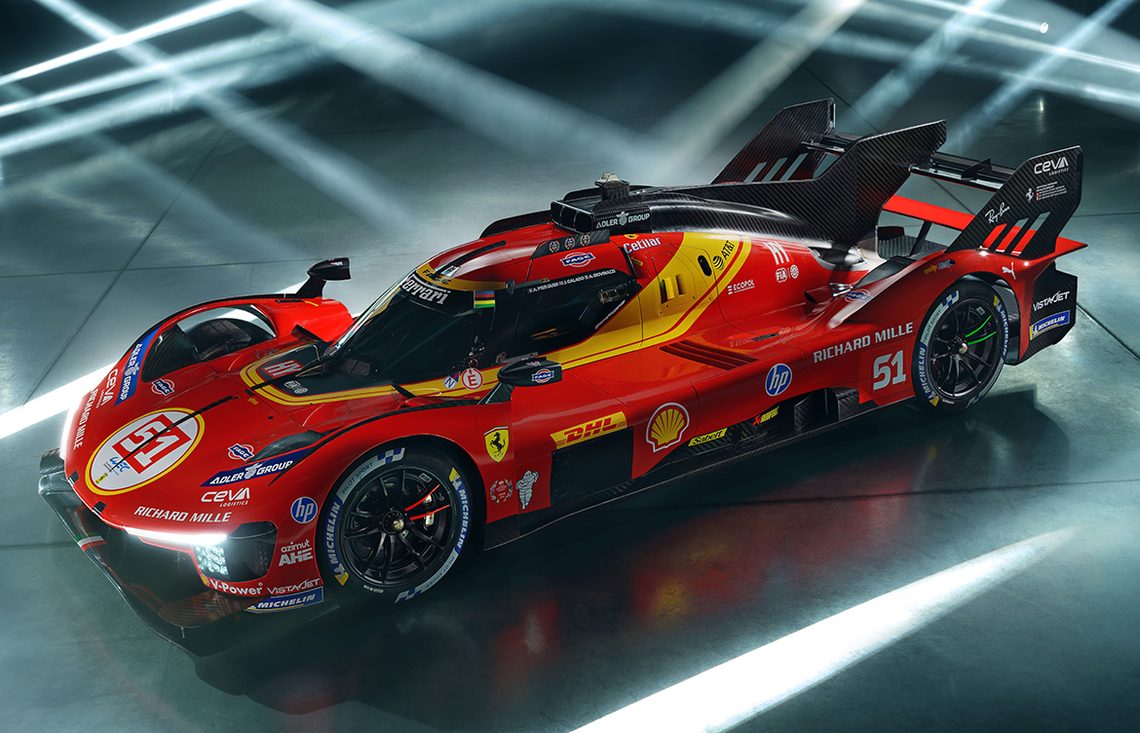
In top-tier endurance racing, engineering a Le Mans Hypercar (LMH) like the Ferrari 499P is only half the battle. The true, exhausting complexity of the FIA World Endurance Championship (WEC) lies in translating that technical masterpiece into a machine capable of winning across a multi-hour stint.
Unlike Formula 1, where a car is hyper-tailored to a single driver’s unique ergonomics and behavioral inputs, a Hypercar is a forced exercise in democratic engineering. It is a strict “one size fits all” platform that must accommodate three distinct drivers, all while navigating regulatory restrictions on data stream telemetry, brutal tire wear matrices, and extreme statistical outliers.
Here is an analytical breakdown of how Ferrari manages the human variables through advanced data translation.
1. The Tri-Driver Dilemma: The One-Size-Fits-All Trap
When three world-class drivers share a single seat over 6, 8, or 24 hours, optimization becomes a game of compromise. Driver A might favor an aggressive, point-and-squat rotation that spikes the rear tire temperatures. Driver B might lean toward a rolling, high-minimum-speed style that strains the front axle under combined loading. Driver C might be a master of wet-weather throttle modulation but lack the absolute dry-track peak aggression of the others.

Because you cannot physically change the suspension geometry, weight distribution, or aerodynamic mapping mid-race, data engineers cannot chase a singular peak setup. Instead, they must hunt for a robust operational envelope.
The goal isn’t to make the car perfectly fast for one driver; it is to minimize the performance drop-off (delta loss) when the weakest driver—or the driver least suited to the current track conditions—is behind the wheel.
2. The Analytical Core: The Optimal Efficiency Equation
To objectively analyze, translate, and balance the vehicle data across three different driving styles, race engineers rely on an overarching optimization function. The goal is to maximize total stint distance or minimize lap time over a complete tire cycle by dynamically weighting the inputs of throttle application, tire degradation, and fuel/energy deployment.
The multi-driver optimization function can be mathematically modeled as:
- The global performance loss function to be minimized.
- The weighting factor assigned to Driver $i$ based on stint length, track conditions, and traffic density.
- The instantaneous lap time profile for Driver $i$.
- The tire degradation rate function, heavily dictated by steering angle and slip ratio.
- The hybrid energy deployment efficiency parameter (balancing the 500 kW total output limit).
- Scaling sensitivities used to prioritize either raw speed or asset preservation depending on the race phase.
By analyzing historical telemetry through this equation, engineers can determine which driver’s natural habits cost the car the most efficiency, allowing them to coach behavioral changes via the pit-to-car radio.
3. Managing the Triad: Tires, Throttle, and Stint Predictions
Because WEC regulations mandate exact allocations of Michelin control slicks per weekend, tire management is the ultimate differentiator. The way a driver modulates the throttle directly influences the car’s dynamic slip curve.
[Throttle Input Rate] ──> [Slip Ratio (λ)] ──> [Tire Core Temp (T_core)] ──> [Stint Life Prediction]
To predict results and vary strategies across stints, data analysts break down telemetry into three primary variables:
Throttle Application Rate
An aggressive initial throttle hit causes micro-wheelspin before the traction control system can fully catch it. Over a 30-lap stint, these micro-slips compound, raising the internal tire core temperature past its optimal operating window. Engineers translate this by looking at the derivative of throttle position against lateral G-forces to see who is forcing the rear tires to overwork.

Tire Degradation Slope
By comparing the degradation slopes of the three drivers, strategy software can project whether a tire set can survive a “double stint” (running two consecutive fuel loads on one set of rubber) to save 12 to 15 seconds in the pit lane. If Driver A’s tire wear slope is flat, they will be assigned the grueling double-stint duty.
Stint Simulation Variation
Using Monte Carlo simulations running concurrently on the pit wall, the team constantly variates the race timeline. If a driver shows an unexpected 2% spike in tire wear due to climbing track temperatures, the simulation shifts the target window for the next pit stop, adapting the entire remaining race architecture in real time.
4. Telemetry Caps: The FIA’s Fight for In-Race Action
A significant hurdle in modern endurance racing is the FIA and ACO’s regulatory stance on real-time data data streams. The governing bodies have placed strict caps on two-way telemetry and limited the bandwidth of information that can be beamed back to the garage during live racing.
From an engineering perspective, this feels counterintuitive why restrict the flow of pristine technical data? However, from a sporting lens, the FIA’s intent is clear: they want to keep the racing human.
By limiting real-time data crunching, the regulations prevent the pit wall from acting as an omniscient, automated chess master. If a car’s tire pressure spikes or a hybrid sensor acts up, engineers cannot simply upload a live patch or tell the driver the exact millisecond to alter their line based on a cloud-calculated script.
Instead, the burden of data translation falls back onto the driver’s gut feel and the team’s pre-race preparation. Teams are forced to build incredibly sophisticated onboard diagnostic algorithms that translate complex system states into simple, actionable dash readouts for the driver.
5. Attacking the Outliers: Six Sigma and Rare Track Conditions
In an endurance environment, you don’t just plan for the expected average; you must bulletproof the operation against the anomalies—the Six Sigma events. In statistical modeling, a Six Sigma condition represents an occurrence that sits far out on the tail of a normal distribution curve. These are the rarest of conditions: an unexpected localized flash flood at a single sector of Le Mans, a sudden 20-degree drop in track temperature under a lengthy safety car, or a freak sensor failure that blinds the team’s primary telemetry stream.
Regardless of how statistically irrelevant these events might seem during standard simulator runs, Ferrari cannot afford to handle them reactively. A winning program must possess a pre-mapped “Plan of Attack” for the extreme variables:
- Degraded Mode Matrices: If a crucial hybrid sensor fails under Six Sigma conditions, the steering wheel contains pre-programmed default maps. The driver can manually override the automated data pipeline, reverting the powertrain to a safe, deterministic, mechanical baseline map.
- The Cross-Over Window Plan: When the track conditions are highly volatile (neither fully dry nor fully wet), the team relies on a rigid “cross-over matrix.” Drivers report subjective grip levels, which are matched against sector-time deltas. If the delta exceeds a precise mathematical threshold, the strategy automatically triggers an immediate pit stop for intermediate or wet tires, completely bypassing human hesitation on the pit wall.
Ultimately, the Ferrari 499P Hypercar is a triumph of mathematical synthesis. Winning requires taking millions of cold data points, running them through optimization functions, and translating them into a singular, cohesive language that three very different human beings can execute at 300 km/h.