There is a specific, sacred window of time at the Circuit de la Sarthe that defines the entire ethos of endurance racing. It arrives well after the sun drops below the horizon, when the ambient temperature plummets and the grandstands fall into a weary, hypnotic hum.

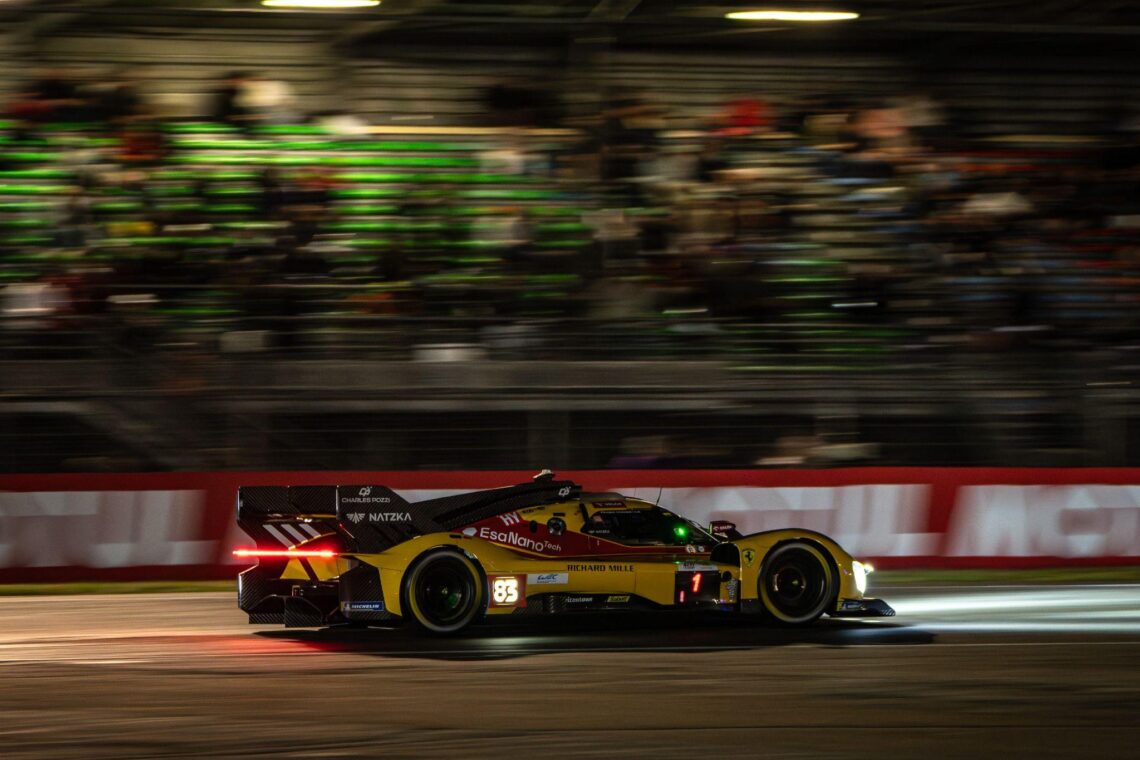
In this ink-black darkness, the Mulsanne Straight becomes a 3.7-mile sensory deprivation chamber, lit only by the incandescent beam of headlights slicing through the mist at 210 mph.
For Ferrari, dominating this specific window is what secures legends. As the Scuderia builds on its historic modern legacy capturing three consecutive outright victories at Le Mans from 2023 through 2025 their relentless pursuit of nocturnal perfection continues.
Car Racing Reporter
To understand why Ferrari spends millions refining how their 499P Hypercar behaves at 3:00 AM, one has to go back to the very genesis of the 24 Hours of Le Mans, and how the concept of racing through the night was born.
The Genesis: An Open-Air Laboratory
When the Automobile Club de l’Ouest (ACO) inaugurated the first 24-hour race on May 26, 1923, Grand Prix motor racing was already the dominant, glamorous force in Europe. Those races, however, were short, frantic sprints designed purely to crown the fastest machine.
Wikipedia
Le Mans founders Charles Faroux, Georges Durand, and Émile Coquille envisioned something radically different: an open-air laboratory to test automotive reliability, fuel efficiency, and roadholding under real-world consumer conditions.
24 Heures du Mans
To prove that a car was genuinely practical for the public, it had to face the ultimate equalizer: the night.
In 1923, public roads were rarely lit, and standard automotive headlights were primitive, fragile acetylene or early electrical lamps that frequently shattered under heavy vibration. Forcing drivers to race through 8 hours of absolute pitch darkness was not a gimmick; it was a brutal, direct challenge to automotive lighting technology.
24 Heures du Mans
The regulations even dictated that the cars had to be true touring models. In those early years, drivers had to run the first 20 laps with their canvas tops fully erected to simulate a family road trip, before dropping them for the nocturnal stint.
The night instantly became the crucible of the event. It was where dynamos failed, where fuses blew, and where drivers like the legendary “Bentley Boys” of the 1920s learned to navigate the unlit gravel tracks by sheer memory, tracking the silhouettes of pine trees against the starlight. Over the last century, lighting technology evolved from a tool for mere survival into a highly sophisticated aerodynamic and psychological weapon.
Harnessing the Darkness: The 499P Night Test
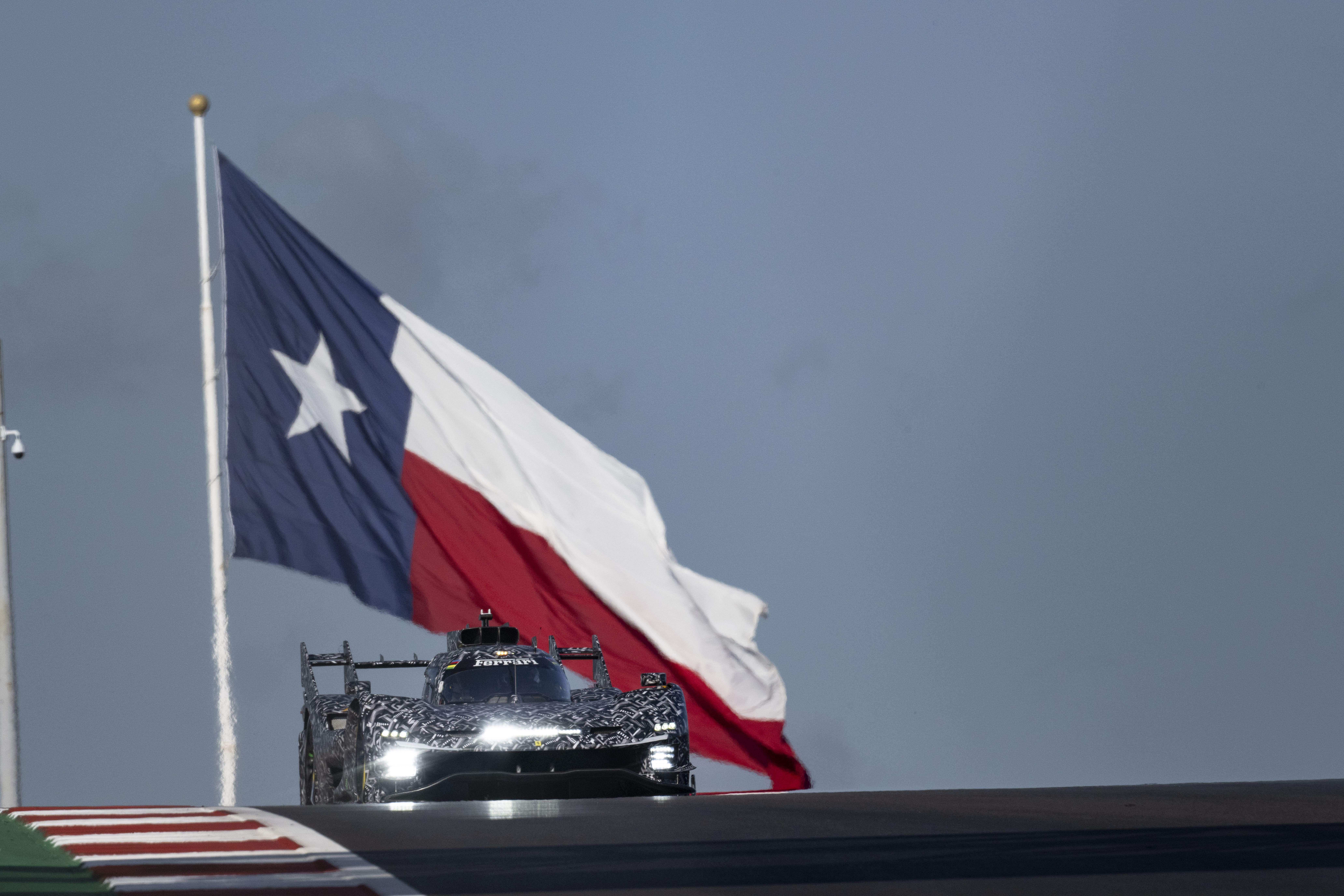
Fast forward to the modern Hypercar era. Ferrari’s testing protocol for the all-conquering 499P treats the night shift not just as a visibility challenge, but as an entirely different aerodynamic and thermodynamic ecosystem.
When the sun sets over a circuit, the track dynamics shift instantly:
- The Density Dividend: Cooler night air is denser. This provides an immediate boost in internal combustion performance for the 499P’s structural, twin-turbo 120° V6.
- The Aero Balance: Denser air also increases downforce, but it simultaneously increases aerodynamic drag. Engineers must optimize the carbon fiber bodywork to exploit this extra grip without completely destroying their straight-line speeds down the Mulsanne.
- The Thermal Drop: As track temperatures plummet, keeping the Michelin tires within their optimal operating window becomes a razor-thin balancing act. A driver stepping into the car at 2:00 AM must find immediate traction on a cold surface while managing a hybrid powertrain delivering 680 horsepower to the rear wheels and 272 horsepower of electric ERS deployment to the front axle.
Wikipedia
Ergonomics in the Dark: The Cockpit Warfare
During a high-stakes night test, Ferrari focuses heavily on human-machine correlation. At 200+ mph in total darkness, a driver’s peripheral vision shrinks down to a narrow cone of light. The physical environment inside the cockpit has to adapt to prevent cognitive fatigue.
+————————————-+———————————————————+
| Feature | Night Operational Function |
+————————————-+———————————————————+
| High-Beam Flasher (“FLA” Button) | High-intensity LED strobe to alert slower GT3 traffic |
| Backlit Manettinos | Tactile, color-coded rotary dials for blind adjustment |
| Luminescent Display Delta | High-contrast UI displaying real-time pace variance |
| Photometric LED Headlights | Matrix arrays engineered to illuminate corner apexes |
+————————————-+———————————————————+
The 499P’s bespoke steering wheel features a dedicated “FLA” button. This triggers a high-intensity, high-beam LED strobe sequence. In the dead of night, when the mirrors of slower GT3 class cars are covered in grime and rubber debris, this flashing light is the only signal that a top-tier Hypercar is closing the gap at a terrifying speed delta.
Similarly, the central screen layout is modified for high-contrast, low-glare visibility. Critical metrics like tire pressures, brake temperatures, and the 800V battery’s State of Charge (SoC) must be readable in a fraction of a second, ensuring the driver’s eyes remain locked on the shimmering asphalt ahead.
Ferrari
“When you drive at night at Le Mans, the world shrinks. There is only the dashboard, your headlights, and the white lines. You aren’t driving by sight anymore; you’re driving by rhythm and feel.”
The Legacy Continues
From the glowing acetylene lamps of a 1923 Chenard & Walcker to the blinding matrix-LED arrays of the modern 499P, the fundamental soul of Le Mans has never changed.
Ferrari’s continuous obsession with testing in the dark is a direct homage to the race’s original vision. By mastering the cold air, managing the shifting thermal balances, and perfecting the ergonomics of the cockpit, the Prancing Horse ensures that when the sun finally rises over the Ford Chicane on Sunday morning, their cars are exactly where history demands them to be: leading the field.