The Lifestyle

Time-Travel at Le Mans: Dropping Modern Muscle Into Porsche’s Chaotic 1951 Dawn

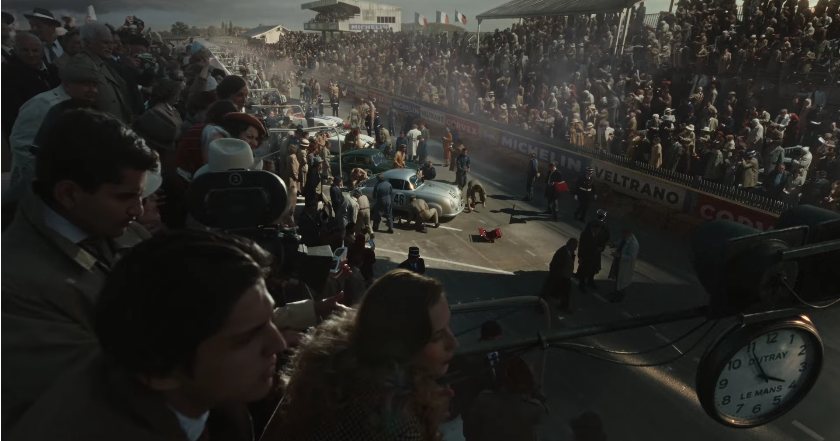
It is rare for an advertising campaign to tap directly into the raw, unpolished nerve of motorsport history, but Porsche’s latest retrospective video does exactly that. To celebrate 75 years of racing heritage, the brand didn’t just stitch together a glossy montage of modern hypercars blinking under stadium lights. Instead, they took us back to the mud, the smoke, and the absolute chaos of the 1951 24 Hours of Le Mans.

The result is a stunning, cinematic juxtaposition: a modern-day racing weapon cutting through a sea of mid-century turmoil, proving that while technology changes, the underlying grit remains exactly the same.

1951: The Era of Bare Typography and Untamed Tracks

The video immediately strikes a chord with purists by capturing the literal “bones” of Porsche’s origins. In 1951, Porsche was a tiny, upstart manufacturer operating out of a cramped garage space. They didn’t even have the iconic Stuttgart crest yet—that legendary badge wouldn’t be designed until late 1952.

Instead, when Auguste Veuillet and Edmond Mouche drove their silver Porsche 356 SL (Super Light) aluminum coupe out of Zuffenhausen and literally commuted on public country roads to the grid in France, the car bore only simple, clean block lettering across its bonnet: PORSCHE.

The video brilliantly resurrects the atmosphere of that 1951 race. Back then, Le Mans wasn’t a pristine, heavily marshaled sanctuary of carbon-fiber barriers and massive runoff zones. The track and the stands were practically one. Spectators stood inches from the racing line, separated from roaring engines by nothing more than wooden fences and bundles of straw. It was a beautiful, terrifying spectacle defined by raw mechanics, rain, and thick exhaust smoke.

The Evolution of the Face of Porsche

├── 1951: Minimalist, bare aluminum bodies with simple “PORSCHE” block text across the nose.

└── 2026: Intricate, wind-tunnel-tested carbon fiber wearers of the iconic Stuttgart Crest.

The Cross-Timeline Interception

The absolute stroke of genius in the video is dropping a modern-day Porsche beast directly into this monochrome, mid-century setting.

Seeing a state-of-the-art machine tear through the 1951 field creates an incredible visual friction. It isn’t presented as a clean, triumphant victory lap. Instead, the film leans into the confusion, turmoil, and unrest of endurance racing. The modern car slices through a landscape of exhausted mechanics covered in oil, frantic flagmen waving canvas banners in the pouring rain, and drivers battling sheer physical fatigue in primitive cockpits.

It reminds us that the 75-year journey from an underpowered 46-horsepower aluminum coupe to today’s hybrid endurance monsters wasn’t a straight, easy line. It was forged through mechanical failures, high-speed heartbreaks, and constant Adaptation.

75 Years of “Raceborn” DNA

This retrospective drops at a perfect moment. This year, Porsche is celebrating 75 Years of Porsche Motorsport at Le Mans by running special, silver-liveried 911 GT3 R cars that pay direct homage to that original 1951 aluminum 356 SL.

The video cuts through the modern, over-polished corporate veneer that often surrounds luxury brands today. It embraces a “Pinkies Down” appreciation of what makes Porsche special: not old-money prestige or clinical numbers, but the unpretentious, mechanical continuity of a company that still tests its road cars on the exact same tarmac where its founders used to change spark plugs in the mud.

For anyone who loves the heritage of the sport, it is a powerful reminder that every modern Porsche carries the ghost of that 1951 grid inside its software.

For a deeper dive into the historic relationship between the French endurance classic and the Stuttgart brand, check out Racing with Giants: Porsche at Le Mans, a documentary narrated by Patrick Dempsey that blends archival footage with interviews from legends like Jacky Ickx and Derek Bell to chronicle the brand’s rise to becoming the most successful manufacturer in Le Mans history.

Leave a Reply

Your email address will not be published. Required fields are marked *