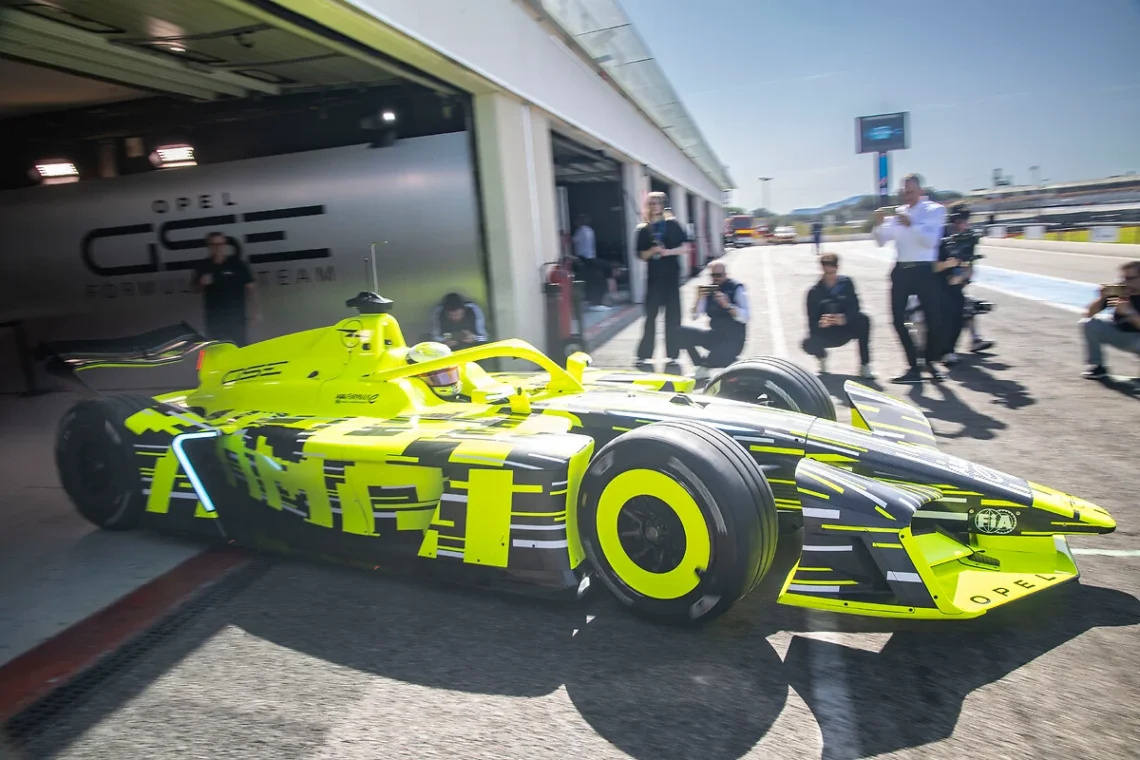
There is a striking moment when an open-wheel racing car stops looking like a collection of technical compromises and starts looking like raw, aggressive art. As Formula E prepares to transition to its highly anticipated Gen 4 era next season, the Opel GSC Formula E Team has pulled back the curtain on its prototype contender, the FE27. The collective intake of breath from the motorsport community wasn’t just about the technology it was about the sheer, unadulterated aesthetic of the machine.


While much of the media attention naturally gravitates toward the team’s high-profile signings including the immensely talented German test and development driver Sophia Flörschm the real star of the tarmac right now is the car itself. It is a stunningly cohesive design that proves electric racing can shake off its sterile, boxy origins and deliver true visual drama.
Aerodynamics Meet Pure Asphalt Romance
For a long time, electric single-seaters prioritized drag reduction to an almost clinical degree, sacrificing aggressive styling for battery efficiency. The Gen 4 machine flips that script entirely, injecting heavy doses of functional aerodynamics right into the car’s carbon fiber skin.

The Opel GSC prototype features a dramatically resculpted front wing assembly, intricately channeled sidepods, and a segmented rear wing setup designed to clean up dirty air while keeping the car pinned to tight street circuits. The sheer mechanical aggression of the package is wrapped in a bold, fresh yellow and black prototype livery crafted by Opel’s in-house design team a look that Team Principal Jörg described as “very bold, very fresh, and very strong.” The final, race-ready show car is scheduled to debut at the Paris Motor Show this October, but even in its current testing state, it looks like an absolute weapon.
And the numbers backing up that beautiful bodywork? They are nothing short of insane:
- Peak Output: Over 800 horsepower (nearly doubling the output of early-generation electric racers)
- Drivetrain: Four-wheel drive capability for unprecedented mechanical grip
- Performance Character: Brutal straight-line speed coupled with devastating acceleration out of low-speed corners
A Century of Racing DNA: From Dusty Rally Stages to Open-Wheel Glory
To understand why Opel is jumping into the deep end of a premium single-seater world championship, you have to look backward. Opel isn’t an interloper looking for a quick marketing win; they possess a deep, 135-year legacy in motorsport. While their track record includes legendary stints in touring cars (the glory days of the DTM), the brand has spent the last several years almost completely locked in on grueling rally championships.
Crucially, they aren’t strangers to high-voltage competition either. Opel achieved a true pioneering milestone by running the world’s first international, single-brand electric rally cup over the last five years. Transitioning from dusty, unpredictable gravel trails to the precise, barrier-lined tarmac of Formula E street circuits is a massive leap, but it’s one rooted in genuine electric validation.
All-In on the Trend: “We Are Here to Win”
The decision to enter the championship as a true, uncompromised factory team under the Stellantis umbrella marks a pivotal turning point for the German manufacturer.
In an exclusive interview with RacingNews365, Team Principal Jörg made it abundantly clear that Opel is completely all-in on this premium motorsport trend. They aren’t treating this as a high-budget science experiment or a grid-filler exercise.
“From the sporting point of view, it’s definitely the right moment in time to join,” Jörg explained. “We made the decision because all the conditions came together finally in the right way. Gen 4 is the right starting point because all of the manufacturers are starting on a level playing field… It’s a new start.”
The atmosphere inside the factory is described as performance-driven, intense, and hyper-focused. The team is leveraging the massive engineering weight, simulators, and technical resources of the broader Stellantis group sharing a garage ecosystem alongside sibling brand Citroën while keeping a direct line to their passionate, grassroots fan base.
For a brand that once boasted over 600 dedicated fan clubs in Germany alone during its touring car zenith, returning to a world championship with an absolute stunner of a race car is the ultimate homecoming. Opel is willing to try, willing to innovate, and as their leadership confidently noted, they aren’t just showing up to turn laps on the grid they are here to fight for podiums.
For the full technical breakdown, insights from Sophia Flörsch on simulating the 800-horsepower Gen 4 power delivery, and Jörg’s teaser about a “very special” home race showcase planned for Berlin, watch the Inside Opel’s Ambitious Gen 4 Project Interview on YouTube.