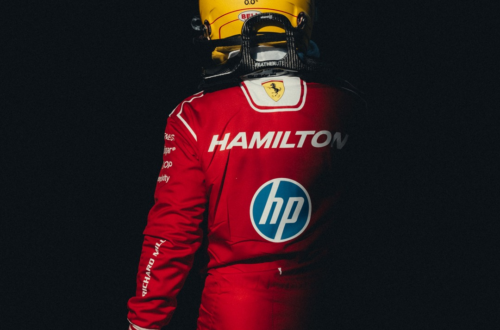
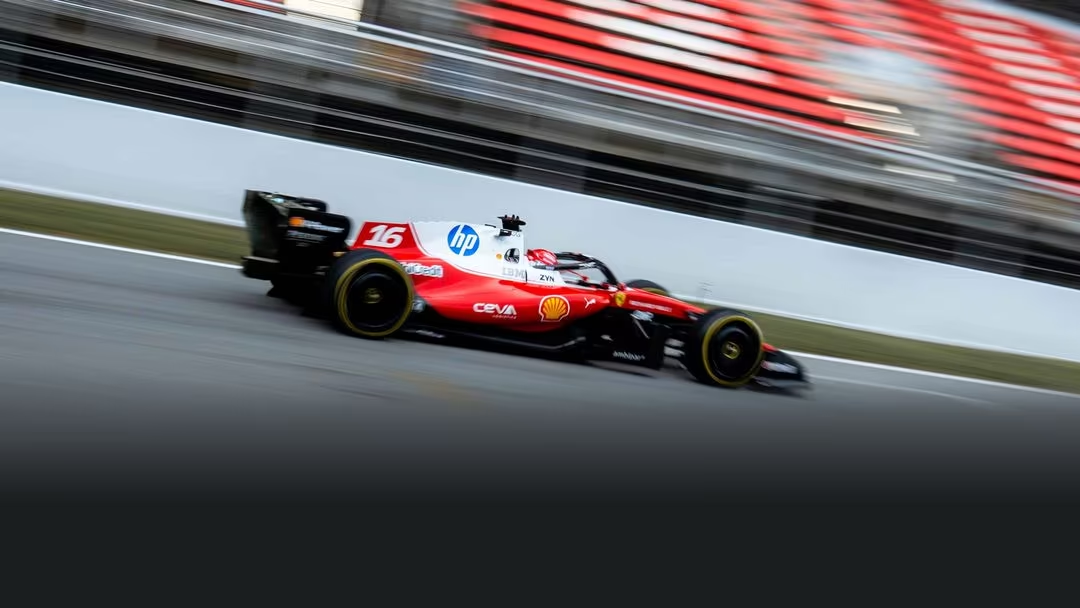
In the hyper-political, data-drenched theater of the 2026 paddock, a single narrative has consumed Maranello: Ferrari built the best chassis on the grid, but they coupled it with a suffocating set of lungs.

The structural diagnosis of the SF-26 is well-established. While rivals like Mercedes designed muscular internal combustion units that effortlessly sustain top-end velocity, Ferrari’s 067/6 power unit is locked in a chronic, 30-horsepower deficit. On long straights, the car hemorages time, forcing Charles Leclerc and Lewis Hamilton into a desperate loop of aggressive lift-and-coast to prevent their 350 kW MGU-K batteries from completely depleting before the braking zone.
To fix this bottleneck, Team Principal Fred Vasseur is currently laying the groundwork to trigger the FIA’s ADUO engine equalization loop. His objective? Use regulatory tokens and extra cost-cap allowance to scrap Ferrari’s current compact turbocharger and replace it with a massive, high-volume alternative.
On paper, Vasseur’s plan sounds like logical engineering. In reality, it is a blunt-force trauma approach that threatens to dismantle the very DNA that makes the SF-26 a racing masterpiece.
The Trap of the Big Turbo: Welcoming Back the Lag
To understand why a hardware overhaul is a mistake, one must look at what the 2026 regulations stripped away: the MGU-H. In the previous era of hybrid machinery, this electric motor was attached directly to the turbocharger shaft, instantly spinning up the compressor to eliminate turbo lag before the mechanical exhaust gases even arrived.
With the MGU-H banned, turbochargers are once again purely mechanical slaves to thermodynamics. rotational inertia is the ultimate enemy.
Ferrari’s initial choice to run a compact, lightweight turbocharger was a stroke of packaging genius. Because the compressor wheel is small, it has incredibly low inertia. It spools up instantly the moment a driver cracks the throttle, granting the SF-26 elite, razor-sharp corner exit elasticity. It is the reason the car looks like it is on rails through complex, low-speed sectors; the power delivery is linear, predictable, and perfectly synchronized with the chassis’ exceptional mechanical grip.
If Vasseur forces a larger turbocharger architecture into the tight confines of the Maranello power unit, that beautifully crisp throttle response vanishes. A larger turbine wheel requires a massive volume of exhaust gas to get moving. The result? The return of classic, old-school turbo lag.
Drivers will stomp on the pedal at the apex, face an excruciating millisecond of dead response, and then suffer a violent surge of boost mid-corner. For an elite chassis designed around rolling speed and delicate rotation, this sudden torque spike will tear through the rear tires, destroying the car’s balance and transforming a driver’s dream into an unpredictable, snappy handful.
The Alternative: The Scalpel Over the Hammer
Ferrari does not need a bigger hammer; it needs a sharper scalpel. The battery depletion crisis can be solved without turning a single wrench on the turbo hardware, by focusing instead on a trinity of fluid dynamics, chemistry, and software engineering: Active Aerodynamics, Combustion Stability, and Predictive Mapping.
First, the aerodynamic department must weaponize the 2026 active aerodynamics regulations. The SF-26’s straight-line deficit isn’t just an engine problem; it is a drag problem. Because the car generates immense downforce, it fights a wall of air down the straights.
By hyper-optimizing the calibration of X-Mode forcing the active front and rear wings to snap into their flattened, zero-drag states the absolute microsecond the rear wheels straighten out Ferrari can drop the chassis’ air resistance off a cliff. When a car slices through the air effortlessly, it requires less energy to sustain top speed. The software can automatically dial back the MGU-K’s battery deployment from 100% down to 70% mid-straight. The top speed remains identical, but the battery stops draining.
Second, the answer lies in the fuel cell, not the engine bay. The 2026 100% sustainable e-fuels are highly temperamental, and Ferrari’s power unit is currently limited by pre-ignition knock when pushed to maximum limits.
By collaborating with Shell to maximize the fuel’s chemical stability up to the absolute legal 102.0 RON limit, and pairing it with a redesigned micro-nozzle for Pre-Chamber Jet Ignition, Ferrari can extract a cleaner, more explosive burn from every milligram of fuel. A hotter, higher-pressure explosion creates immense mechanical torque down the crankshaft, allowing the engine to passively spin the MGU-K generator and fill the battery on the straights without changing the turbocharger size at all.
The Compromise to Maranello’s Masterpiece
Vasseur’s urge to bolt on a bigger turbocharger is understandable; it is the most visible, quantifiable fix on an engineer’s clipboard. It yields immediate horsepower figures on the dynamometer that look great in a boardroom.
But Grand Prix cars do not race on dynamometers. They race on technical, winding ribbons of tarmac where track position is won and lost on throttle application and driver confidence.
If Ferrari yields to the tyranny of the turbo, they will build a car that can keep up with Mercedes on the straights, but one that can no longer beat them in the corners. They will cure the symptom but kill the patient. Maranello must resist the temptation of raw, lagging horsepower and instead choose the elegant, software-and-chemical paradigm of the 2026 regulations. Fix the efficiency, drop the drag, and leave the turbo alone.